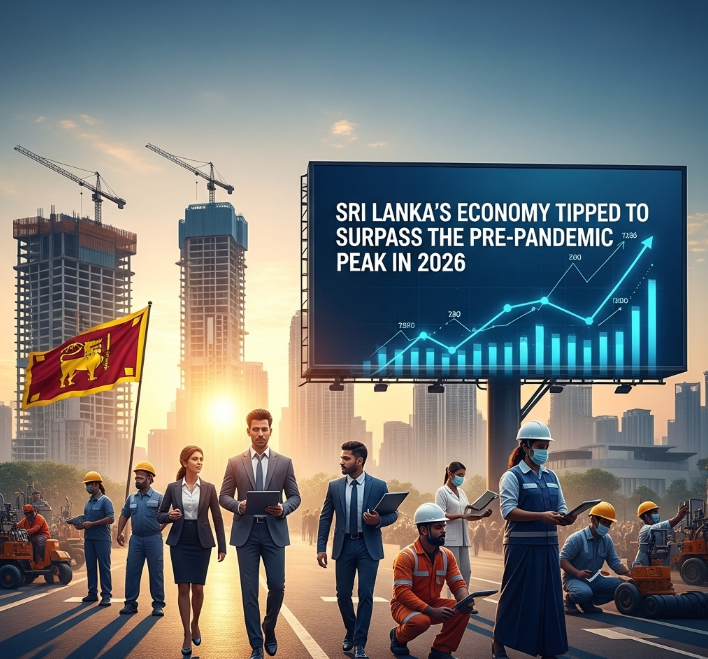
Sri Lanka’s Economy Tipped to Surpass Pre-Pandemic Peak in 2026
Colombo Sri Lanka Lion’s Roar reporter: Optimism is emerging regarding Sri Lanka’s economic trajectory, with Bloomberg Economics projecting that the nation’s output is poised for a significant rebound, surpassing its pre-pandemic peak by 2026. This forecast offers a much-needed ray of hope for a country that has endured a severe economic crisis in recent years, characterized by soaring inflation, foreign exchange shortages, and widespread public discontent. The prediction underscores the initial signs of stabilization and the potential for recovery following stringent economic reforms and international support.
The economic crisis that gripped Sri Lanka in 2022 was unprecedented in its modern history, leading to widespread shortages of essential goods, daily power cuts, and political upheaval. The economy contracted sharply, and the country defaulted on its foreign debt, signaling a dire financial situation. The subsequent implementation of an Extended Fund Facility (EFF) program with the International Monetary Fund (IMF) proved to be a critical turning point, paving the way for debt restructuring efforts and encouraging macroeconomic stability through fiscal consolidation and monetary tightening.
Bloomberg’s projection suggests that these painful but necessary reforms are beginning to yield results. Key indicators such as inflation, which had reached hyperinflationary levels, have shown signs of moderation, and the country’s foreign exchange reserves have gradually started to rebuild. The tourism sector, a vital source of foreign currency, has also shown promising signs of recovery, attracting international visitors back to the island. Furthermore, remittances from overseas workers have remained robust, providing another crucial lifeline to the economy.
However, the path to sustained recovery is not without its challenges. While the projection offers an encouraging outlook, it is contingent upon continued adherence to reform commitments, political stability, and a favorable global economic environment. Issues such as public debt sustainability, state-owned enterprise reforms, and improving the ease of doing business remain critical for long-term growth. The social impact of the economic crisis, including poverty and unemployment, also needs sustained attention as the country rebuilds.
The target of surpassing the pre-pandemic peak by 2026 implies a period of robust growth that will be essential for improving living standards and reducing the economic hardship experienced by many Sri Lankans. This forecast will likely embolden policymakers to stay the course on reforms, while also encouraging foreign investment and trade partnerships. For the citizens of Sri Lanka, it offers a tangible goal and a sign that the worst of the economic turbulence may be behind them, with a more stable and prosperous future on the horizon.