The Global Bird Flu Pandemic: New Zealand’s Race Against Time
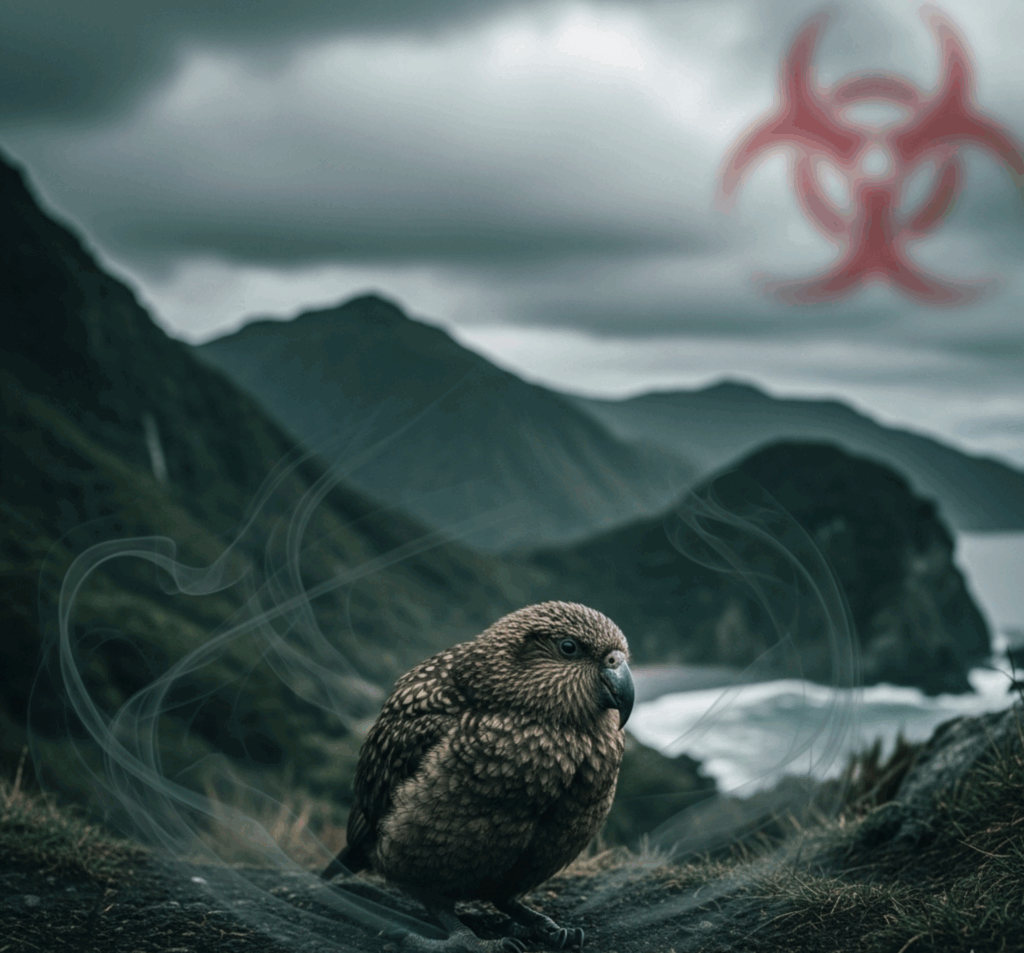
In a remote corner of New Zealand, amidst the lush forests of a protected sanctuary, a team of dedicated wildlife veterinarians is engaged in a race against time. Their mission: to vaccinate some of the world’s most unique and critically endangered bird species against the rapidly spreading H5N1 strain of bird flu. This ambitious and unprecedented program has captured the attention of conservationists and scientists worldwide, as it represents one of the few hopes for protecting a fragile ecosystem from a virus that has already wreaked havoc on global wildlife populations. The urgency of their work has been heightened by the recent, alarming news that the highly pathogenic avian influenza has been detected in Antarctica, marking its arrival on the last untouched continent and bringing it dangerously close to New Zealand’s shores.
The H5N1 virus, which has evolved into a formidable threat, has caused catastrophic die-offs in bird populations across the globe. From the migratory seabirds of the North Atlantic to the penguins of South America, the virus has shown a terrifying ability to jump between species and continents, defying traditional containment efforts. For New Zealand, an isolated island nation known for its unique and ancient avifauna, the threat is existential. The country is home to nearly 100 bird species found nowhere else in the world, many of which are already teetering on the brink of extinction due to habitat loss and introduced predators. A major H5N1 outbreak could be the final, devastating blow for species like the kākāpō, the takahē, and the kakī (black stilt), which have been the focus of decades of intensive conservation efforts.
The New Zealand Department of Conservation (DOC) has not been caught off guard. For the past two years, since the virus’s global rampage began, it has been preparing for this very eventuality. The cornerstone of its strategy is a groundbreaking vaccination program that, to date, has successfully vaccinated a small number of captive birds from five critically endangered species. The scientists are using an H5N3 poultry vaccine, a modified version of the commercially available vaccine, to test its efficacy in non-domestic birds. The initial results have been promising. After receiving two doses, four of the five species tested have developed a strong antibody response that has lasted for at least six months. This breakthrough has given conservationists a glimmer of hope, but the challenges ahead are immense.
“You can’t just run around the forest and catch everything and jab it,” says Kate McInnes, a senior wildlife veterinarian at DOC. The logistics of vaccinating a wild population, especially in New Zealand’s rugged and remote terrain, are staggering. The department is now focused on building a detailed deployment strategy before the spring migration season, when millions of traveling seabirds could introduce the virus to the country. The plan involves prioritizing the vaccination of core breeding populations in aviaries and managed populations on offshore islands, which are vital for the long-term survival of the species. The goal is to create a buffer, a resilient core of vaccinated birds that can be used to repopulate the wild in the event of a major outbreak.
The global community is watching New Zealand’s efforts with keen interest. Australia, which is also bracing for the arrival of the virus with the upcoming migratory season, has been in close contact with New Zealand officials. The Australian government has already allocated A100milliontopreparefortheflu,withA2.8 million specifically earmarked to protect captive populations of threatened species. “We expect it’s not a matter of if, but when bird flu arrives in Australia,” says Fiona Fraser, Australia’s commissioner for threatened species. “Because now that it is circulating in Antarctica, we are essentially surrounded.” The Australian efforts are focused on trialing the vaccine on stand-in species—animals similar to their critically endangered counterparts—to prepare for the day the vaccine might be needed for real.
The situation in Antarctica is particularly troubling. The detection of the virus on the remote continent has highlighted its ability to travel vast distances and its potential to infect even the most isolated and vulnerable populations. Scientists fear that a major outbreak among Antarctica’s iconic penguin and seal colonies could be a global ecological catastrophe. The virus’s proximity to New Zealand has created a sense of urgency and has transformed the country’s vaccination program from an interesting scientific experiment into a global lifeline.
The New Zealand initiative is not without its risks. The long-term effects of the vaccine on wild bird populations are still unknown, and there is a risk that the virus could evolve to evade the vaccine. But for now, it is the best tool available. The success of the program will depend on a massive, coordinated effort involving not just scientists and conservationists, but also government agencies, local communities, and international partners. The world is holding its breath, hoping that New Zealand can pull off what many see as a miracle—saving a unique and irreplaceable part of our planet’s biodiversity from the age of extinction. The fate of the world’s fattest parrot and many other precious species now rests on a small team of dedicated New Zealanders, in a race against a global pandemic that knows no borders.
The logistics of this operation are nothing short of a monumental challenge. The terrain in which many of these birds live is rugged and inaccessible, requiring specialized equipment and highly skilled teams. The birds themselves can be elusive and difficult to handle, and the process of catching, vaccinating, and releasing them must be done with the utmost care to avoid causing them stress or injury. The cost of such an operation is also immense, and the government is relying on a combination of public funding, private donations, and international partnerships to finance the effort. The Department of Conservation has launched a public awareness campaign to highlight the urgency of the situation and to encourage people to report any sightings of sick or dead birds. The public’s cooperation is seen as critical to the success of the program.
The program is also a powerful reminder of the interconnectedness of our global ecosystems. A virus that originated thousands of miles away is now threatening the unique biodiversity of a small island nation. It highlights the need for greater international cooperation on issues of public health and conservation. The lessons learned in New Zealand could be applied to other countries facing similar threats, and the data gathered from the vaccination trials could be used to develop new and more effective vaccines for other species.
The future of New Zealand’s unique bird species is hanging in the balance. The coming months will be a test of the country’s scientific prowess, its commitment to conservation, and its ability to act decisively in the face of a global crisis. The success of the vaccination program will not only save some of the world’s most precious and endangered species, but it will also send a powerful message of hope to a world struggling to contain a rapidly evolving pandemic. The fate of the kākāpō, the takahē, and the kakī is not just a matter of national concern; it is a matter of global importance. And the world is watching, with bated breath, to see if New Zealand can succeed in its race against time.