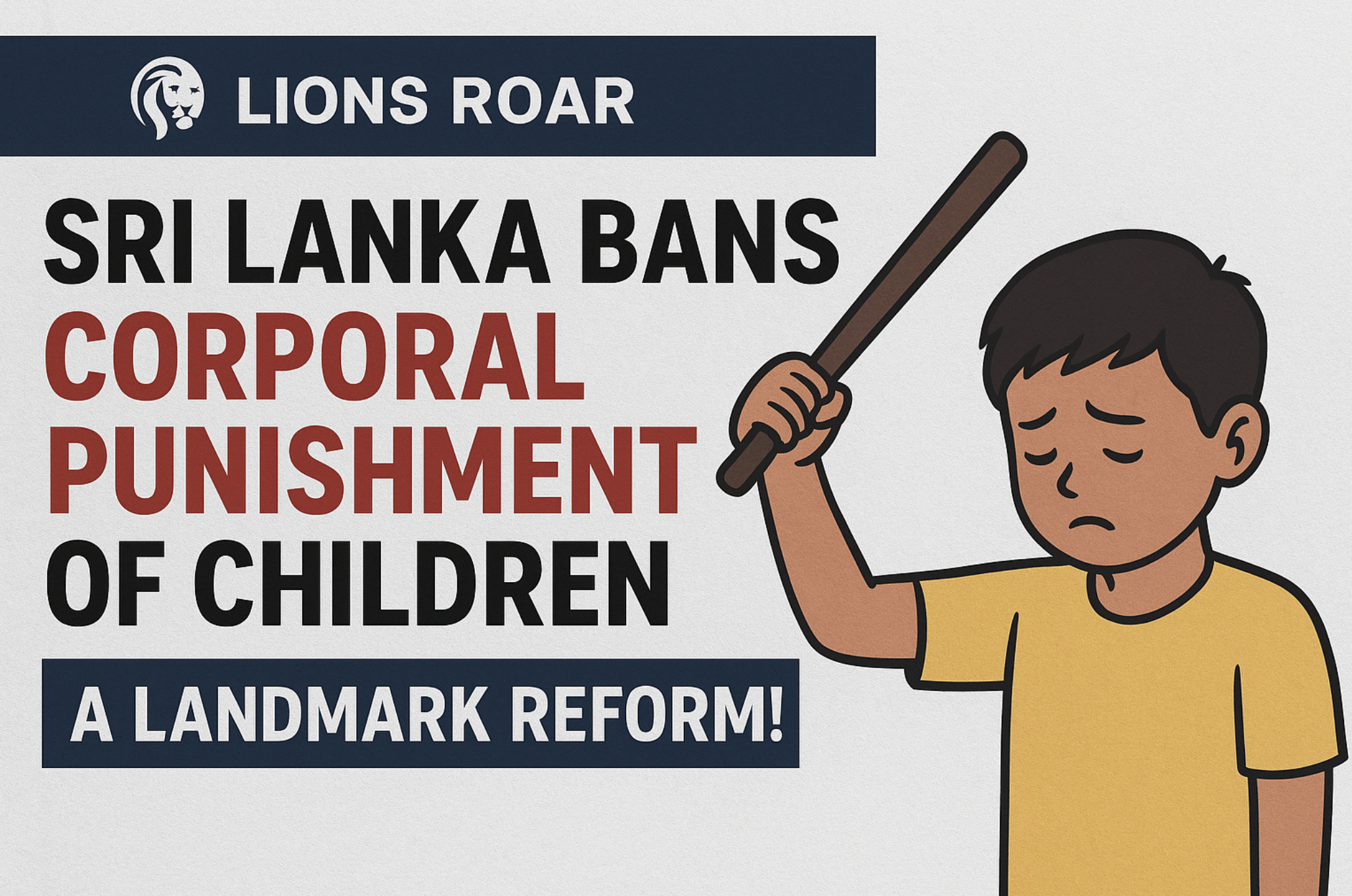
Sri Lanka’s New Stance on Corporal Punishment: A Landmark Move in Child Protection
By Lions Roar News Desk
Introduction
Sri Lanka has taken another step toward reshaping its social and legal framework for child protection. The government has amended the laws relating to corporal punishment of children, marking a milestone in its ongoing commitment to uphold child rights and reduce the normalization of violence in society.
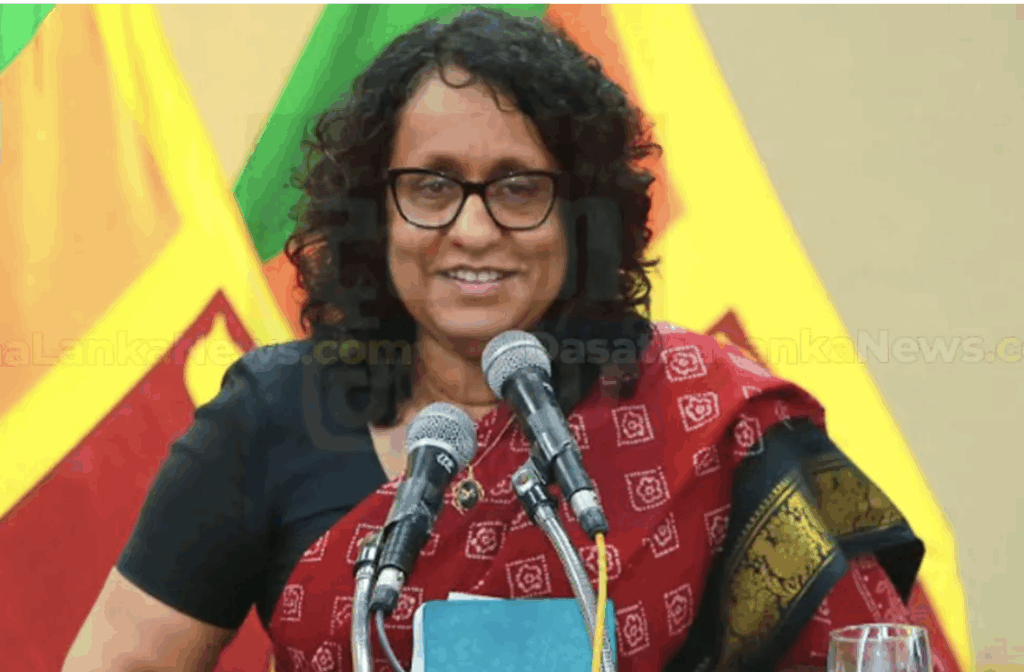
The new law—clarified by the Minister of Higher Education and Vocational Training, Harini Amarasuriya—has sparked widespread discussion. While some initially feared that the amendment was aimed specifically at schools and teachers, the minister stressed that the law is not designed to penalize educators. Instead, it seeks to protect all children in every sphere of life.
The amendment, which directly addresses both physical and psychological punishment, reflects global child protection standards and Sri Lanka’s own recognition of the long-lasting harm caused by abusive discipline.
What the Amendment States
The amended law clearly prohibits corporal punishment and psychological abuse of children in all contexts, expanding its scope far beyond the schoolyard. It covers children at home, in foster care, in state institutions, in detention facilities, and in situations where they are otherwise vulnerable to abuse.
For decades, corporal punishment has been widely tolerated in Sri Lanka, especially in schools, where teachers were often seen as having the right to discipline children physically. But the amendment clarifies that discipline and order must be maintained without violence, humiliation, or psychological harm.
Crucially, the law does not outlaw discipline itself. Parents, teachers, and guardians are still expected to guide and correct children—but through non-violent methods that encourage learning, respect, and responsibility.
Why This Amendment Was Introduced
The roots of this reform lie in a long history of both domestic concern and international pressure.
- Global Commitments:
Sri Lanka is a signatory to the United Nations Convention on the Rights of the Child (CRC), which obligates states to protect children from “all forms of physical or mental violence.” Periodic reviews of Sri Lanka’s progress by UN bodies consistently highlighted corporal punishment as a major area needing reform. - Psychological Research:
Over decades, research has shown that physical punishment does not improve behaviour long-term. Instead, it fosters fear, aggression, and even intergenerational cycles of violence. Studies also revealed that children subjected to humiliation or verbal abuse often carry deep emotional scars into adulthood. - Domestic Advocacy:
Sri Lankan child protection groups, educators, and psychologists have campaigned for years to end corporal punishment, citing tragic incidents where excessive discipline led to serious injuries and even deaths. - Cultural Shifts:
Acknowledging that violence is deeply ingrained as a tool of control in many households, workplaces, and institutions, the government framed this amendment as part of a larger cultural reform project—an effort to redefine discipline without harm.
Minister Harini Amarasuriya’s Declaration
In unveiling the amendment, Minister Harini Amarasuriya was clear in her messaging:
- Not About Targeting Teachers:
The minister emphasized that this is not a campaign to punish or intimidate school staff. Teachers, she said, are partners in raising children, not adversaries. The amendment is not meant to remove teachers’ authority but to redefine how authority is exercised responsibly. - About All Children:
Amarasuriya stressed that the law extends beyond classrooms. It is equally about street children, children in police custody, institutionalized children, and those in care homes. In other words, no child should be subjected to violence in any setting. - On Discipline:
She acknowledged the importance of discipline in education and family life, but insisted that “discipline must not come at the cost of dignity.” She urged teachers and parents to adopt positive discipline strategies, including counselling, restorative practices, and guided behaviour correction. - A Broader Cultural Challenge:
In perhaps her strongest remark, the minister said that Sri Lankan society has long normalized violence as a way to resolve conflict. From homes and schools to workplaces and even religious spaces, the cycle of control through fear is pervasive. Breaking this cycle is essential not only for child protection but also for building a more peaceful and just society.
Significant Social Implications
1. For Schools and Teachers
The amendment challenges schools to rethink classroom management. Traditional methods—ranging from caning to verbal humiliation—are now legally and ethically unacceptable. Instead, schools must implement training and policies on positive discipline techniques.
While some teachers fear they may lose control of classrooms, evidence from other countries shows that violence-free education environments often lead to better student performance, stronger teacher-student relationships, and lower dropout rates.
2. For Parents and Families
The reform also addresses the home, where corporal punishment remains common. Parents who grew up with “the rod” often see it as normal, but under the new legal framework, such practices are not only discouraged but could lead to legal consequences. The law sends a strong message: love must not be expressed through harm.
3. For Institutions
Children in foster care, orphanages, and detention centres are among the most vulnerable. The amendment ensures that state accountability extends to these spaces, making sure children are not silenced victims of unchecked abuse.
4. For Society at Large
Ending corporal punishment is not just about protecting children—it is about reshaping a culture. If society accepts violence against children, it indirectly legitimizes violence in other contexts—domestic abuse, workplace harassment, and even political conflict. This law represents an effort to break that cultural acceptance of violence.
Related Concerns: School Governance and Corruption
While the corporal punishment debate took centre stage, another related issue was raised by Ranga Dissanayake, Director General of the Bribery Commission. He highlighted the financial irregularities in schools, including principals collecting money from parents under various labels—school development funds, admissions fees, and other unofficial contributions.
Dissanayake warned that such practices, while normalized, sometimes amount to corruption and exploitation. He called for a transparent, regulated system to prevent abuse and restore public trust.
This parallel discussion underscores a deeper truth: child protection cannot be seen in isolation. From financial exploitation to physical abuse, the vulnerabilities of children often intersect with systemic failures in governance and accountability.
International Perspective
Many countries have already outlawed corporal punishment in schools and homes. In Sweden, for instance, the ban dates back to 1979, and studies show significant reductions in child abuse cases since then. New Zealand, too, banned smacking in 2007, sparking heated debate but ultimately creating a safer environment for children.
Sri Lanka’s amendment now aligns it with a growing global movement. While cultural resistance remains strong, international evidence suggests that once societies move beyond corporal punishment, they rarely turn back.
Challenges Ahead
- Enforcement:
Passing a law is easier than implementing it. Teachers, parents, and institutions will need training and resources to adopt alternative discipline methods. - Public Perception:
Resistance is expected, especially from those who see corporal punishment as part of tradition. Public education campaigns will be critical. - Monitoring:
Mechanisms must be established to ensure compliance, especially in rural schools and state institutions where oversight is weak. - Balancing Authority:
Teachers and parents worry about losing authority. The government must ensure that discipline tools are provided, so authority is maintained without resorting to violence.
Conclusion
The amendment to Sri Lanka’s corporal punishment laws marks a historic moment in the country’s child protection journey. By moving away from fear-based discipline and embracing respect-based guidance, Sri Lanka is signalling its readiness to break cycles of violence that have plagued its homes, schools, and institutions for generations.
Minister Harini Amarasuriya’s declaration makes it clear: this is not an attack on teachers or parents, but a recognition that children—all children—deserve dignity, safety, and love.
As Sri Lanka navigates this cultural transformation, the challenge will not only be legal compliance but also winning hearts and minds. If successful, the reform could help raise a generation of children who grow up free from violence—and who, in turn, help build a more peaceful and just society.