Edge-of-the-seat thriller in Dubai as India ousts Pakistan to lift ninth Asia Cup — but overshadowed by political drama
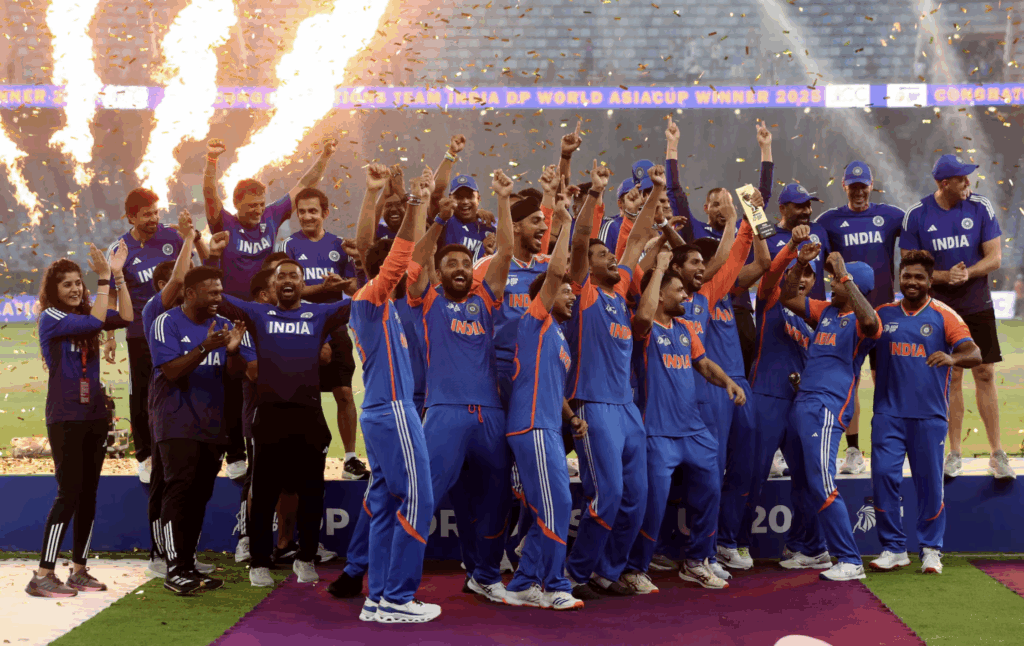
Dubai, 28 September 2025 — In what will be remembered as one of the most dramatic finals in Asia Cup history, India edged past Pakistan by 5 wickets with just two balls to spare to win the 2025 Asia Cup in Dubai. But the contest’s fairytale finish was tinged with controversy, tension and spectacle — enough to draw global headlines beyond just the cricket.
A final for the ages
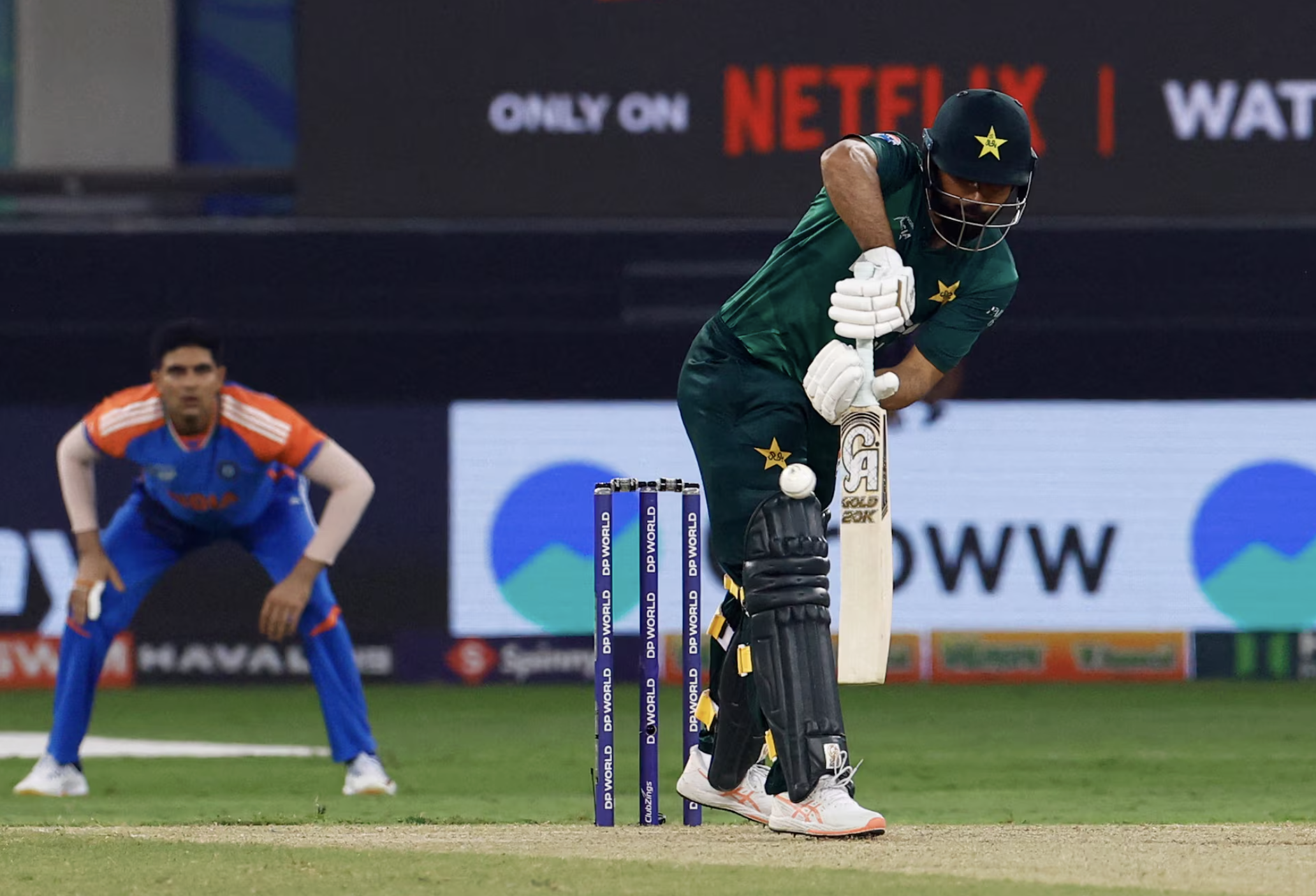
The target set by Pakistan — 147 runs — seemed modest at first glance. But Pakistan’s batting faltered spectacularly at the wrong time, losing their last nine wickets for just 33 runs, collapsing from a comfortable 113/1 to all out in 19.1 overs.
India’s chase, however, began painfully. Three top batters — Abhishek Sharma (5), Shubman Gill (12), and skipper Suryakumar Yadav (1) — fell before the score reached 20, leaving India gasping at 20/3.
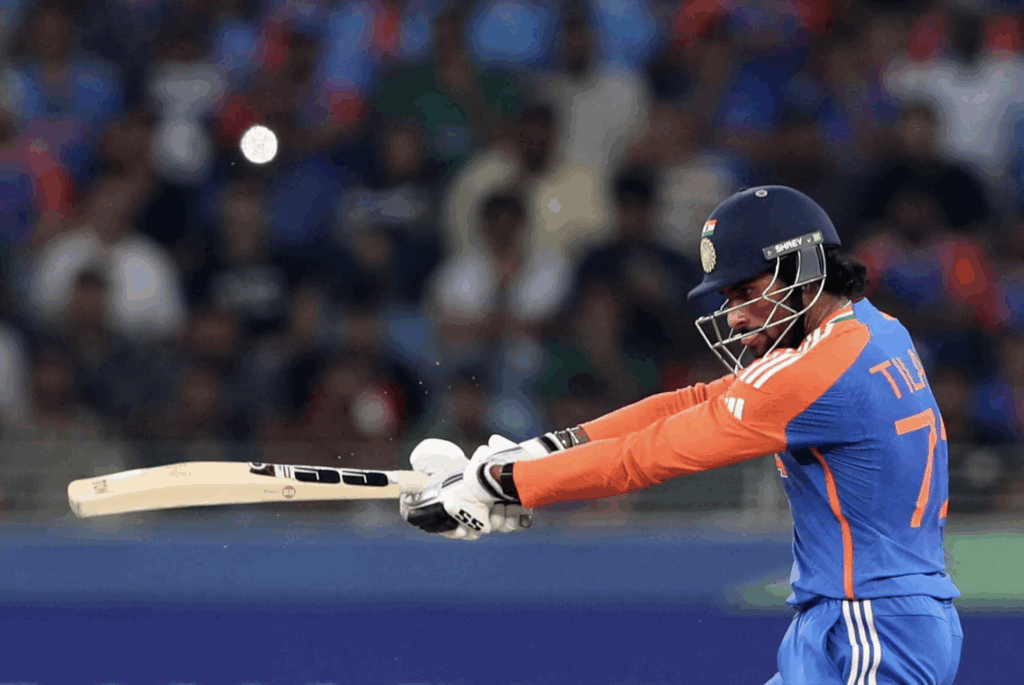
Enter Tilak Varma. He steadied the chase with a cool, unbeaten 69 off 53 balls, mixing calculated defense and timely aggression. In concert with Shivam Dube’s 33 off 22, he forged a crucial 60-run stand for the fifth wicket that steadied India’s march to the target.
The finish came in dramatic fashion: needing just two runs off the last over bowled by Haris Rauf, Varma struck a six early in the over to ease the pressure. Then Rinku Singh, who had only ever faced one ball in the entire tournament, dispatched the next delivery for a four — sealing victory with two deliveries to spare.
Thus, India not only retained the Asia Cup but extended their tally to nine overall.
The bowlers’ storm
If the batting collapse by Pakistan caught many by surprise, India’s bowlers deserve full credit for turning the match. Kuldeep Yadav was the torrent that broke the dam — finishing with 4 for 30 in his four overs. He flattened Pakistan’s top and middle order at critical junctures, including a wicket in the 17th over which swung the momentum.
He wasn’t alone. Varun Chakravarthy, Axar Patel, and Jasprit Bumrah took two wickets apiece, combining to hemming in the Pakistan innings and forcing risky shots.
Pakistan’s innings actually held promise early, with Sahibzada Farhan (57) and Fakhar Zaman (46) putting together a brisk 84-run opening stand. But once the spinners kicked in, the chase lost its grip.
More than cricket — politics and protocol
It’s not just the on-field contest that won international attention. The final was deeply influenced by geopolitical and symbolic gestures, which many saw as an extension of tensions off the pitch.
No handshakes, no trophy
Before the match, at the toss, no handshake was exchanged between the captains. After the game, the customary handshake between the two teams was also shelved.
The drama peaked when the Indian team refused to accept the trophy and winners’ medals from Mohsin Naqvi, the Pakistan Interior Minister and President of the Asian Cricket Council (ACC). The presentation ceremony was delayed and then shortened, reportedly at India’s insistence.
An ACC official later announced that “the Indian team will not be collecting their awards tonight.
Instead, Indian players collected prize cheques privately without formally receiving the trophy. Amid the drama, captain Suryakumar Yadav and his teammates celebrated by miming lifting an “invisible cup.”
This was not the first such symbolic snub: during earlier India-Pakistan matches in the tournament, India had also refused to shake hands after games.
The refusal to accept the trophy from Naqvi, in particular, is seen as a pointed political statement. Many interpreted it as a protest against the deepening tensions between the two countries, especially following conflict and allegations earlier this year.
The “plane crash” gesture
One moment that lit up social media and drew international commentary came from Jasprit Bumrah. After dismissing Haris Rauf with a sharp yorker, Bumrah performed a dramatic “plane crash” gesture — mimicking an aircraft falling. Viewers interpreted this as a retort to earlier showboating by Rauf, who had made an airplane gesture in a previous match.
While some saw it as provocative, others viewed it as spirited gamesmanship in a heated rivalry. In any case, the gesture became one of the tournament’s most talked-about moments.
Why did these incidents happen?
To understand why sport spilled into politics in Dubai, one must look beyond the boundary ropes.
Legacy of Indo-Pak rivalry
India–Pakistan cricket is never “just a match.” Decades of political tension, military standoffs, and unresolved disputes mean every contest becomes imbued with symbolism. India’s refusal to shake hands or accept the trophy from a Pakistani minister is seen by many as a continuation of those tensions into the sporting arena.
Strategic signaling
The refusal to accept the trophy wasn’t just a snub — it was an assertion of agency. By rejecting the presentation from Naqvi, India signalled that sporting protocol would not override its national sensitivities. There’s a strong sense among many Indian observers that sporting dignity and national pride must come first, especially when facing a traditional rival perceived by many as hostile.
Similarly, Bumrah’s gesture can be understood in that light — a symbolic “reply” in a conflict already freighted with non-sporting pressure.
The weight of expectations
With so much at stake — national pride, domestic politics, media narratives — players and boards alike are under enormous pressure. In such an atmosphere, small provocations can escalate, and symbolic acts can absorb outsized significance.
Global response and implications
International media widely covered the match not just for the contest, but for its political overtones. Many editorials commented that cricket diplomacy — long hoped to thaw icy relations — seems to be unraveling.
Cricketing boards and commentators raised alarms about the implications: when a sport becomes a proxy for geopolitical tension, the spirit of fair play and mutual respect can be jeopardised. Some analysts predicted further politicisation of bilateral series, with future presentation ceremonies potentially becoming flashpoints.
From a sporting perspective, though, the match will be celebrated for its drama, skill, and nerve. Tilak Varma’s composed innings, Kuldeep’s kindling of Pakistan’s collapse, and the last-over finish ensure its place among the Asia Cup classics.
What this means for India, Pakistan and Asian cricket
For India, this is both a continuation of dominance (now 9 Asia Cups) and a psychological victory. The manner in which they managed protocol, media optics, and performance under pressure speaks to a cricketing establishment that seeks not just wins but narrative control.
For Pakistan, the collapse in the final will sting — they lost control when wickets mattered most. It also underscores a worrying pattern: even with strong starts, they sometimes lack the temperament or composure to close out in high-pressure settings.
For Asia Cup and Asian cricket as a whole, the final raises fundamental questions. How much of sport remains sport when national identity and political conflict intrude? Can tournaments remain neutral grounds, or will every match risk becoming symbolic theater?
The final word
In the desert heat of Dubai, cricket produced a fittingly fiery spectacle. India won the match; Pakistan lost momentum. But what captured the world’s eye wasn’t just a six off the last over or a collapse of the tail — it was the subtle duel of protocol, symbolism, and national pride playing out in plain view.
As the dust settles, the 2025 Asia Cup final will be remembered not just for its result, but for how it transcended sport — and reminded us that in some contests, every boundary, wicket, gesture, and handshake carries a weight far heavier than the scoreboard.