Sri Lanka’s Foreign Investment Landscape in 2025: Challenges and Opportunities
By Lion’s Roar Economic reporter
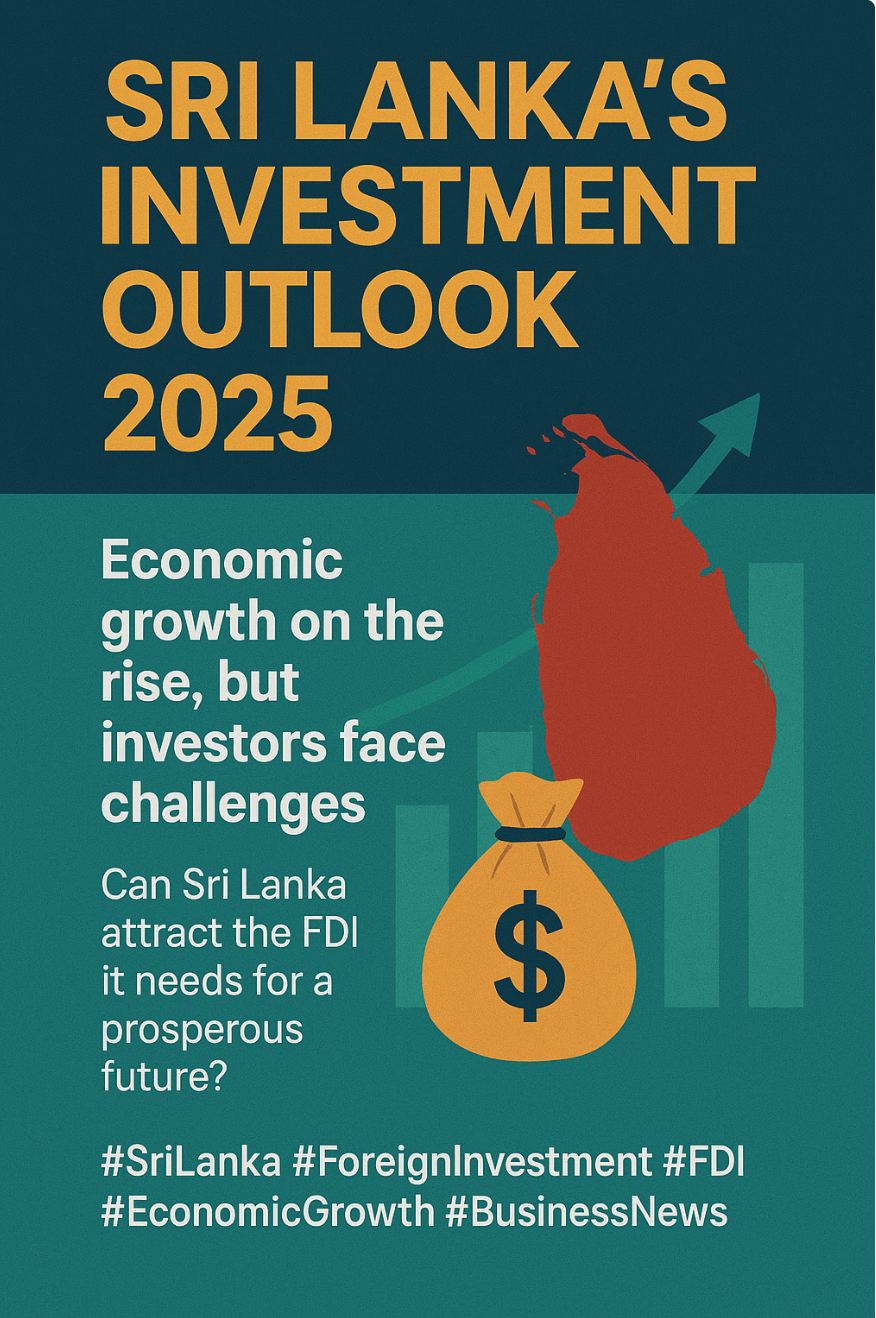
In 2025, Sri Lanka’s foreign investment landscape presents a complex picture. While the country has shown resilience with a 5% GDP growth in 2024, challenges persist, particularly concerning foreign direct investment (FDI). The U.S. Department of State’s 2025 Investment Climate Statement highlights several factors contributing to the cautious stance of potential investors.
Economic Growth Amidst Investment Hesitation
Sri Lanka’s economy demonstrated unexpected strength in 2024, with a 5% GDP growth surpassing expectations. This growth was attributed to various sectors, including agriculture, manufacturing, and services. However, the optimism surrounding this economic performance is tempered by underlying issues that continue to deter foreign investment.
Policy Inconsistencies and Regulatory Challenges
One of the primary concerns for investors is the inconsistency in Sri Lanka’s foreign investment policies. Frequent changes in regulations, especially with shifts in government, create an environment of uncertainty. Investors report difficulties in establishing consistent and open dialogues with the Board of Investment (BOI), the country’s principal investment promotion agency. Key impediments include unnecessary regulations, legal uncertainty, and opaque procurement processes, which hinder the ease of doing business in Sri Lanka.
Institutional Corruption and Governance Issues
Despite efforts to combat corruption, institutional challenges persist. High-level political interference and entrenched patronage networks continue to affect sectors such as construction, energy, and infrastructure. These issues undermine investor confidence, as businesses face the risk of arbitrary decisions and unfair practices. The lack of transparency and accountability in governance structures further exacerbates these concerns.
The Case of Adani Group’s Withdrawal
A notable example of investor apprehension is the withdrawal of India’s Adani Group from a $400 million renewable energy project in Sri Lanka’s Northern Province. The group’s decision was influenced by the government’s attempt to renegotiate previously agreed-upon contracts. This move raised concerns about the stability and reliability of Sri Lanka’s investment agreements, prompting other potential investors to reconsider their commitments.
Debt Restructuring and IMF Engagement
Sri Lanka’s financial stability has been bolstered by successful debt restructuring agreements, including a $2.5 billion deal with Japan and a $12.5 billion agreement with international bondholders. These efforts have paved the way for resumed infrastructure projects and improved relations with international creditors. Additionally, the country secured a $2.9 billion bailout from the International Monetary Fund (IMF), which has been instrumental in stabilizing the economy.
However, the IMF has emphasized the need for continued structural reforms to ensure sustainable economic growth. These reforms include addressing fiscal deficits, enhancing public sector efficiency, and improving governance standards. The government’s commitment to these reforms will be crucial in maintaining investor confidence and attracting long-term FDI.
Strategic Shifts and Sectoral Opportunities
In response to economic challenges, Sri Lanka’s leadership has initiated strategic shifts aimed at fostering a more investor-friendly environment. President Anura Kumara Dissanayake, a former leftist leader, has adopted a pro-market approach since taking office. His administration has implemented energy tariff reforms, dismantled state monopolies, and engaged in discussions with international partners to attract investment.
Notably, Sri Lanka is exploring opportunities in emerging sectors such as medical cannabis cultivation for oil exports. The government has negotiated with the IMF to allow tax incentives for investments exceeding $50 million in this sector. Additionally, discussions are underway with China’s Sinopec for a $3.7 billion oil refinery project in Hambantota, reflecting a growing interest in energy infrastructure development.
Regional Integration and Trade Partnerships
Sri Lanka’s aspirations to enhance its trade relations are evident in its interest in joining the Regional Comprehensive Economic Partnership (RCEP), the world’s largest trade bloc led by China. The country has expressed its intention to join RCEP, alongside Hong Kong, Chile, and Bangladesh. This move aims to strengthen economic ties with Asia-Pacific nations and diversify trade partnerships beyond traditional Western markets.
Conclusion
Sri Lanka’s foreign investment climate in 2025 is characterized by a juxtaposition of economic growth and persistent challenges. While the country has made strides in stabilizing its economy and initiating reforms, issues such as policy inconsistency, institutional corruption, and governance concerns continue to deter foreign investors. Addressing these challenges through transparent governance, consistent policies, and strategic sectoral development will be essential for Sri Lanka to realize its full investment potential and achieve sustainable economic growth.