Sri Lanka Inks UK Final Debt Restructure Agreements
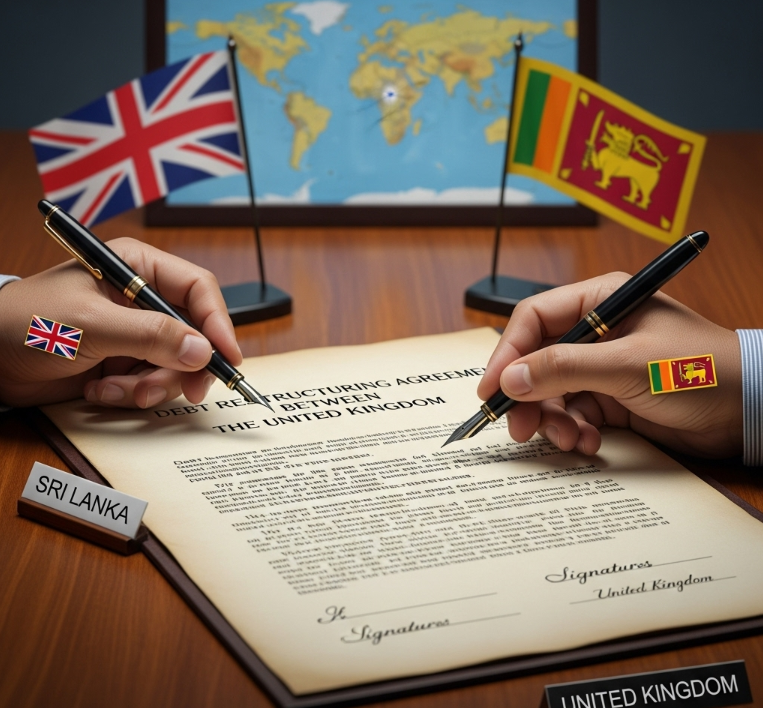
Sri Lanka has taken another significant step in its path toward economic recovery by signing final debt restructuring agreements with the United Kingdom. The agreement, finalized on 24 August 2025, covers approximately US $86 million and ¥582 million in bilateral debt owed by the island nation. Officials said the move reflects the strong commitment of both governments to resolve Sri Lanka’s external debt crisis following its first-ever sovereign default in 2022.
The deal with the UK comes under the framework of Sri Lanka’s International Monetary Fund (IMF)-backed program, which requires restructuring of outstanding obligations with bilateral creditors before the country can fully regain access to international capital markets. According to the Ministry of Finance in Colombo, the successful signing marks one of the concluding stages of agreements with members of the Paris Club of creditor nations, of which the UK is a key participant.
For Sri Lanka, the importance of this agreement is twofold. Firstly, it reduces immediate repayment pressure, giving the government fiscal space to focus on rebuilding the economy and supporting vulnerable communities still struggling with the aftermath of the 2022–23 crisis. Secondly, it strengthens international confidence in Sri Lanka’s commitment to meeting its obligations transparently and in line with global financial standards.
UK officials praised the deal as a “milestone” in supporting Sri Lanka’s efforts to achieve long-term debt sustainability. The agreement also demonstrates London’s willingness to continue its role as a partner in South Asia’s economic stability, with broader benefits for trade, investment, and regional security. Analysts note that debt relief pacts like this one can also unlock future development financing and encourage private investors to re-engage with Sri Lanka.
Economists stress, however, that while debt restructuring is essential, sustainable recovery will depend on deep structural reforms, effective governance, and investment in growth sectors. With agreements now secured with several major creditors, Sri Lanka is entering a critical phase—balancing fiscal discipline with social protection measures. The UK deal thus marks not just a financial arrangement but also a symbolic milestone in Sri Lanka’s gradual journey out of crisis and toward stability.