Sri Lanka and China’s Hubei Province Forge Deeper Ties Under Belt and Road Initiative
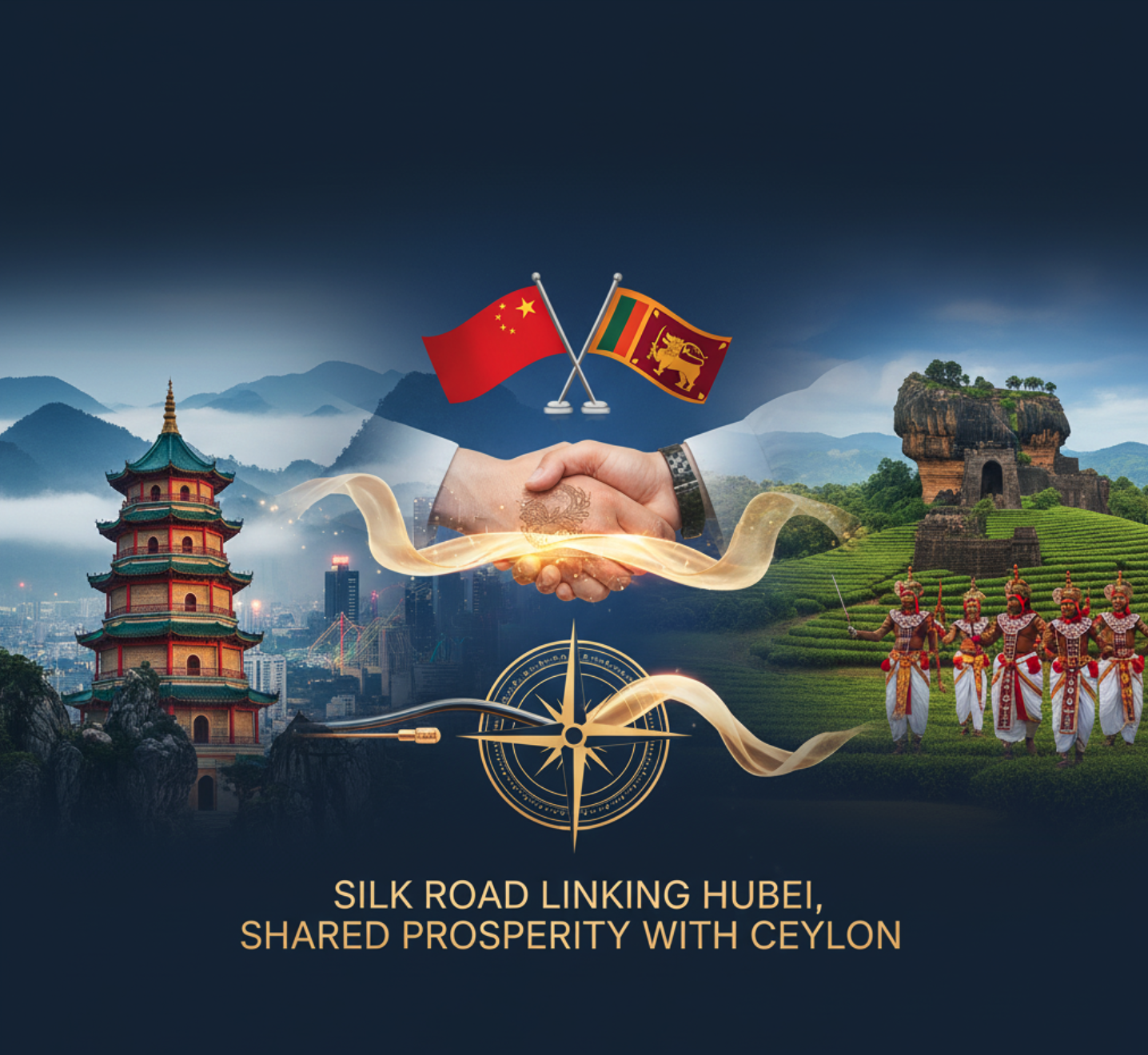
Colombo, Sri Lanka – Sri Lanka and China’s Hubei Province have taken another significant step in strengthening their long-standing bilateral relationship by launching a hybrid economic and cultural cooperation forum titled “Silk Road Linking Hubei, Shared Prosperity with Ceylon.” The initiative was unveiled during a high-level event attended by government officials, business leaders, and representatives from both nations, reaffirming the two countries’ commitment to advancing economic partnerships, cultural exchanges, and strategic cooperation within the framework of China’s Belt and Road Initiative (BRI).
The event highlighted both countries’ shared vision for sustainable development and mutual prosperity, while also symbolising Sri Lanka’s growing engagement with regional Chinese provinces beyond Beijing’s central administration.
A New Chapter in Bilateral Cooperation
The forum marked the launch of two key initiatives: the Overseas Service Station for Hubei Enterprises in Sri Lanka and the South Asia Branch of the Global Economic & Cultural Exchange Center. These institutions are designed to facilitate business collaboration, provide services for Chinese enterprises operating in Sri Lanka, and build a bridge for Sri Lankan companies seeking to expand into Chinese markets.
By establishing a permanent service hub in Colombo, Hubei aims to streamline business operations for its enterprises, encouraging greater Chinese investment in Sri Lanka’s key sectors such as agriculture, energy, tourism, and manufacturing. For Sri Lanka, the move opens new channels to access China’s vast consumer market and technological expertise.
Officials from both countries emphasised that the initiative is not just about trade, but about cultivating a long-term partnership rooted in cultural understanding, people-to-people exchanges, and shared prosperity.
Expanding Trade and Investment Opportunities
Among the most significant aspects of the agreements signed were commitments to deepen cooperation in tea exports, agricultural innovation, ecological research, and green development. Sri Lanka, renowned worldwide for its Ceylon tea, sees enormous potential in expanding its footprint in Hubei’s rapidly growing consumer market.
China has already emerged as one of the fastest-growing markets for Ceylon tea, and Hubei’s interest in forging direct trade links with Sri Lankan producers is expected to cut down intermediary costs and boost competitiveness.
Agriculture was another focal point, with both sides agreeing to explore collaboration in modern farming techniques, hybrid seed research, and sustainable irrigation systems. Experts noted that Hubei, known as one of China’s most agriculturally advanced provinces, could bring valuable technology transfer to Sri Lanka’s rural economy, helping local farmers improve yields and resilience against climate change.
In addition, the agreements covered ecological and environmental research, aligning with global efforts toward sustainability. With Sri Lanka’s biodiversity and Hubei’s technological innovation, the two countries aim to undertake joint research projects in conservation, ecological farming, and climate adaptation strategies.
Belt and Road Initiative: A Strategic Backdrop
The cooperation aligns seamlessly with China’s Belt and Road Initiative, under which Sri Lanka is already a key partner due to its strategic location along vital Indian Ocean shipping routes. Hubei’s engagement is seen as an extension of China’s provincial-level diplomacy under the BRI framework, bringing local governments and industries closer to international partners.
For Sri Lanka, strengthening ties with Hubei fits into its broader strategy of diversifying partnerships across multiple Chinese provinces rather than relying solely on central government projects. Analysts say this could reduce risks, broaden opportunities, and allow Sri Lanka to tap into a wider range of expertise, funding, and market access.
Cultural Exchange: Building Bridges Beyond Business
Cultural cooperation formed a central theme of the event, highlighting the shared historical ties between Sri Lanka and China that stretch back centuries through trade, Buddhism, and maritime exchanges along the ancient Silk Road.
As part of the forum, cultural performances and exhibitions showcased the artistic heritage of both regions, from traditional Sri Lankan Kandyan dance to Chinese folk music and calligraphy. Education officials also announced initiatives to encourage student exchange programs, language training, and joint cultural research projects.
The establishment of the South Asia Branch of the Global Economic & Cultural Exchange Center will play a pivotal role in coordinating these activities, acting as a hub for academic collaborations, tourism promotion, and cultural diplomacy.
Strategic Importance for Sri Lanka
Sri Lanka stands to benefit significantly from this deepening engagement with Hubei. At a time when the country is striving to rebuild its economy following recent financial challenges, securing new avenues of trade and investment is crucial.
Hubei’s strong industrial base, particularly in sectors such as biotechnology, pharmaceuticals, and renewable energy, complements Sri Lanka’s development priorities. The partnerships formed could lead to:
- New export markets for Sri Lankan products such as tea, spices, and fisheries.
- Technology transfer in agriculture, manufacturing, and energy.
- Job creation through Chinese investment in local projects.
- Tourism growth, as Sri Lanka positions itself as a preferred destination for Chinese travelers.
- Capacity building in education, research, and digital technology.
Voices from the Event
Speaking at the launch, senior Sri Lankan officials praised the initiative as a milestone in bilateral relations. They stressed that partnerships at the provincial level bring a more practical, business-oriented dimension to cooperation, ensuring that projects deliver tangible benefits to citizens.
Representatives from Hubei highlighted Sri Lanka’s role as a gateway to South Asia, noting its strategic geographic location and longstanding cultural ties with China. They expressed optimism that the Overseas Service Station will become a vital platform for Chinese businesses to integrate into Sri Lanka’s economic landscape.
Challenges and Considerations
While the forum has been welcomed as a positive development, experts caution that Sri Lanka must carefully balance its partnerships to ensure long-term sustainability. Critics often point to concerns about dependency on Chinese loans and infrastructure projects. However, by engaging with Hubei on trade, cultural exchange, and research collaborations, Sri Lanka is moving toward a more diversified and less debt-centric model of cooperation.
Transparency in agreements, fair opportunities for local businesses, and proper regulatory oversight will be essential to ensure that the benefits of the partnership are widely shared across Sri Lankan society.
Looking Ahead: Toward Shared Prosperity
The launch of “Silk Road Linking Hubei, Shared Prosperity with Ceylon” marks the beginning of a new era in Sri Lanka–China relations. With strong commitments to expand trade, foster cultural exchange, and pursue joint research, the cooperation offers the potential to transform sectors critical to Sri Lanka’s future growth.
As the world navigates shifting geopolitical and economic landscapes, Sri Lanka’s deepening partnership with Hubei underscores the importance of regional diplomacy and pragmatic collaboration. By linking local economies and cultures through shared initiatives, both countries have signaled their readiness to pursue a future of mutual prosperity and sustainable development.
For Sri Lanka, the challenge and opportunity now lie in leveraging this partnership not only for economic revival but also for creating a platform of cultural understanding and resilience that will endure for generations.