Some mayoral outcomes (major centres) – progress / early & likely winners
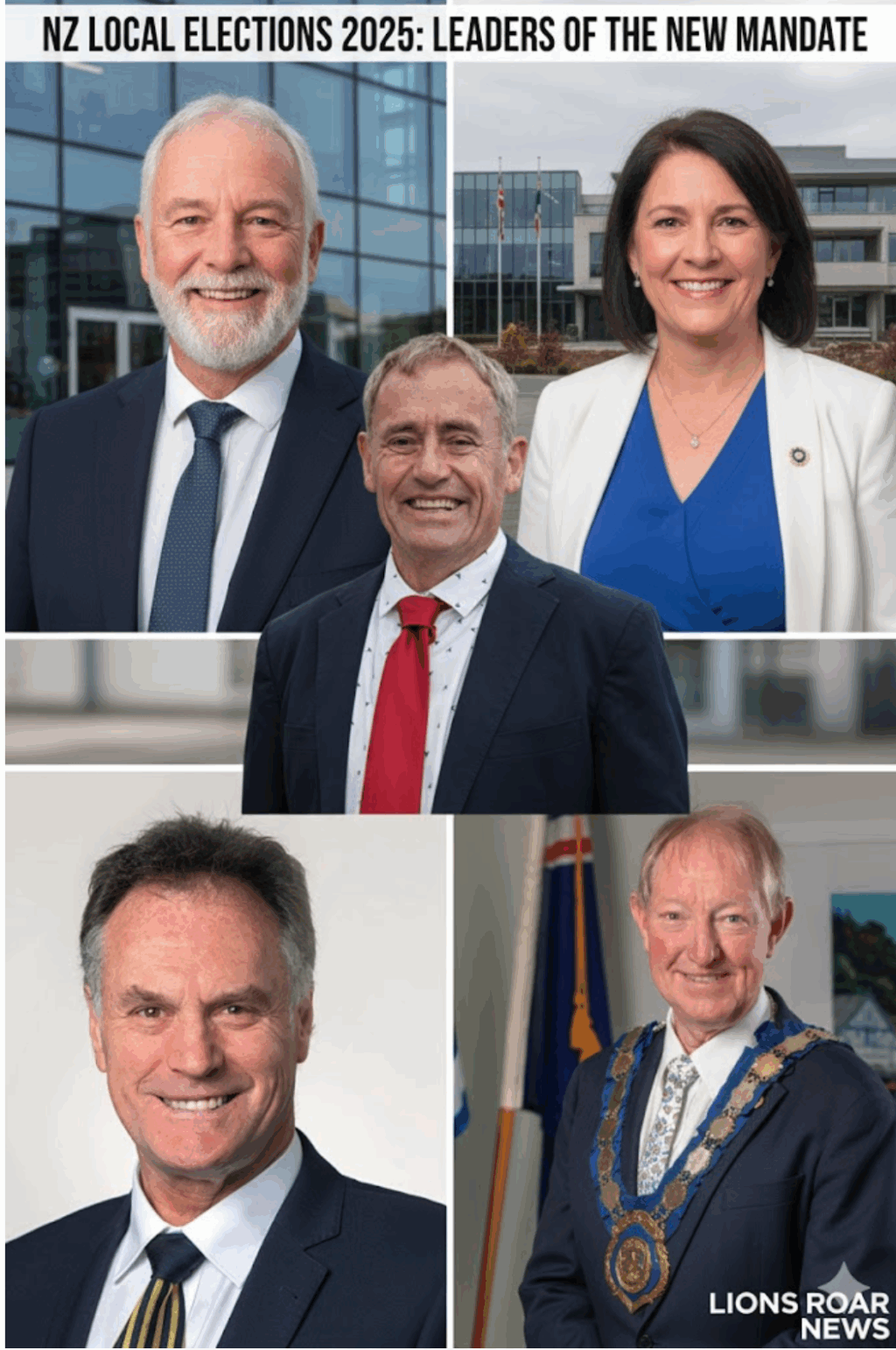
Here’s what is known or strongly likely so far (as of the latest live-updates) in some of the biggest cities / regions you asked about:
| Region / City | Likely / Reported Mayor | Incumbent or new? | What seems to explain their election / re-election or change |
|---|---|---|---|
| Auckland | Wayne Brown | Incumbent, re-elected (likely) | His name recognition, incumbency advantage, and campaign messaging (“Fix Auckland”) have been cited as strong assets. ➤ Local analysts noted that his name has clout in Auckland local politics. |
| Christchurch | Phil Mauger | Incumbent, likely re-elected | Mauger has already been mayor and ran again — continuity may have appealed to voters seeking stable leadership in the rebuild and infrastructure challenges. Early reports list him among re-elected mayors. |
| Nelson | Nick Smith | Incumbent, re-elected | Early media updates list Nelson’s Nick Smith among mayors re-elected in the 2025 local election. |
| Dunedin | Jules Radich | Incumbent, seeking re-election | He is among those named in live updates as running again and likely to retain office. |
Notes & caveats
- Wellington: The sitting mayor, Tory Whanau, is not standing for re-election in 2025. That means Wellington will have a new mayor, but as of now I have not found a definitive progress result naming a winner.
- Hamilton, Whangārei, Rotorua, Invercargill (and several other districts) — I have not seen credible published early results for those mayoralties at this stage in the sources I checked.
- Many “results” being cited in media are from progress/preliminary counts, not final certified results.
- In tight contests, special votes and late ballots can change outcomes.
Why the apparent re-elections and what changed where there was turnover
Here’s a deeper look at what seems to be driving incumbent success (or defeat) and what voters appear to reward in mayoral contests.
Why incumbents seem to be holding
- Name recognition and incumbency advantage
In Auckland, for example, political observers have noted that Wayne Brown’s name carries weight in local politics and gives him a leg up. Voters often default to the known candidate, especially where change is not demanded. - Perceived performance and stability
Where incumbents can point to infrastructure work, service delivery, or visible local improvements, that gives them credibility. In Christchurch, for instance, managing rebuild, roading, water infrastructure, and maintaining momentum in recovery likely worked in Mauger’s favour. - Avoiding “new risk” in tough times
Many local authorities are under financial stress, grappling with rates pressure, deferred maintenance, climate adaptation, flood risk, etc. Voters in such contexts may prefer continuity rather than experiment, unless a challenger makes a compelling case for change. - Campaign messaging and clarity
Incumbents often benefit if challengers split the alternative vote or run on overlapping platforms. In Auckland, multiple challengers diluted opposition to Brown. Also, Brown’s “Fix Auckland” brand has become familiar and easily communicable.
What happens when a new mayor is elected / or when incumbents step aside
- In Wellington, the fact that Tory Whanau chose not to run opens space for new leadership. The dynamics there may favour strong challengers, or people seen as consensus builders.
- In cases where an incumbent loses (if/when that happens in some districts), it may reflect voter dissatisfaction over rates rises, lack of responsiveness, or failure to deliver key projects or infrastructure.
- Sometimes turnover is driven by local scandals, shifting alliances, or rising candidates with stronger local grassroots backing.
What we don’t (yet) know: gaps to watch
- Final certified results for many mayoral races, especially outside the largest cities, are not yet published.
- In several councils, results remain too close for media to call with confidence until special votes are counted.
- For cities like Hamilton, Whangārei, Rotorua, Invercargill, I could not locate confirmed names in my review of available sources at this moment.
- Detailed post-election analysis (voter breakdowns, shifts by ward, turnout impact) will shed more light on why some mayors were returned and others replaced.