Rain Halts ‘Unstoppable’ Tongariro Blaze, But National Park Faces Long Road to Recovery
By Lions Roar News Investigative Team
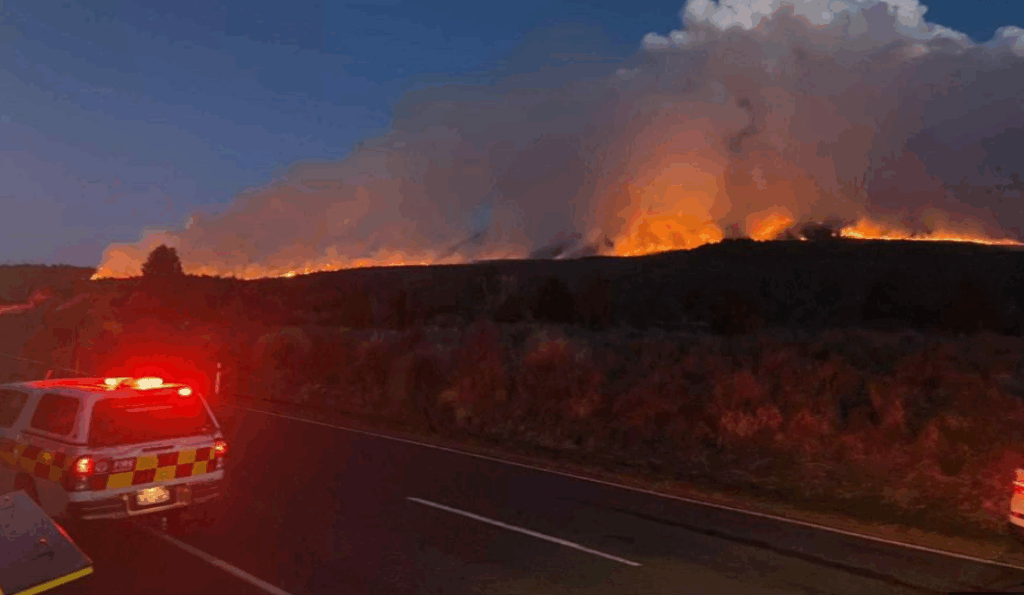
AUCKLAND, NZ — A massive wildfire that tore through thousands of hectares of New Zealand’s oldest and most sacred landscape, the Tongariro National Park, has finally been brought to a standstill, thanks to a sudden and significant downpour across the central North Island. Fire and Emergency New Zealand (FENZ) officials confirmed late on Monday that an afternoon observation flight revealed “no visible signs of fire,” marking a dramatic turnaround from the “extremely challenging” conditions faced just 24 hours earlier.
The blaze, which began on Saturday, November 8, rapidly consumed approximately 2,800 hectares (the size of over 3,900 rugby fields) of irreplaceable alpine scrub and tussock. The fire, which at its peak led to the evacuation of trampers, hikers, and residents from Whakapapa Village and surrounding areas, has now entered a critical new phase: containment and investigation.
District Commander Nigel Dravitzki described the rainfall as having a “significant impact” on suppressing the fierce blaze. “This is very good news for our crews who have been battling this on the ground and from the air with incredible fortitude,” Dravitzki stated. “We were facing extremely dry terrain and high fuel loading, meaning any wind at all made the fire almost impossible to contain. The rain has bought us the crucial time we needed to solidify our containment lines.”
The immediate focus for FENZ and Department of Conservation (DOC) teams is the relentless pursuit of hotspots. Specialist drone crews equipped with thermal imaging technology were deployed overnight across the perimeter of the vast fireground. Their mission is to identify residual heat sources deep within the peaty, dry ground, which could otherwise reignite the blaze should the weather turn dry again. FENZ officials have been cautious, stressing they are “planning for all contingencies” against a potential resurgence.
While the danger to human life has receded, the environmental cost is only beginning to be understood. DOC Central North Island Regional Director Damian Coutts expressed relief that key visitor assets, including the Mangatepopo Hut and its associated road end, were spared. However, he warned that the “impact on biodiversity is going to be significant.”
Tongariro National Park is a dual World Heritage Area, recognised for both its Māori cultural significance and its unique geological and ecological values. The destruction of vast swathes of native flora, including slow-growing alpine species, represents a substantial ecological blow. Teams will be deployed in the coming weeks to properly assess the extent of the damage to habitats for threatened native birds and insect life.
In response to the devastation and to allow the land to begin its healing process, the local iwi, Ngāti Hikairo ki Tongariro, has placed a rāhui over the area. This traditional ban, initially covering the famous Tongariro Alpine Crossing, will allow the maunga (mountain) and its pathways to “rest and recover,” underscoring the deep spiritual connection Māori have to the land.
The cause of the fire remains under investigation by specialist fire investigators. Authorities have noted that the blaze started near State Highway 47, leading to speculation that human activity, whether accidental or otherwise, may be responsible. The seriousness of the incident has been underlined by the involvement of Emergency Management and Recovery Minister Mark Mitchell and Minister of Conservation Tama Potaka, who met with officials on the ground.
Ruapehu District Mayor Weston Kirton had earlier urged tourists to treat the area as a “no-go zone,” an advisory that remains in place while containment efforts continue. The closure of key roads, including parts of State Highway 47 and 48, are likely to remain for the immediate future.
The collective sigh of relief felt across the country is palpable, but the focus now shifts from fighting the flames to a long-term strategy of recovery, remediation, and understanding how best to protect this natural treasure from future climate-change-driven fire risks.