Prince Andrew’s Fall from Grace: The Full Story Behind a Royal Scandal
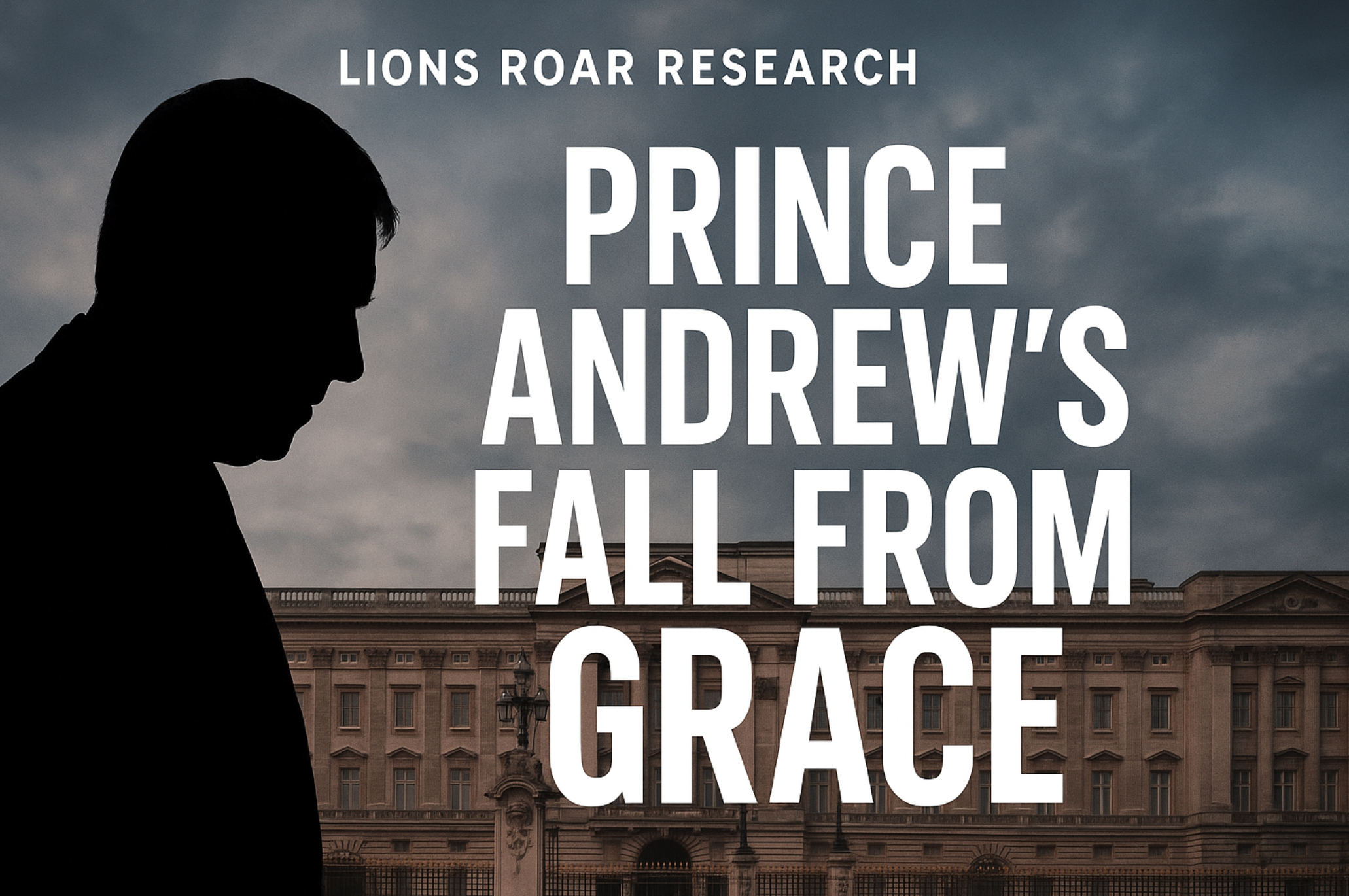
By Lions Roar Research Desk | October 18, 2025
For decades, Prince Andrew, the Duke of York, stood as one of the most recognizable faces of the British monarchy — a royal who served in the military, represented the Crown overseas, and was once seen as the Queen’s “favourite son.” But today, he stands at the centre of one of the most damaging scandals to ever rock the House of Windsor.
In a move that marks the end of an era, Prince Andrew has relinquished the use of all royal titles and honors following ongoing controversy surrounding his past associations and legal disputes. This step, while framed as voluntary, reflects the immense institutional pressure and public outrage that has built steadily over recent years.
A Sudden Announcement — and What It Means
Buckingham Palace confirmed this week that Prince Andrew will no longer use the title “Duke of York,” nor hold any of the ceremonial orders or royal appointments that once defined his status within the monarchy. The decision, reportedly taken after discussions with King Charles and senior royal advisers, is intended to protect the credibility of the institution amid continuing fallout from past scandals.
While Prince Andrew maintains his innocence, he acknowledged that the controversy surrounding him “distracts from the work of His Majesty and the Royal Family.” He has therefore agreed to permanently step back from all remaining royal roles, public or private, and retreat from public life.
This decision, though framed as personal, effectively represents a formal severing between the royal household and one of its most troubled members.
The Epstein Connection — Origins of a Scandal
The seeds of this crisis were planted years ago through Prince Andrew’s friendship with Jeffrey Epstein, a wealthy American financier later convicted of sex trafficking minors. The two men first met in the 1990s and maintained contact for years — even after Epstein’s first conviction.
It was this connection that led to explosive allegations from Virginia Giuffre, an American woman who claimed she was forced into sexual encounters with Prince Andrew when she was 17 years old. Giuffre said Epstein and his associate, Ghislaine Maxwell, arranged these meetings, a claim Andrew has repeatedly and emphatically denied.
In 2021, Giuffre filed a civil lawsuit in the United States, accusing the prince of sexual abuse. The case was settled out of court in early 2022 for an undisclosed sum, reportedly in the millions. While the settlement contained no admission of guilt, it effectively ended the possibility of a trial — but not the controversy.
Even after the settlement, questions continued to swirl. Why had a senior royal maintained such a close relationship with Epstein? And why had he visited Epstein’s home even after his conviction? For many observers, Andrew’s explanations — especially during a now-infamous BBC interview — only made matters worse.
The Interview That Changed Everything
In late 2019, Prince Andrew appeared on television to publicly address the allegations. What was intended as a chance to clear his name became a public relations disaster. His answers were evasive, his tone appeared dismissive of victims, and his explanations — including the now-mocked claim that he could not sweat — drew ridicule and disbelief.
The public backlash was immediate. Charities, military organizations, and business partners cut ties with him. Within days, Buckingham Palace announced that the prince would step back from all official duties “for the foreseeable future.”
The Queen, deeply protective of her son but mindful of the monarchy’s reputation, later stripped him of all royal patronages and military titles.
The Re-Emergence of Allegations
While the legal case appeared closed, the issue resurfaced this year after new revelations emerged through documents, testimonies, and renewed public interest. A book published by Virginia Giuffre before her death earlier this year reignited scrutiny of Andrew’s conduct, alleging fresh details about her interactions with Epstein’s circle and the prince’s involvement.
The memoir included deeply personal accounts that painted a disturbing picture of power, privilege, and exploitation. These revelations triggered widespread condemnation across Britain and the Commonwealth, fueling calls for further accountability.
Royal insiders reportedly recognized that the renewed coverage risked overshadowing the monarchy’s efforts to modernize under King Charles III. As a result, discussions began to permanently distance the institution from Prince Andrew.
Behind Closed Doors — The King’s Decision
Sources close to royal circles suggest that King Charles and Prince William led discussions about how to manage the crisis. The consensus was clear: continued association with Prince Andrew was untenable.
For the King, this was both a personal and constitutional dilemma. On one hand, Andrew remains his brother — but on the other, Charles is now the head of an institution whose survival depends on public trust.
After months of internal deliberation, the decision was made that Andrew would give up all remaining formal ties. Although the monarchy cannot legally strip him of his “Prince” title without parliamentary intervention, the symbolic effect of this decision is decisive.
Andrew is now expected to live a private life, away from royal residences and public engagements, with his security and financial arrangements reportedly under review.
Public Reaction — From Sympathy to Outrage
The public response has been mixed but overwhelmingly critical. Many see this as a necessary — though long overdue — step to safeguard the monarchy’s integrity. Others argue it does not go far enough, insisting that all titles and privileges, including those by birth, should be revoked.
Survivors’ groups and women’s rights advocates have applauded the move, viewing it as a victory for accountability in the face of power. Critics, however, point out that the settlement of the original case means the truth may never be fully established in court.
On social media, reactions have ranged from anger to mockery, with renewed calls for transparency about how much of Andrew’s legal expenses and security costs were borne by taxpayers.
Impact on the Royal Family
The scandal has cast a long shadow over the modern monarchy. King Charles, already contending with political pressures and debates about the Crown’s role in contemporary Britain, must now navigate the delicate task of restoring public confidence.
Prince William, widely regarded as the monarchy’s future, is said to be determined to prevent similar crises. Insiders claim he was instrumental in advising his father that Andrew’s continued presence in royal circles would be damaging.
For Queen Camilla and other senior royals, the focus has shifted toward rehabilitation of the royal image — emphasizing charity, duty, and reform. But the scars of this controversy will take years to heal.
The Broader Questions — Accountability and Privilege
Beyond the headlines, the Andrew scandal raises deeper questions about accountability within the British establishment. Can members of the royal family truly be held to the same legal and moral standards as ordinary citizens? Should hereditary privilege offer protection from the consequences of personal actions?
These are not merely symbolic issues. They touch on the core of Britain’s constitutional and moral identity. As the monarchy seeks to position itself as a modern, transparent institution, the handling of this scandal will define how it is remembered in future history.
What Lies Ahead
Prince Andrew’s retreat from public life may not end the controversy. Investigations into Epstein’s global network continue, and potential new revelations could further implicate those once connected to him. Meanwhile, the British Parliament could face pressure to consider legislation formally removing Andrew’s titles — an act that would be unprecedented in modern royal history.
For now, Andrew remains a private citizen, stripped of honors but still a royal by birth. Whether his story ends in quiet obscurity or further exposure depends on what future evidence — and public opinion — may reveal.
A Legacy of Lessons
The story of Prince Andrew is a cautionary tale about privilege, power, and the fragility of reputation. It illustrates how even the mightiest institutions can falter when transparency and accountability are ignored.
For the royal family, the lesson is clear: the survival of the monarchy in the 21st century depends not on titles or tradition, but on trust.
And for Prince Andrew himself, it marks the end of a royal life — and the beginning of an uncertain exile.