New High-Tech Weapon Deployed in War Against Invasive Yellow-Legged Hornet
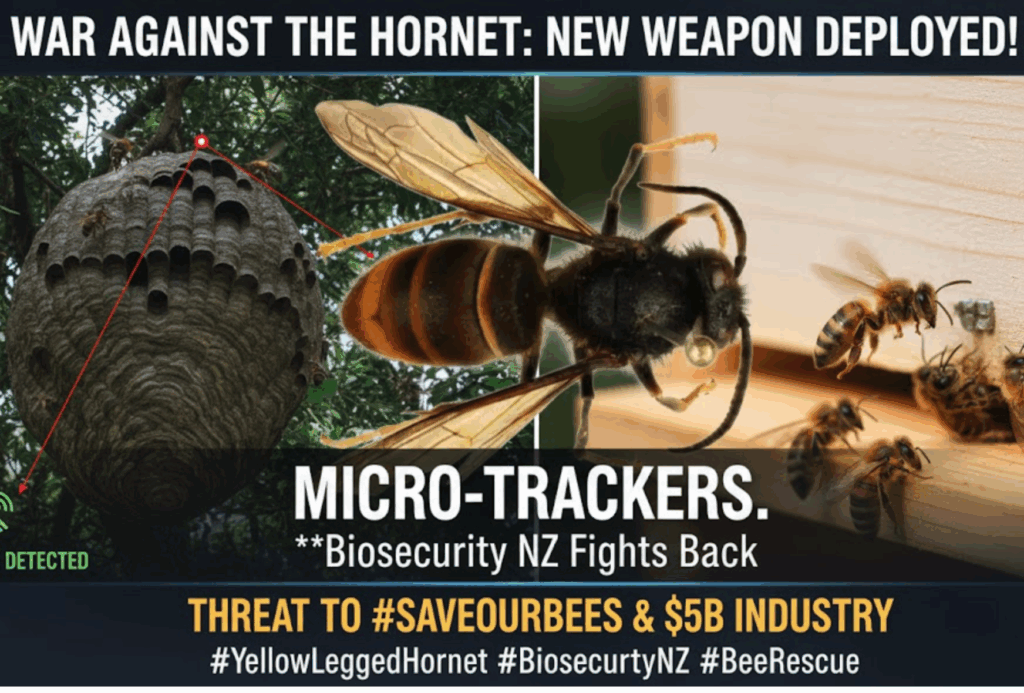
AUCKLAND, NEW ZEALAND — December 2, 2025 — Biosecurity New Zealand (BNZ) has deployed a new, sophisticated tracking technology imported from the Netherlands and proven in the United Kingdom, marking a major escalation in the effort to eradicate the aggressive yellow-legged hornet (Vespa velutina).
The new “weapon” is a micro-transmitter tracking device, a tiny piece of technology designed to be attached to worker or male hornets, allowing biosecurity teams to follow the insects directly back to their nests. This technology is a game-changer for control efforts, as the hornet often builds its large, round nests high in tree canopies, making them extremely difficult to locate through traditional visual searching.
🔍 How the High-Tech Hunt Works
The deployment of this advanced tracking system addresses the primary challenge of yellow-legged hornet eradication: finding the nest before it can produce new queens and males for the following season.
- The Tracker: The device is a small unit, sometimes weighing less than 160mg, with a short antenna. It is attached to a captured hornet, often in a matter of seconds.
- The Bait & Capture: Hornets are first lured to bait stations. Once a hornet is reliably feeding, it is captured, tagged with the micro-transmitter, and released.
- The Trace: The hornet, now a tiny flying beacon, returns to its nest. Biosecurity teams use handheld directional receivers or other equipment to follow the signal, allowing for the precise, rapid location of the nest. This can cut nest finding time from days of observation down to under an hour, as demonstrated in overseas trials.
- Destruction: Once the nest is located, it can be quickly and safely destroyed by injecting biocide, preventing further spread.
🐝 A Critical Threat to Pollinators
The yellow-legged hornet, which has been detected across Auckland’s North Shore, poses a significant and urgent threat to the country’s biodiversity and agricultural sector, particularly to the honeybee population. A single hornet can consume dozens of bees per day, and a large hornet colony can severely impact a honeybee hive, threatening the country’s $5 billion kiwifruit and other pollinator-dependent industries.
Alongside the new tracking technology, BNZ is also ramping up the use of toxic baiting agents like Vespex and intensifying ground searches, with over 600 traps deployed in a 5km radius around detection sites.
Biosecurity officials are urging the public to remain vigilant and continue reporting suspected sightings of the distinctive yellow-legged hornets to the exotic pest and disease hotline immediately, as citizen awareness remains the first line of defense in maximizing the chances for successful eradication.