International Space Station Crew Experiments with Advanced Crop Cultivation Techniques
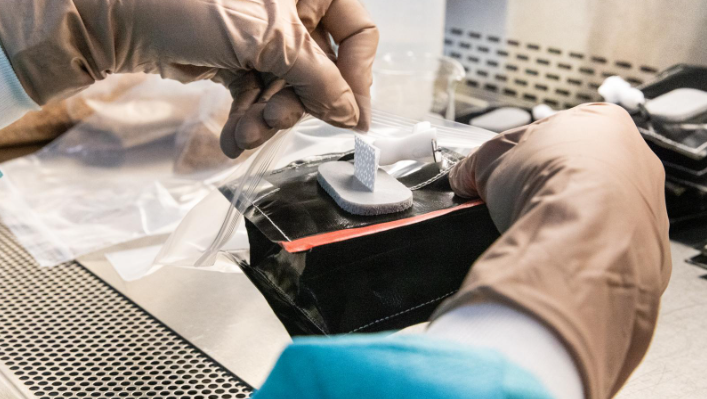
International Space Station – August 19, 2025 – The crew aboard the International Space Station (ISS) is currently engaged in a series of groundbreaking experiments focused on advanced crop cultivation techniques. These experiments are exploring innovative methods for sustainable food production in the unique microgravity environment of space, with potential applications for long-duration space missions and for enhancing agricultural practices on Earth.
The current research is centered around two primary systems: advanced hydroponics and aeroponics. The hydroponic systems involve growing plants in nutrient-rich water solutions without soil, while the aeroponic systems cultivate plants by spraying their roots with nutrient-laden mist. Both methods offer advantages in terms of water efficiency and the ability to grow crops in controlled environments, which are crucial for space-based agriculture.
Astronauts are meticulously monitoring the growth rates, nutrient uptake, and overall health of various plant species, including leafy greens, dwarf tomatoes, and even experimental varieties of grains. They are also testing different lighting conditions and nutrient formulations to optimize plant growth in the absence of gravity. The data collected from these experiments will provide valuable insights into the challenges and opportunities of space-based food production.
“The ability to grow our own food during long-duration space missions will be critical for future human exploration of the solar system,” explained Dr. Emily Carter, lead scientist for the ISS plant growth research program at NASA’s Johnson Space Center. “These experiments are not only helping us to understand how plants behave in microgravity but also paving the way for sustainable food systems that could benefit agriculture here on Earth, particularly in resource-limited environments.”
One of the key areas of investigation is the development of closed-loop systems that can recycle water and nutrients efficiently, minimizing waste and maximizing resource utilization. The researchers are also studying how microgravity affects plant physiology and genetics, which could lead to the development of more resilient and productive crop varieties for both space and terrestrial agriculture.
The experiments aboard the ISS are a collaborative effort involving space agencies and research institutions from around the world. The findings are being shared with the global scientific community to accelerate advancements in controlled-environment agriculture and contribute to food security on Earth and in space. The ongoing research highlights the crucial role of the ISS as a unique platform for scientific discovery and technological innovation.