Inner-City Shock: Auckland Residential Parking Permits Set for 60% Hike
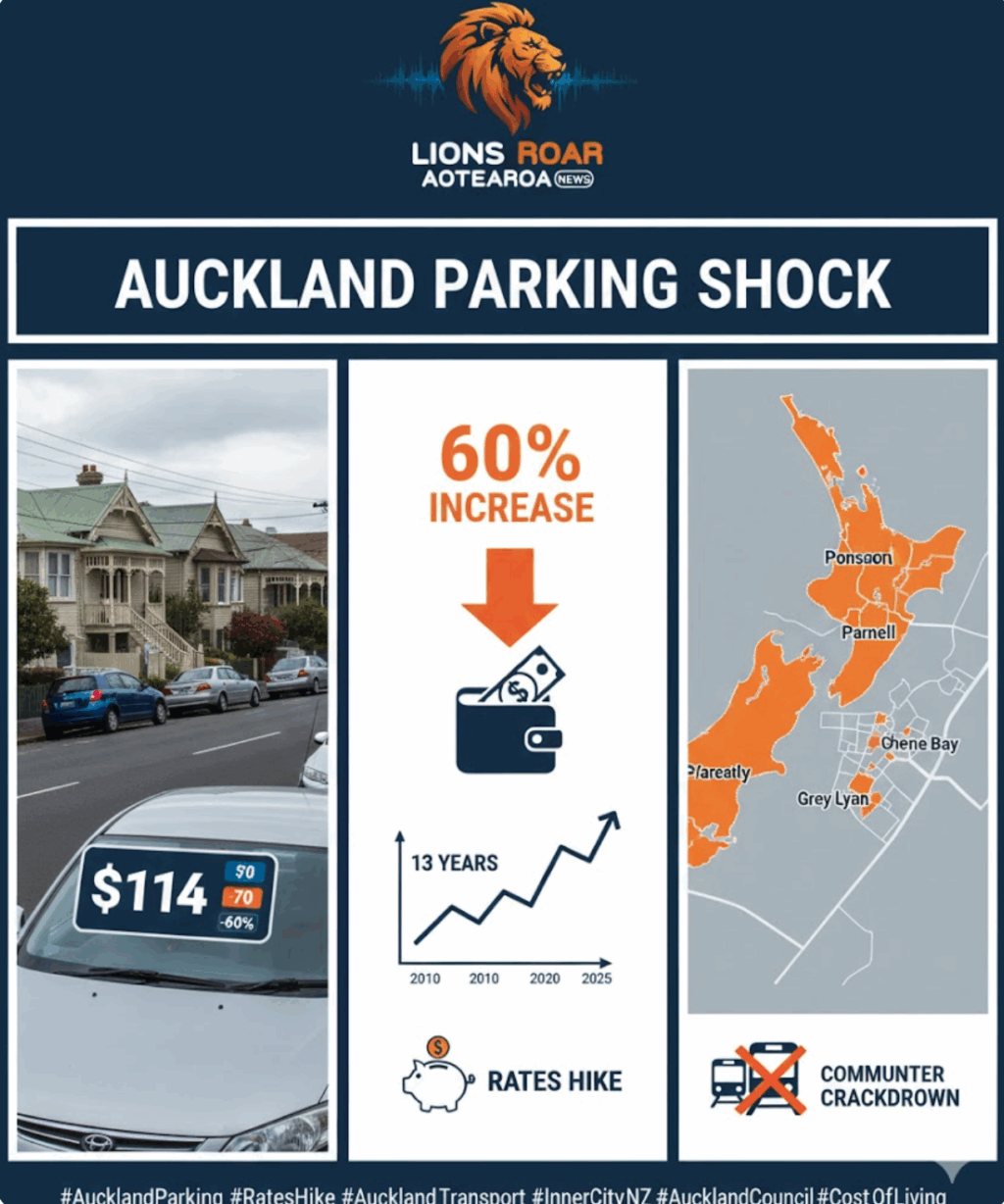
AUCKLAND, NZ – Inner-city Auckland residents are facing a significant financial shock, with a proposed 60% increase in the annual residential parking permit fee. The hike, which would see the cost jump from $70 to $114, is the first fee adjustment in 13 years and comes as part of Auckland Council’s challenging annual budget proposal.
Auckland Transport (AT) parking manager John Strawbridge confirmed the proposed increase, noting that the $70 fee has remained static since the parking permit system was first introduced to address commuter parking congestion in central suburbs.
The Proposed Permit Hike
The residential parking permit grants inner-city residents the right to park on the street in designated zones without facing a fine, offering a crucial amenity for homeowners and tenants in high-density areas.
The permit system currently covers approximately 9,300 permits across key suburbs, including Arch Hill, Freemans Bay, Grey Lynn, Ponsonby, Herne Bay, Parnell, Mt Eden, Eden Terrace, Grafton, Newmarket, Remuera, St Marys Bay, and Takapuna. The primary function of the zones is to protect resident parking from all-day commuters who attempt to park for free within a short bus or rail trip of the Central Business District (CBD).
AT’s proposal justifies the steep increase by citing the length of time since the last review and the rising administrative costs associated with maintaining and enforcing the extensive network of residential parking zones.
Part of a Wider Fiscal Squeeze
The proposed parking fee increase is not an isolated event; it is directly linked to the wider fiscal challenges currently facing the Auckland Council group:
- Mayor Wayne Brown’s Rates Proposal: The hike follows Mayor Wayne Brown’s recent proposal for a 7.9% average residential rates increase for the next year. This is the largest rate rise since the formation of the ‘Super City’ in 2010. The Mayor has stated that the increase is primarily necessitated by the substantial operational costs of the newly built City Rail Link (CRL), a project he has both criticised for its budget blowouts and acknowledged as vital for future economic growth.
- Government Rate Cap Challenge: The Council’s financial maneuvering is further complicated by the Government’s announcement of a phased-in rates cap of 2% to 4% starting between 2027 and 2029. Mayor Brown has publicly criticised this national policy, arguing that imposing a cap ignores the real costs of necessary regional infrastructure like the CRL, potentially forcing the Council to increase other fees and charges (like the parking permits) to meet funding shortfalls.
Parking fees and permits are often considered a tool for managing demand and generating non-rate revenue, making them a likely target for increases when core rates revenue is under pressure or facing future limitations.
Community and Policy Context
The residential parking permit system has long been a source of public debate. While inner-city residents largely support the system for protecting their amenity, other submissions (from past consultations) have strongly opposed paying for parking on public streets, often labelling the system as a “money-making scheme.”
AT parking manager John Strawbridge has a long history with the Council’s parking strategy, having previously managed the Auckland Transport Operations Centre and been involved in addressing other parking compliance issues, such as mobility parking and commercial loading problems. His team’s focus remains on using pricing and restrictions to manage vehicle demand in line with the city’s strategic priorities, which include prioritizing rapid public transport and reducing inner-city congestion.
The large increase is likely to be met with strong opposition from the 9,300 permit holders and is set to be a key point of discussion as the Mayor’s Annual Plan proposal proceeds to the Council for consideration on December 15th, ahead of public consultation in early 2026.