Auckland Becomes Hub of the ‘Southern Link’ as China Eastern Launches ‘World’s Longest’ One-Stop Route
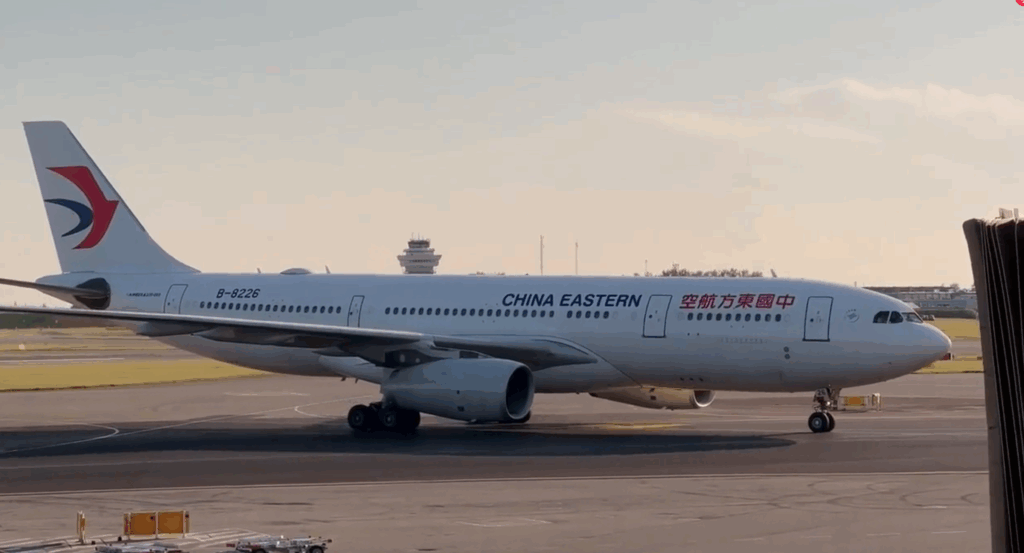
AUCKLAND, NZ – December 4, 2025 – Auckland officially cemented its new status as a strategic intercontinental bridge today, following the arrival of the inaugural China Eastern Airlines flight MU745 connecting Shanghai to Buenos Aires with a single stop in New Zealand.
The twice-weekly service establishes a long-sought-after “Southern Link,” forging a direct, one-stop connection between Asia and South America across the Pacific. The journey spans approximately 20,000 kilometres, making it one of the longest scheduled commercial passenger routes in the world, with the total travel time nearing 26 hours outbound and 29 hours inbound.
A Monumental Moment for New Zealand
The first Boeing 777-300ER twinjet landed at Auckland Airport at 6.10 pm, where it was met with a celebratory ceremony attended by key government and industry figures, including Immigration Minister Erica Stanford, Tourism and Hospitality Minister Louise Upston, and Auckland Mayor Wayne Brown.
“This is really a monumental moment,” Minister Stanford told the crowd, emphasizing the diplomatic and economic significance of the route.
Minister Upston highlighted the dual benefits of the new link: “It’s going to be great for hospitality and tourism, but also really important for trade. What we do want to see is more of our goods going to markets like South America, and for Auckland Airport to be seen as a hub.”
Auckland Airport Chief Executive Carrie Hurihanganui celebrated the new link, noting that the airport is now positioned as a strategic bridge and part of the world’s longest passenger route. She indicated the service is expected to inject an additional NZ$48 million in annual visitor spending into the New Zealand economy and addresses a significant gap in direct capacity to South America, which had been down 53% since 2020.
The decision by China Eastern to route the flight through Auckland was heavily influenced by the government’s move last month to streamline transit for Chinese nationals. Immigration Minister Stanford confirmed that Chinese passengers can now transit on a New Zealand Electronic Travel Authority (NZeTA), eliminating the need for a separate, more expensive, and time-consuming transit visa.
The ‘Gas and Go’ Logistics
The twice-weekly flights (departing Shanghai every Monday and Thursday) transit in Auckland for approximately two hours and 25 minutes. During this technical stop, the aircraft is cleaned, refuelled, and undergoes necessary checks, with all passengers disembarking temporarily. While some passengers join or leave in New Zealand (about one-third of passengers boarding in China are predicted to disembark in Auckland), others will continue the entire journey from Shanghai to the Argentine capital.
The return flight, MU746, departs Buenos Aires every Tuesday and Friday, making its brief Auckland stop before proceeding to Shanghai.
Mayor Brown Takes Credit and Revives Bed Tax Idea
Auckland Mayor Wayne Brown, who was among those boarding the inaugural flight to Buenos Aires, used the ceremony to both celebrate the new link and push his controversial domestic agenda.
Brown took direct credit for the route, attributing its success to the advocacy efforts of himself, Minister Todd McClay, and Auckland Airport in removing the restrictive transit visa for Chinese nationals. “Auckland sits at the crossroads of the people and trade of Asia-Pacific,” he stated.
In a politically charged move, the Mayor resurrected his proposal for a “bed tax” on tourists, a proposal that Prime Minister Christopher Luxon has repeatedly ruled out. Brown insisted that the new international traffic made the levy more justifiable than ever: “A bed levy makes even more sense now. Watch this come across the line.”
Global Geopolitical Context: Trump’s Aviation Stance
The launch of China Eastern’s major new intercontinental route occurs against a backdrop of increasing trade and aviation tension between China and the United States, led by the Donald Trump Administration.
While the Shanghai-Auckland-Buenos Aires route itself does not directly cross US airspace, the Trump Administration has been applying considerable pressure on Chinese airlines globally, specifically over their use of Russian airspace on routes connecting China and the US.
In the past few months, the US Department of Transportation (DOT) has proposed barring Chinese carriers, including China Eastern, from flying over Russia on US-bound passenger routes. The DOT argues that this practice creates an “unfair competitive advantage” for Chinese airlines, as US and European carriers have been banned from Russian airspace since 2022.
The new China Eastern service through New Zealand, an alternative “Southern Link” that entirely avoids both Russian and US airspace, highlights China’s strategy to diversify its global aviation network and reduce its vulnerability to political pressure and sanctions from Washington. While Donald Trump has not made a specific public statement about the Shanghai-Auckland-Buenos Aires route, his administration’s broad policy against Chinese overflights underscores the strategic value of non-aligned hubs like Auckland in the current geopolitical environment.
The new route, which restores a direct connection to Argentina not seen since 2020, is expected to significantly boost tourism, trade, and cultural exchange across the three regions, reinforcing Auckland’s role as a vital “Southern transit hub.”