Government Unveils ‘Super Ministry’: Housing, Transport, Environment to Merge in Bid for Integrated Growth
By Lions Roar News Political Correspondent
WELLINGTON, NZ – The Government has announced the creation of a massive new agency, the Ministry of Cities, Environment, Regions and Transport (MCERT), in a move it says will dismantle bureaucratic silos and accelerate its ambitious reform agenda across planning, infrastructure, and urban growth.
The new “super ministry,” which will be fully operational by July 2026, will merge four key central government functions:
- The Ministry for the Environment (MfE)
- The Ministry of Housing and Urban Development (HUD)
- The Ministry of Transport (MoT)
- Local government functions from the Department of Internal Affairs (DIA)
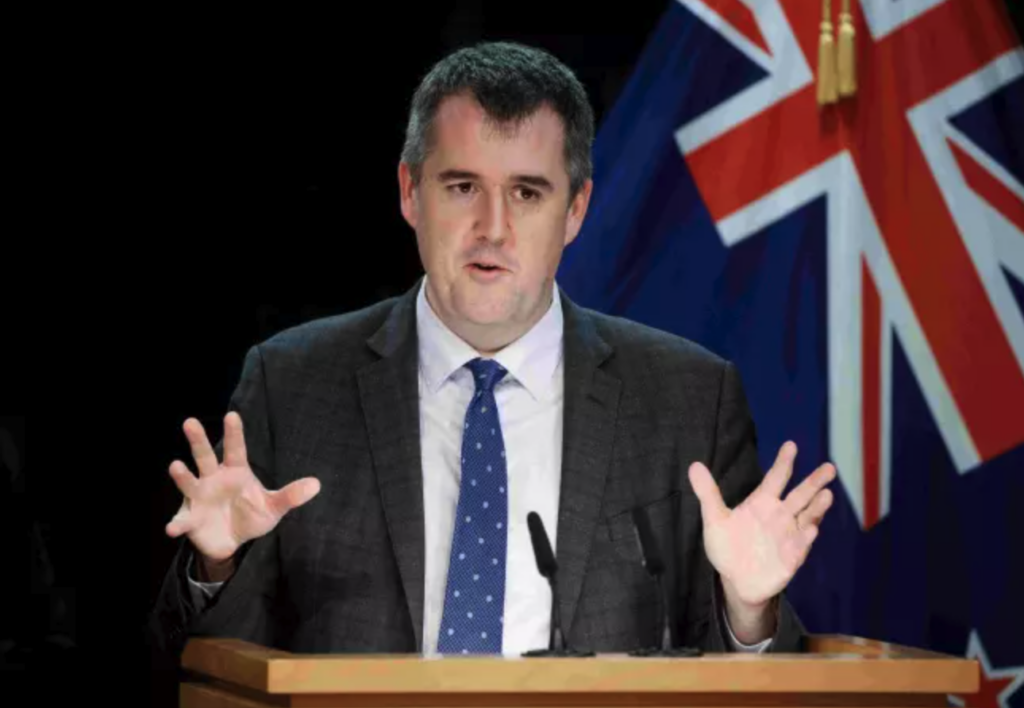
Housing, Transport, RMA Reform and Infrastructure Minister Chris Bishop, the lead minister championing the restructure, argued that the disconnected nature of these agencies has long frustrated attempts to solve New Zealand’s most pressing challenges.
🔨 Breaking the Silos for Housing and Infrastructure
Minister Bishop stated that the current system is “too fragmented and too uncoordinated,” leading to missed opportunities and slow progress on critical issues like housing affordability, infrastructure deficit, and climate change adaptation.
“For example, solving our housing crisis is impossible without fundamental planning reform, which is currently the responsibility of the Ministry for the Environment,” Minister Bishop said. “It is also impossible without reforms to infrastructure funding and financing, currently split across HUD, DIA and Transport.”
The establishment of MCERT is intended to create a single, integrated agency that combines all the key levers for economic growth and environmental stewardship: planning, land use, housing, transport, water, and the interface with local government. The Government believes this will lead to clearer coordination, more succinct advice, and, ultimately, better decision-making.
“The new agency will be the ‘one stop shop’ for local government and others to deal with on these complex challenges,” Minister Bishop added. He cited the Auckland City Rail Link (CRL) as an example where the “disconnected nature of central government policy advice” contributed to missed opportunities in land use change and infrastructure financing.
🎯 Focus on Reform and Efficiency
The creation of MCERT aligns directly with several major legislative reforms currently underway, including:
- Resource Management Act (RMA) Replacement: The two new bills—the Planning Bill and the Natural Environment Bill—aim to simplify the complex resource consenting process. MCERT will be responsible for implementing this new planning system.
- “Going for Housing Growth” Programme: This initiative requires councils to free up land for urban development and implement new infrastructure funding and financing methods, all of which will be coordinated by the new ministry.
- Transport Agenda: Including a renewed focus on transit-oriented development, congestion pricing, and the transition to electronic road user charges.
Public Services Minister Judith Collins supported the move, stating the new ministry is not intended as a “cost-cutting exercise” but that the Government does expect to see efficiencies in the medium to long term as functions are merged.
😟 Staff Uncertainty and Political Criticism
The announcement, however, has been met with immediate concern from public sector unions and criticism from the Opposition.
The Public Service Association (PSA) acknowledged that staff across the four affected agencies are “fearful about their job security and frustrated that this is being done right before Christmas.” The Public Service Commissioner has committed to working closely with the PSA, but the uncertainty for hundreds of dedicated public servants remains a major concern.
Meanwhile, the Labour Party immediately labelled the new agency a “mega-ministry” and an unnecessary layer of bureaucracy. Infrastructure spokesperson Kieran McAnulty argued that the lack of progress on housing and transport was due to the Government’s poor funding and policy decisions, not a fragmented public service.
“The Government is creating a new mega-ministry nobody asked for,” McAnulty stated, suggesting the merger would repeat the mistakes of the previous National-led government’s creation of the Ministry of Business, Innovation and Employment (MBIE) in 2012.
Environment Minister Penny Simmonds and Local Government and Climate Change Minister Simon Watts both stressed that the new structure would protect the environment and lift prosperity by providing integrated advice and clearer accountability.
A Chief Executive for the Ministry of Cities, Environment, Regions and Transport will be appointed in the first half of 2026, with the goal of being fully operational by July of that year to tackle the challenges of growth, infrastructure, and climate adaptation.