Total Mobility Cuts Hit Disabled and Elderly Hard: Higher Taxi Costs Loom Amid Funding Shake-Up
By Lions Roar News Social Affairs Desk
WELLINGTON, NZ – A significant cut to the Total Mobility scheme, which provides subsidised taxi fares for disabled and elderly New Zealanders, is set to impact thousands of vulnerable individuals, leading to higher transport costs and concerns about reduced independence and social participation.
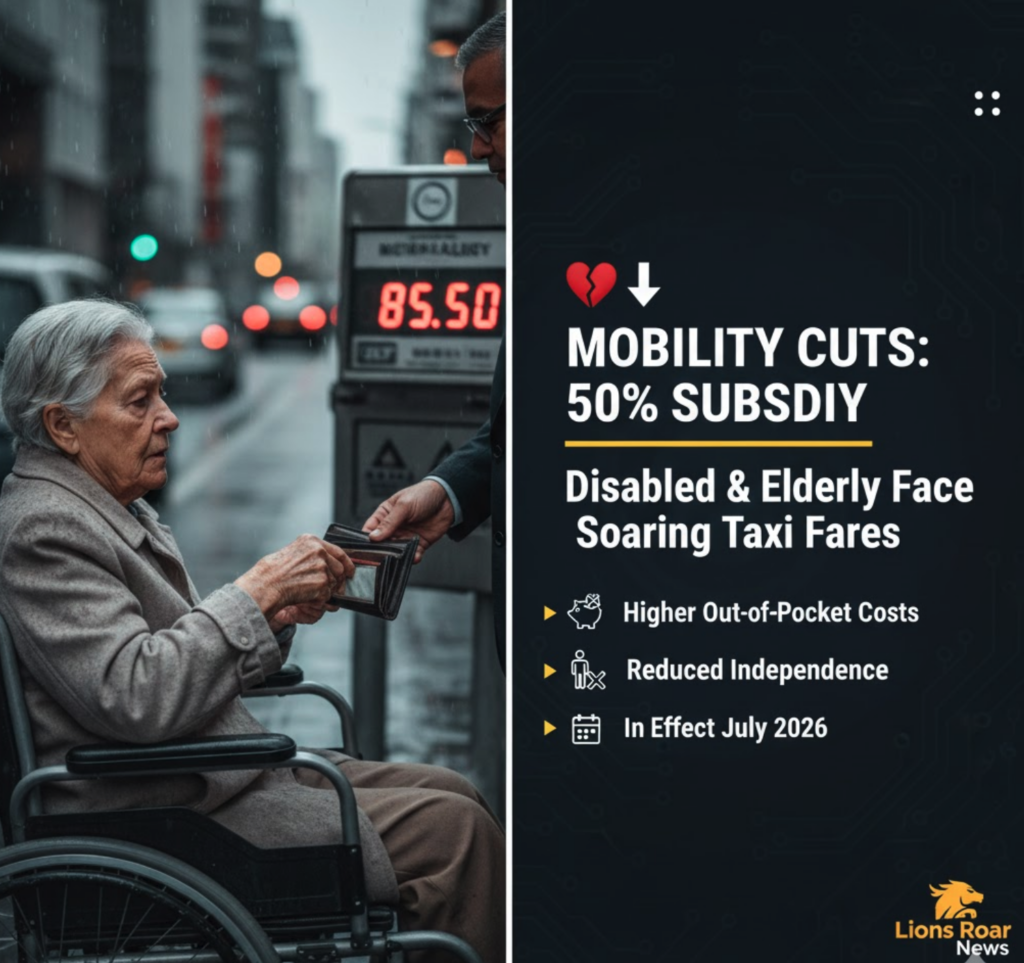
From July 1, 2026, the maximum subsidy for Total Mobility trips will be reduced from 75% to 50%. This change, announced by the Government, means that users will now be responsible for paying a larger portion of their taxi fares out of pocket.
💔 Impact on Vulnerable Communities
The Total Mobility scheme is a lifeline for approximately 50,000 New Zealanders who cannot use public transport due to disability or age-related mobility issues. It enables them to access essential services, medical appointments, social events, and employment, fostering independence and reducing isolation.
Disability advocates and users of the scheme are expressing deep concern over the immediate and long-term consequences of this funding cut.
Brenda Smith, a spokesperson for Disabled Persons Assembly NZ, stated:
“This isn’t just about a few extra dollars; it’s about the ability for disabled people to live full, independent lives. For many, Total Mobility is their only way to get around. This cut means they’ll have to choose between a doctor’s appointment, a social visit, or even buying groceries.”
Many users rely on the scheme for multiple trips each week. A reduction from 75% to 50% of the fare means a substantial increase in their weekly transport budget, which for those on fixed incomes or benefits, will be extremely challenging to absorb.
💰 The Rationale: Funding Constraints and Efficiency
The Government has justified the decision by citing the need to ensure the long-term sustainability and efficiency of the Total Mobility programme. While specific figures for the savings are yet to be fully detailed, it is understood that the move is part of a broader government effort to manage spending across various social services and re-prioritise departmental budgets.
Minister for Disability Issues, Sarah Davidson, acknowledged the impact on users but stressed the importance of ensuring the scheme could continue to serve those who need it most within fiscal constraints.
“We understand this will be a change for many users, and it was not a decision taken lightly,” Minister Davidson stated. “However, by adjusting the subsidy rate, we aim to ensure the Total Mobility scheme remains viable and accessible for the tens of thousands of New Zealanders who depend on it, now and into the future, while encouraging prudent use.”
🛣️ Alternative Solutions and Future Concerns
Concerns are also being raised about whether the reduction might inadvertently lead to increased pressure on other social services, such as home care support, if individuals become more isolated or miss essential appointments.
Advocates are calling for:
- Review of Subsidy Cap: Currently, the subsidy is capped at a maximum of $40 per trip, meaning users pay the remaining cost. With the 50% subsidy, trips over $80 will still only be subsidised by $40, making longer journeys disproportionately more expensive.
- Increased Public Transport Accessibility: A long-term solution involves making mainstream public transport fully accessible, reducing the reliance on schemes like Total Mobility. However, this is a significant infrastructure challenge that will take many years to achieve.
- Targeted Support: Calls are being made for the government to consider additional, targeted support for those with the highest needs or lowest incomes who will be most severely impacted by the change.
As the July 2026 implementation date approaches, disabled and elderly communities, along with their advocates, are gearing up to voice their concerns and seek reconsideration of a decision that threatens to significantly diminish the quality of life and independence for thousands across New Zealand.