UN Issues Stern Criticism of New Zealand’s Treatment of Māori — What It Means and Why the Stakes Are High
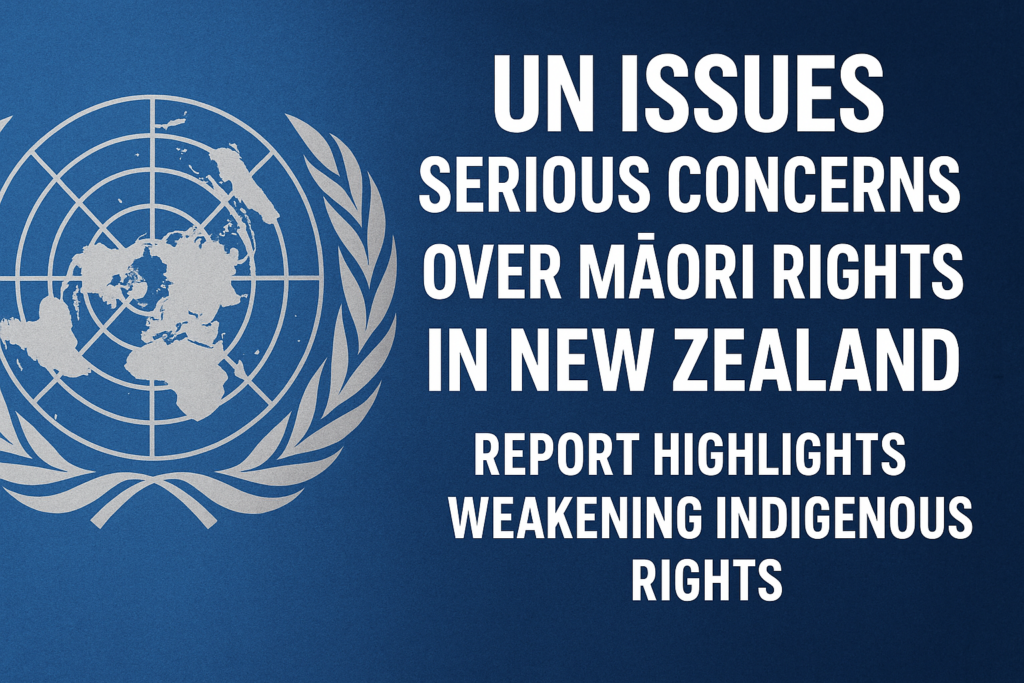
Wellington, Aotearoa — A major international spotlight has turned toward New Zealand this month, as the United Nations Committee on the Elimination of Racial Discrimination (CERD) released its most critical report ever on the country’s treatment of its Indigenous Māori population. The report — part of New Zealand’s regular eight-year review under the International Convention on the Elimination of All Forms of Racial Discrimination — raises urgent concerns about government policies that may weaken Māori rights, undermine Treaty obligations and reverse decades of progress toward racial equality. AOL+1
The findings have ignited vigorous debate across the nation, both within political circles and among iwi (tribes), legal experts, human rights advocates, educators, and everyday citizens. But what exactly did the UN say — and why does this matter so significantly for New Zealand’s future?
🔍 What CERD’s Report Says
The CERD report, released on 5 December 2025, acknowledged some positive efforts by New Zealand — including commendation for refugee welcome and certain human rights protections — but was decisively critical in its overall assessment of Māori rights and racial equality.
Among the key concerns were:
- Disestablishment of Māori-specific institutions, including the Māori Health Authority, and significant budget cuts to Māori services.
- Moves perceived as weakening the role of the Treaty of Waitangi (Te Tiriti o Waitangi) in law, education and public policy, which many view as central to ensuring Māori rights.
- Persistent disparities in education, health, housing and political representation for Māori, which the committee says indicate ongoing systemic inequalities.
- Concerns about racial discrimination in policing and disproportionate impacts on Māori and other groups.
- Inadequate mechanisms to implement UN human rights obligations, including the lack of a comprehensive national plan against racism. AOL+1
The report was described by Māori leaders as the “strongest critique of New Zealand ever issued by CERD” — marking a sharp departure from past reviews that generally acknowledged progress. Reddit
🧭 Context: What Led to This Moment
The UN report did not emerge in a vacuum. It follows years of policy changes and political shifts under the centre-right coalition government formed in late 2023, led by the National Party with partners ACT and New Zealand First. This administration has pursued reforms described by critics as rolling back or redefining many structures designed to uphold Māori institutional input and Treaty obligations. Wikipedia
Some of the most contentious developments include:
🔹 The disestablishment of Te Aka Whai Ora, the Māori Health Authority, a body created to oversee Māori health outcomes. Its removal in 2024 has been widely criticised for weakening targeted health strategies responding to persistent inequities. Te Ao Māori News
🔹 Budget cuts and restructuring in ministries and institutions focused on Māori development, ethnic communities and Pacific peoples, potentially limiting support and advocacy functions. AOL
🔹 Changes to education policy and legal obligations — including legislative amendments that remove mandatory Treaty clauses from schools’ responsibilities and curriculum standards, prompting urgent Waitangi Tribunal claims that these changes threaten Māori cultural safety and equity in education. Te Ao Māori News
At the same time, Māori leaders — particularly Lady Tureiti Moxon, chair of the National Urban Māori Authority and CEO of Te Kōhao Health — have directly engaged with the United Nations, submitting a formal human rights complaint about systemic discrimination and policy regressions. RNZ+1
🧠 Why This Matters: Treaty of Waitangi at the Core
At the heart of the controversy is the Treaty of Waitangi, signed in 1840 between Māori chiefs and representatives of the British Crown. The Treaty (Te Tiriti o Waitangi) is New Zealand’s founding constitutional document and is widely understood to guarantee Māori tino rangatiratanga (self-determination), equitable access to rights and resources, and partnership in governance. Wikipedia
For decades, successive governments have interpreted Treaty principles in legislation, public policy, education and co-governance arrangements to varying degrees. Many Māori advocates argue that these frameworks — while imperfect — have been essential to recognising Māori identity, language, culture and collective rights.
The UN’s critique is deeply connected to what it sees as a rollback or dilution of Treaty commitments — not simply administrative adjustments — with real consequences for Māori well-being and equality. Moves to reduce the presence of Treaty obligations in legislation, governance, education, and institutional practices are seen by many as undermining the partnership foundation of the nation. AOL
⚖️ Legal and Political Fallout
Māori Leaders’ Response:
Māori leaders have welcomed the UN scrutiny. Lady Tureiti Moxon, whose complaint helped catalyse CERD’s review, stated that Māori rights are under serious threat and that New Zealand is moving backwards on racial equality. She and others argue that institutional dismantling, reduced protections, and changes in legal obligations risk deep and lasting harm to Māori communities. Reddit
Government Response:
Government officials have pushed back against some interpretations of the report, emphasising respect for equality under the law and reaffirming commitments to improving Māori outcomes within their policy priorities. Some ministers dispute the claim that policies constitute regression, framing changes as efforts to ensure fairness for all New Zealanders. Wikipedia
Waitangi Tribunal Claims:
Separate from the UN process, iwi and Māori organisations are filing urgent claims with the Waitangi Tribunal, including challenges to education law changes and TE Tiriti-related statutory adjustments. These claims argue that recent reforms violate Treaty principles of partnership, active protection and equity — potentially causing irreversible prejudice to Māori children, culture and education. Te Ao Māori News
📊 Broader Social and Cultural Impacts
The CERD report has amplified public debate in New Zealand about identity, equality, and what the nation’s future should look like. Advocates for Māori rights argue that honouring Treaty commitments and strengthening frameworks for Māori participation in decision-making are essential to social cohesion and racial justice.
Critics of this view sometimes characterise Treaty-specific policies as “race-based,” arguing that they create divisions or special treatment. These contrasting views have intensified political rhetoric, with some commentators framing the UN’s intervention as interference in domestic affairs, while others see it as an overdue international affirmation of the need for justice and equity. Reddit
What is clear is that this conversation transcends policy — it touches on how New Zealand understands its history, its obligations to Indigenous peoples, and how it balances equality with collective cultural rights.
🧩 What Comes Next
The CERD report is not legally binding, but it places significant moral and diplomatic pressure on New Zealand to respond. Over the coming months:
- The New Zealand Government will be expected to formally respond to CERD’s concerns and outline how it intends to address recommendations.
- Māori leaders and civil society will continue lobbying, legal action and public advocacy to protect and restore Treaty-linked protections and institutions.
- The ongoing dialogue between domestic stakeholders and international bodies may influence future policy, legislation, and public discourse.
As one Māori advocate put it, the UN’s criticism underscores a crossroads: Will New Zealand uphold Treaty principles in a way that honours Māori rights and strengthens national unity, or will contested interpretations of equality and sovereignty deepen divisions?
📌 Conclusion: A Nation at a Turning Point
The UN’s CERD report has laid bare deep tensions in New Zealand’s social, legal and political landscapes. For many Māori, the critique reflects lived experiences of systemic inequity, eroding institutional support, and weakening legal protections. For the broader nation, it raises fundamental questions about identity, history and the path to truly equitable citizenship.
That New Zealand — a country often celebrated internationally for its progressive values — should face such a stark admonition is powerful testimony to the complexity and urgency of Indigenous rights issues. The path forward will demand honest engagement, courageous leadership and a shared commitment to justice for all citizens — Indigenous and non-Indigenous alike.