Putin in New Delhi: The Geopolitical Tightrope Walk as India Defies Western Pressure
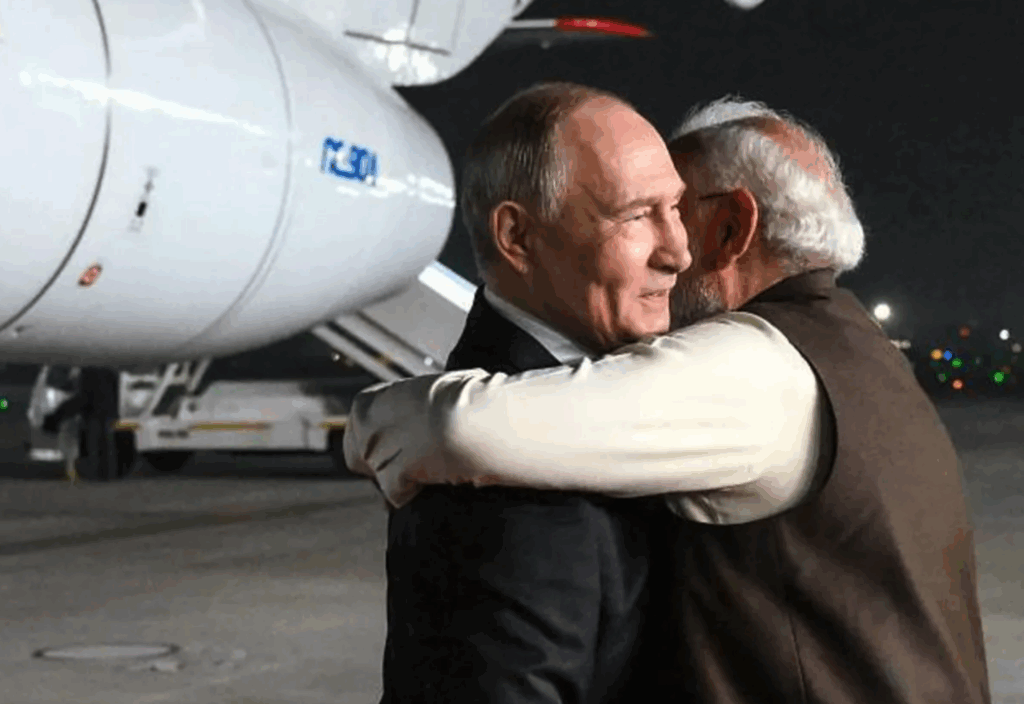
NEW DELHI, India – December 4, 2025 – Russian President Vladimir Putin arrived in New Delhi today for a two-day state visit to attend the 23rd India-Russia Annual Summit, an event that has drawn intense global scrutiny. The visit, which takes place amid significant international pressure on India over its continued engagement with Moscow, is designed to elevate the “Special and Privileged Strategic Partnership” to a “qualitatively new level,” cementing a critical lifeline for Russia in a fractured world.
The summit comes at a pivotal and geopolitically treacherous juncture for both nations. India is navigating its most challenging foreign policy environment in years, seeking to balance its deep-rooted strategic and defence ties with Moscow against the escalating economic and diplomatic pressure from the United States and its Western allies.
Putin’s Pre-Visit Declaration: A Pivot to the East
Before departing for India, President Putin made his strategic objectives clear. Speaking at an investment forum in Moscow earlier this week, he stated that the Kremlin’s goal is to raise cooperation with both China and Russia to a “qualitatively new level.”
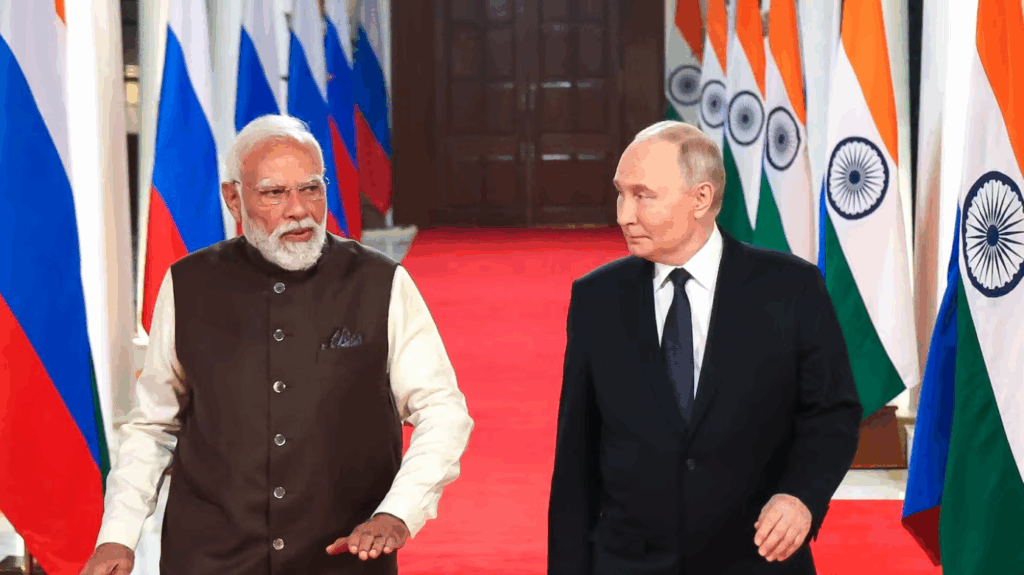
Putin emphasized that deepening relations with Beijing and New Delhi is the core aim behind a multitude of joint projects spanning critical sectors, including energy, industry, space, agriculture, and defense. He noted that he had already established a “substantial dialogue” with Chinese President Xi Jinping on economic matters and looked forward to continuing that dialogue during his visit with Prime Minister Narendra Modi.
The Russian President is accompanied by a large and influential delegation, including senior officials from the defense, finance, and central bank, signaling that the focus is heavily commercial and strategic.
Summit Agenda: Defense, Trade, and Defying Sanctions
The bilateral talks, led by President Putin and Prime Minister Modi, are expected to finalize several key agreements, demonstrating a concerted effort to insulate the partnership from external interference. Indian media reports indicate that the leaders will discuss:
- Elevating Security Ties: Finalizing defense procurement agreements, securing faster delivery of crucial equipment like additional S-400 Triumf air defense systems, and ensuring long-term maintenance and upgrade support for Russia-origin military platforms, which constitute nearly two-thirds of India’s current military arsenal.
- Trade De-dollarization: Formulating new payment arrangements to circumvent Western financial sanctions and reduce trade vulnerability. Discussions are anticipated on formalizing a settlement framework—potentially utilizing the UAE Dirham or integrating Russia’s SPFS system with India’s RuPay network—to address the approximately ₹60,000 crore in unutilised rupee balances currently held in Indian banks by Russia.
- Boosting Indian Exports: New Delhi is pressing to narrow its significant trade deficit with Moscow by securing better market access for Indian goods, particularly in pharmaceuticals, automobiles, and agricultural products like marine exports, backed by a large accompanying business delegation.
- Long-Term Cooperation: The expected signing of key bilateral documents, including a long-term roadmap for economic cooperation extending until 2030, and collaboration in nuclear energy, health, and labor mobility.
The International Response: A Tense Tightrope Walk
The international community is monitoring the New Delhi summit with heightened vigilance, viewing it as a symbolic act of defiance against the Western strategy to isolate Moscow.
United States and Donald Trump’s Response
The backdrop of the summit is dominated by the deteriorating US-India relationship, largely fueled by Washington’s aggressive stance against India’s purchase of Russian oil.
- Tariff Pressure: The administration of US President Donald Trump has explicitly linked India’s Russian oil imports to its foreign policy. In a punishing move months before the summit, the Trump administration imposed a significant punitive tariff (reportedly an additional 25%) on Indian imports, with half of the justification stemming from India’s continued purchase of Russian crude. The President’s trade advisor has even described the Russia-Ukraine conflict as “Modi’s war,” arguing that “the road to peace runs, at least partly, right through New Delhi.”
- “Laundromat” Accusation: US lawmakers and analysts have publicly accused India of acting as a “laundromat” for Russian crude—refining it and exporting the finished products globally—while Washington is simultaneously pushing New Delhi to scale back its Russian energy purchases and open its markets to American defense and energy products.
- Trump’s Ukraine Diplomacy: Interestingly, President Trump’s most recent public comments on Russia have focused on his own peace initiatives in the Ukraine conflict. Hours before Putin’s arrival in India, Trump stated that a US delegation (including his son-in-law) had a “very good” meeting with Putin in Moscow to review the US-proposed peace plan. Trump suggested that the talks gave the “impression” that Putin “would like to end the war,” even though Kremlin aides confirmed no compromises or definitive agreements were reached. This simultaneous pursuit of peace talks with Moscow and punitive action against New Delhi highlights the complex and often contradictory nature of the current US administration’s foreign policy, forcing India to “hedge” its alliances.
European and Western Reaction
The broader Western reaction was one of diplomatic frustration.
- Public Rebuke: In a highly unusual diplomatic move, a joint opinion piece by the French Ambassador, German High Commissioner, and UK High Commissioner to India was published in the Times of India on the eve of the visit, pointedly titled, “Russia doesn’t seem serious about peace.”
- India’s Retort: This prompted a stinging and immediate response from India’s foreign ministry, which publicly stated that such an article constituted “not an acceptable diplomatic practice to give public advice on India’s relations with a third country.” This incident clearly signaled India’s determination to maintain its long-standing policy of strategic autonomy, resisting external pressure on its bilateral relationships.
Russian Perspective
For Russia, the visit is a diplomatic victory that signifies its ability to break out of political isolation. Analysts in Moscow noted that the “importance of this visit lies primarily in the fact that it is happening at all,” signaling that Russia is “returning to something resembling normal international relations.” India’s unwavering support, despite Western sanctions, provides Moscow with a crucial market for its discounted oil and a stable partner for its defense industry.
The Geopolitical Challenge for India
For Prime Minister Modi, the summit is a high-stakes balancing act. While the relationship with Russia is vital—primarily as a continental balancer against an increasingly powerful China and a source of essential military technology and energy—India must carefully manage the optics of the visit.
New Delhi is currently seeking to finalize Free Trade Agreements (FTAs) with both the European Union and the United States, and it cannot afford to let the outcomes of the summit with Russia—especially new defence or energy deals—derail those crucial Western economic partnerships. The visit, therefore, is ultimately a negotiation over risk and supply chains, designed to secure energy and defense interests while making a clear statement that India will retain its strategic autonomy in a multipolar world.