Rates Shock: Mayor Brown Unveils 7.9% Hike to Fund CRL, Sparking Ratepayer Fury
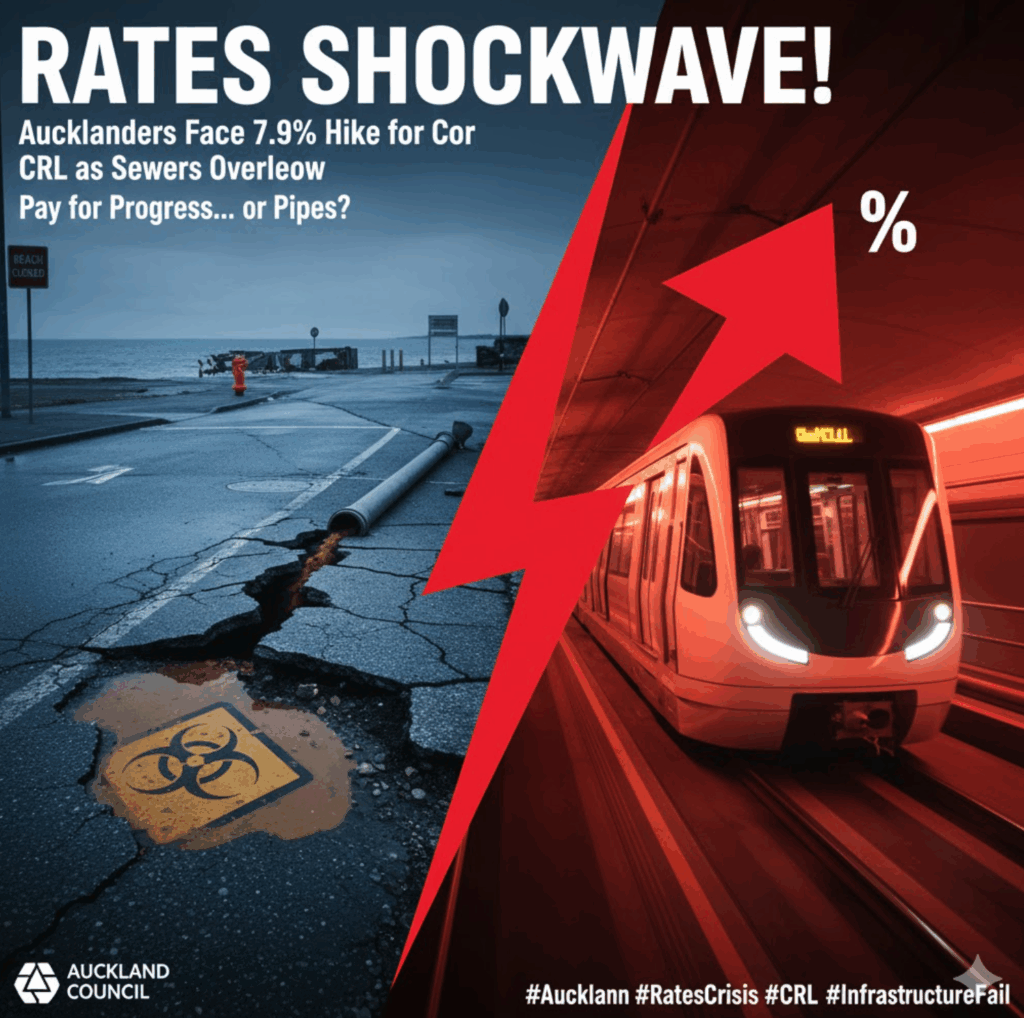
AUCKLAND — Auckland Mayor Wayne Brown has announced a major blow to household budgets, proposing a 7.9 per cent average rates increase for the coming financial year. The significant hike is primarily earmarked to cover the substantial running costs of the City Rail Link (CRL), the city’s largest-ever transport infrastructure project.
The proposal immediately ignited a firestorm of criticism, with ratepayers arguing that the substantial increase is unaffordable and poorly timed, particularly given the concurrent crises facing the city’s basic services.
Economic Pressure Meets Infrastructure Failure
The proposed 7.9% increase lands at a moment when many Aucklanders are already struggling with the intense cost-of-living crisis. For homeowners, rates often represent one of the single biggest annual expenses, and the double-digit growth seen in recent years has drawn national attention, contributing to the central government’s push for rates caps.
The urgency of funding the CRL operation—a new asset—stands in stark contrast to the state of existing essential infrastructure. Just this week, as reported by Auckland Council’s SafeSwim service, sewage overflows from weekend storms caused widespread “Code Brown” warnings, forcing the closure of 13 beaches and highlighting the fragility of the city’s aging wastewater system.
“It’s an insult,” said one resident, citing the recent news of the widespread beach closures. “We are being asked to fork out nearly eight per cent more to run a fantastic new train line, but we can’t even go swimming in our local harbour without risking a trip to the doctor because our pipes are broken. We are paying for luxury before we have basic safety.”
The Mayor’s Balancing Act
Mayor Brown and his supporters argue that the rates increase is a necessary step to future-proof the city and maintain fiscal responsibility. The CRL is a generational investment, and its ongoing operational expenses, including maintenance, staffing, and energy, must be secured.
However, critics contend that the focus on funding a new, high-profile project overlooks the urgent need for investment in fundamental services. As Watercare, the council-controlled organisation responsible for water, has stated, substantial relief for sewage overflow issues is still years away, with key projects like the Herne Bay Collector tunnel not due for completion until around 2028.
The Trade-off: Ambition vs. Maintenance
The financial tension highlights the fundamental challenge facing New Zealand’s largest city: how to pay for major transformative projects while simultaneously addressing decades of underinvestment in core services.
For the average ratepayer, the 7.9% hike forces a painful trade-off. It is viewed less as an investment in a modern public transport network, and more as a compulsory tax in a strained economy, with the money diverted to ambition while the basics—clean swimming water and functional pipes—continue to fail.
Ratepayer advocacy groups are expected to challenge the proposed rate rise strongly during the consultation phase, demanding the council revisit its priorities and focus spending on maintaining existing infrastructure before increasing charges for new operational costs.