Education Crisis Deepens: Rolling Teacher Strikes Begin as Nation Braces for ‘Mega Strike’ Threat
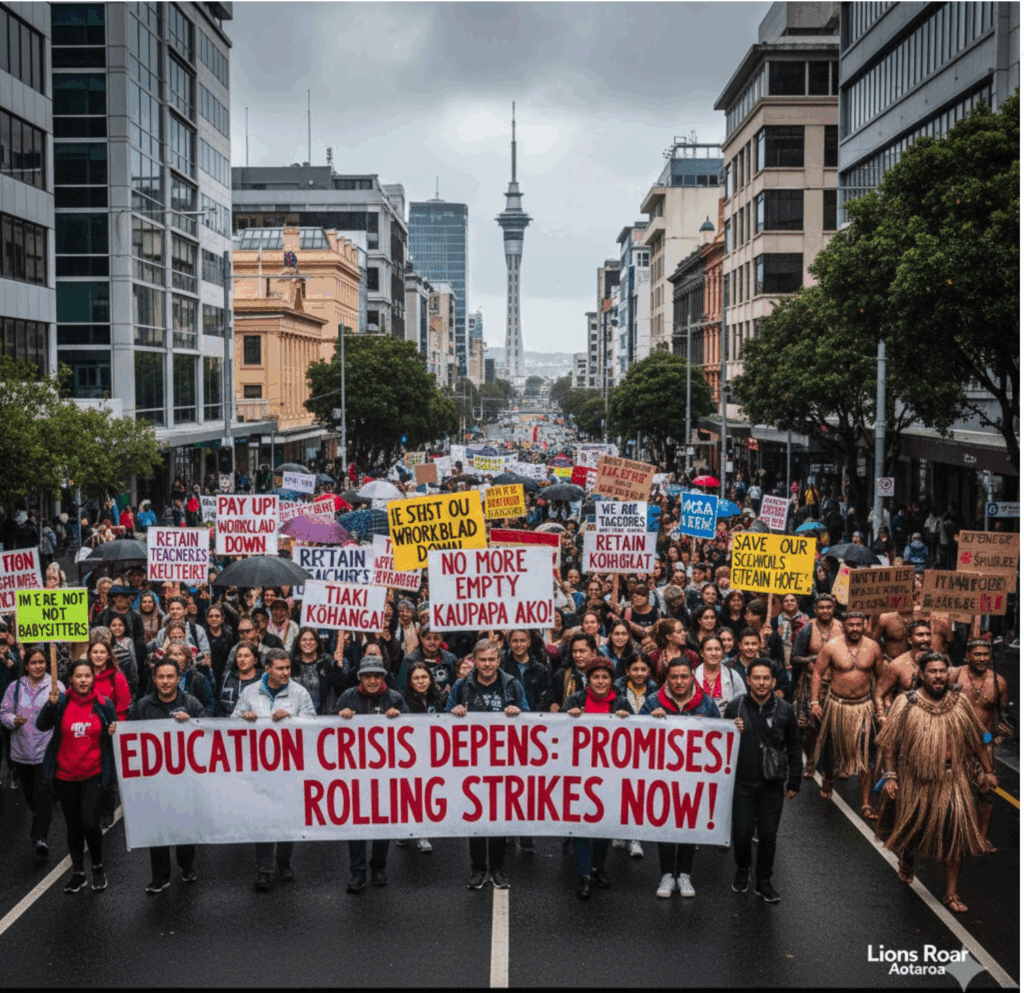
Auckland, Aotearoa — October 14, 2025
New Zealand’s education sector descended into mass disruption today as teachers from across primary and secondary schools began a coordinated series of rolling strikes, marking a severe escalation in their long-running dispute with the government over pay, workload, and the deepening crisis in recruitment and retention.
The industrial action, spearheaded by major unions including the New Zealand Educational Institute Te Riu Roa (NZEI) and the Post Primary Teachers’ Association Te Wehengarua (PPTA), signals a failure of months of negotiation and has forced hundreds of schools nationwide to either close completely or operate with severely restricted programmes.
Today’s action is merely the opening salvo in a planned week of regional disruptions, all building towards the ominous threat of a nationwide “mega strike” slated for next week. If that action proceeds, it would represent one of the most significant mass industrial movements in Aotearoa’s recent history, paralyzing the education system just as students, particularly those sitting NCEA exams, enter a crucial period of preparation.
The Breakdown: Why Teachers Are Walking Out
The core sticking point in the dispute is not simply salary, but the structural integrity of the teaching profession itself. While the government has offered pay increases, unions argue these offers—which they claim are still significantly below current inflation rates—do little to address the twin crises facing schools: a crippling teacher shortage and an unsustainable workload.
“We are not fighting for a bonus; we are fighting for the future viability of the education system,” stated PPTA president Melanie Shaw at a rally in Wellington this morning. “Every single day, schools cannot find relievers. Classes are being merged. Teachers are leaving the profession burned out, and new graduates are choosing higher-paid, less stressful careers overseas. The current offer does absolutely nothing to make teaching an attractive, long-term career.”
The unions are demanding a settlement package that includes:
- A pay increase that significantly restores lost real wages due to inflation over the past few years.
- Immediate action on workload, including mandated reductions in class sizes, especially in intermediate and secondary schools.
- Increased resourcing to support students with diverse learning needs, which currently falls disproportionately on classroom teachers.
- A commitment to effective retention strategies to prevent further exodus of experienced staff.
For the primary sector (NZEI), the focus is particularly intense on parity, demanding that early career teachers and those in small or remote schools receive the support necessary to remain in their posts. “We are seeing the heart bleed out of our schools,” said an NZEI representative. “The government needs to open its eyes to the reality on the ground: the goodwill of teachers has run out.”
Government Holds Firm Amidst Fiscal Pressure
The Minister of Education, Hon. David Seymour, addressed the escalating strikes with a statement late yesterday, reiterating the government’s stance that the current offer is “fair, responsible, and at the limit of what is fiscally prudent.”
“We understand and value the work teachers do,” the Minister stated, “but we must balance our commitment to educators with the need to manage government spending responsibly. The offer on the table is competitive and reflects the significant pressures facing the national budget.”
The government has repeatedly accused union leadership of holding students and families hostage to aggressive bargaining tactics. It argues that the comprehensive costs associated with the union demands—including the long-term investment required to lower class sizes—are simply unachievable in the current economic climate, particularly following the Reserve Bank’s recent, unexpected rate cut and the broader need for fiscal consolidation.
However, critics, including opposition politicians and education analysts, argue that the government’s refusal to substantially improve the offer is a false economy. Dr. Sarah Thompson, an education policy expert from Victoria University of Wellington, noted that the cost of inaction far outweighs the investment required.
“The strike action is not the problem; it’s a symptom of a systemic crisis of devaluing the profession. Every teacher who leaves costs the taxpayer significant amounts in recruitment, training, and lost expertise,” Dr. Thompson told Lions Roar Aotearoa. “The shortage is now so acute that we are actively importing teachers to fill gaps, often at significant cost. Investing now is cheaper than managing a burnt-out workforce and a failing pipeline of talent.”
Families Face Logistical Nightmare
The immediate consequence of the rolling strikes is a logistical nightmare for families. Parents across affected regions are scrambling to arrange childcare, take unpaid leave, or organize supervision, creating a ripple effect across the economy.
In Auckland, where the strike action hit secondary schools today, many Year 12 and 13 students preparing for NCEA examinations found their study timetables severely impacted.
“It’s incredibly frustrating,” said Maria Chen, a mother of two in Christchurch, whose primary school closed today. “I support the teachers—they deserve better pay and less stress—but I also have to work. I’m now trying to balance a full-time job with supervising two kids who should be in class. The government needs to sort this out before exams are jeopardized.”
The prospect of a national “mega strike” next week has elevated parental anxiety, placing immense pressure on the negotiation teams to find common ground before the unprecedented action is triggered.
The Looming ‘Mega Strike’ Deadline
The rolling strikes are strategically designed to create staggered regional pressure before the potential climax. Should negotiations fail to produce a satisfactory outcome by the end of this week, both the NZEI and the PPTA have confirmed they will enact the full-scale national strike—a combined stop-work action involving tens of thousands of educators.
This combined industrial movement would result in the closure of virtually every public and integrated school in the country, affecting over 800,000 students. It would send an unmistakable message to the Beehive regarding the extreme dissatisfaction felt across the entire education workforce.
The decision to escalate the action reflects the belief among union members that only a massive display of unity and disruption will force the government to move beyond its current offer.
The next few days will be critical, as union leaders and government negotiators meet one last time under the shadow of the looming “mega strike” deadline. The nation’s parents, students, and economy are all waiting to see if a compromise can be brokered to prevent the most disruptive education crisis in a generation from reaching its devastating peak. The Lions Roar Aotearoa news team will continue to monitor the situation closely as the clock ticks down toward the planned nationwide shutdown.