Cost Conundrum: Retail NZ Warns Surcharge Ban is a ‘Hidden Tax’ That Will Force Up Prices for Every Kiwi Shopper
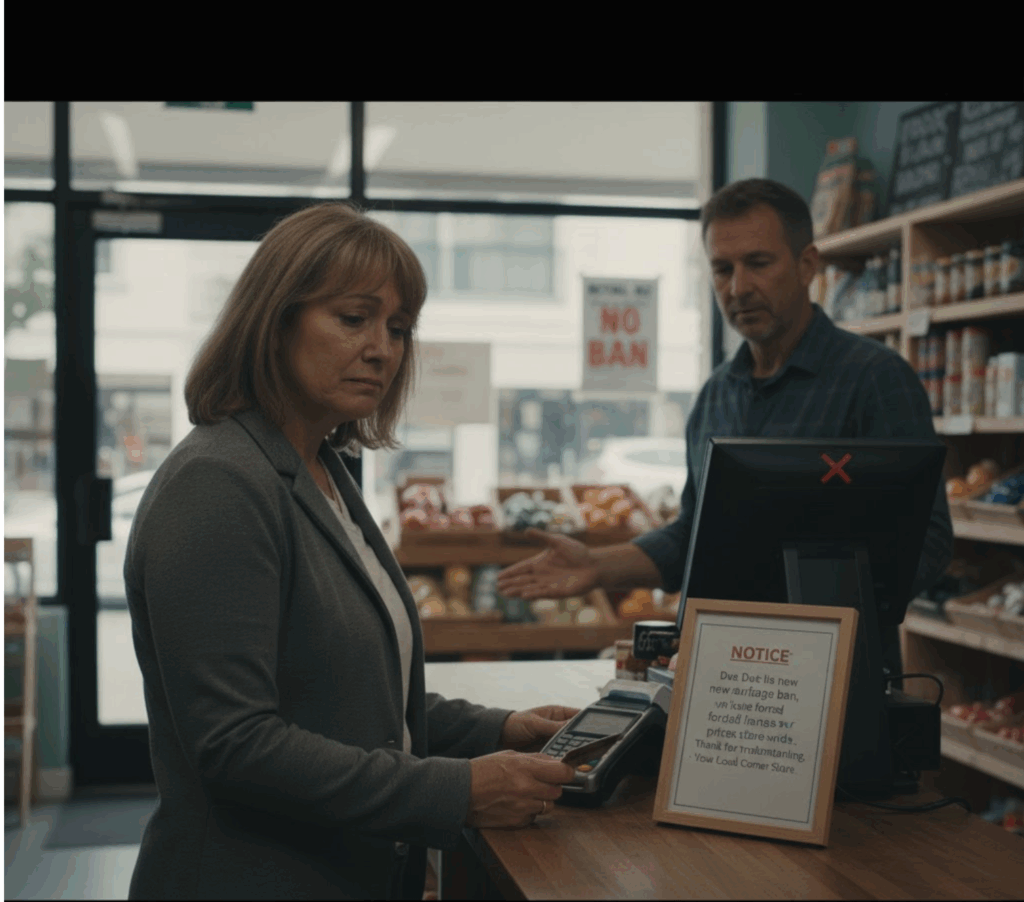
Auckland, Aotearoa — October 14, 2025
The government’s popular-sounding policy aimed at eliminating annoying card surcharges has detonated into a major economic confrontation, with the retail industry warning that the move will backfire spectacularly. Retail NZ, representing the majority of the country’s domestic retail turnover, has launched a vehement pushback against the proposed legislation, arguing that the ban is not only poorly targeted but is guaranteed to hit consumers with a “hidden tax” in the form of higher everyday shelf prices.
The industry group is demanding the government immediately pause the Retail Payment System (Ban on Surcharges) Amendment Bill, which seeks to prevent retailers from applying a separate charge for using payment methods like debit and credit cards, a practice intended to cover the fees imposed by payment networks and banks.
The warning from Retail NZ chief executive Carolyn Young is stark: the Bill fails to address the root cause of the problem—the high interchange fees charged by banks and card providers—and instead merely forces retailers to absorb and redistribute those costs. This redistribution, they argue, means that the $150 million currently paid annually by surcharged card users will simply be baked into the overall cost of goods, penalizing customers who pay with cash or cheaper debit cards.
The Problem: Transparency vs. Cost Recovery
The government, led by Commerce and Consumer Affairs Minister Scott Simpson, introduced the Bill with the explicit goal of improving transparency and ensuring “shoppers will no longer be penalised” for using their preferred method of payment. At the time of the announcement, the Minister highlighted that Kiwis were paying an estimated $45 million to $65 million a year in excessive surcharges—fees charged that were higher than the retailer’s actual cost of acceptance.
This drive for consumer protection is understandable. No one enjoys seeing an unexpected fee added at the checkout. However, Retail NZ’s analysis points out that while the $45-$65 million in excessive charges is an issue, the total amount paid in surcharges annually is closer to $150 million. This difference represents the actual cost of accepting card payments.
“The government is targeting the retailer who is simply the middle-man, passing on a legitimate operating cost,” Ms. Young told Lions Roar Aotearoa this morning. “The ban is akin to treating a fever by turning off the thermometer instead of attacking the virus. The virus, in this case, is the cost structure dictated by the payment scheme providers.”
The majority of surcharges are applied to high-cost methods like international and premium credit cards, where interchange fees are highest. Retailers who currently apply a surcharge do so to maintain a competitive price for their cash and debit-paying customers.
The Small Business Squeeze
The impact of the proposed ban is forecast to be felt most acutely by small and medium-sized enterprises (SMEs). Larger retailers typically have greater negotiating leverage with banks and payment processors to secure lower rates, or they have the operational scale to absorb these costs with minimal relative impact.
SMEs, however, operate on wafer-thin margins, and for them, absorbing a 1.5% to 3% fee on every card transaction is simply not feasible without impacting their bottom line.
A survey conducted by Retail NZ showed that 44% of its members currently apply a surcharge—a figure that has steadily increased from 26.5% just a year ago, reflecting the rising cost of digital transactions. Crucially, 65% of surveyed retailers opposed the ban, confirming the financial necessity of the practice.
“For a small bookstore, a local cafe, or a regional boutique, those hundreds of dollars a month in unrecovered fees can mean the difference between profit and loss,” explained economic commentator, Dr. Alistair Ross. “If forced to ban surcharges, these businesses won’t suddenly absorb the cost; they will uniformly raise the prices of all their goods—known as cross-subsidisation—meaning the cash buyer ends up subsidising the credit card user, potentially raising the cost of living for everyone, particularly low-income earners who rely more on cash or EFTPOS.”
The Call to Pause and Target the Banks
The Bill was announced with the promise that retailers would already be seeing savings from earlier government action. Specifically, the Commerce Commission’s move to cap interchange fees in 2022 was projected to save businesses approximately $140 million a year, with further savings of up to $90 million expected from the Commission’s latest review.
Retail NZ argues that these savings should be allowed to fully flow through before a blanket ban is enforced. Their key recommendation is for the government to pause the Bill and wait for the Commerce Commission’s planned 2026 review and consultation on surcharging regulations.
The lobby group insists that if the government genuinely wants to protect consumers, the legislative focus should be redirected towards the payment scheme providers. They demand measures that enforce lower fees across the board, rather than placing the final regulatory burden on the small business owner.
Looking Ahead: Political and Economic Showdown
The Commerce Commission itself has noted that its primary focus under existing legislation is on ensuring transparency and accountability. The new proposed Bill is an attempt by the government to tighten the consumer protection element by outright removing the fee visibility via a ban.
The situation presents a high-stakes political debate: does the government prioritise the perception of lower costs at the checkout or the economic reality of cost recovery for small businesses?
As the Bill progresses through the legislative process, the retail sector is mobilising to ensure their voice—and the economic ripple effect of the ban—is heard in the select committee submissions. Until the legislation is finalized, the fight over who ultimately pays for the convenience of digital transactions remains one of Aotearoa’s most significant cost of living flashpoints. The decision to enforce the ban could ironically lead to a quiet, permanent increase in everyday costs, trading immediate transparency for chronic inflation.