🇦🇺 RECORD MIGRANT SURGE: EXPERTS WARN AUSTRALIAN GROWTH IS ‘UNSUSTAINABLE’ 🚨
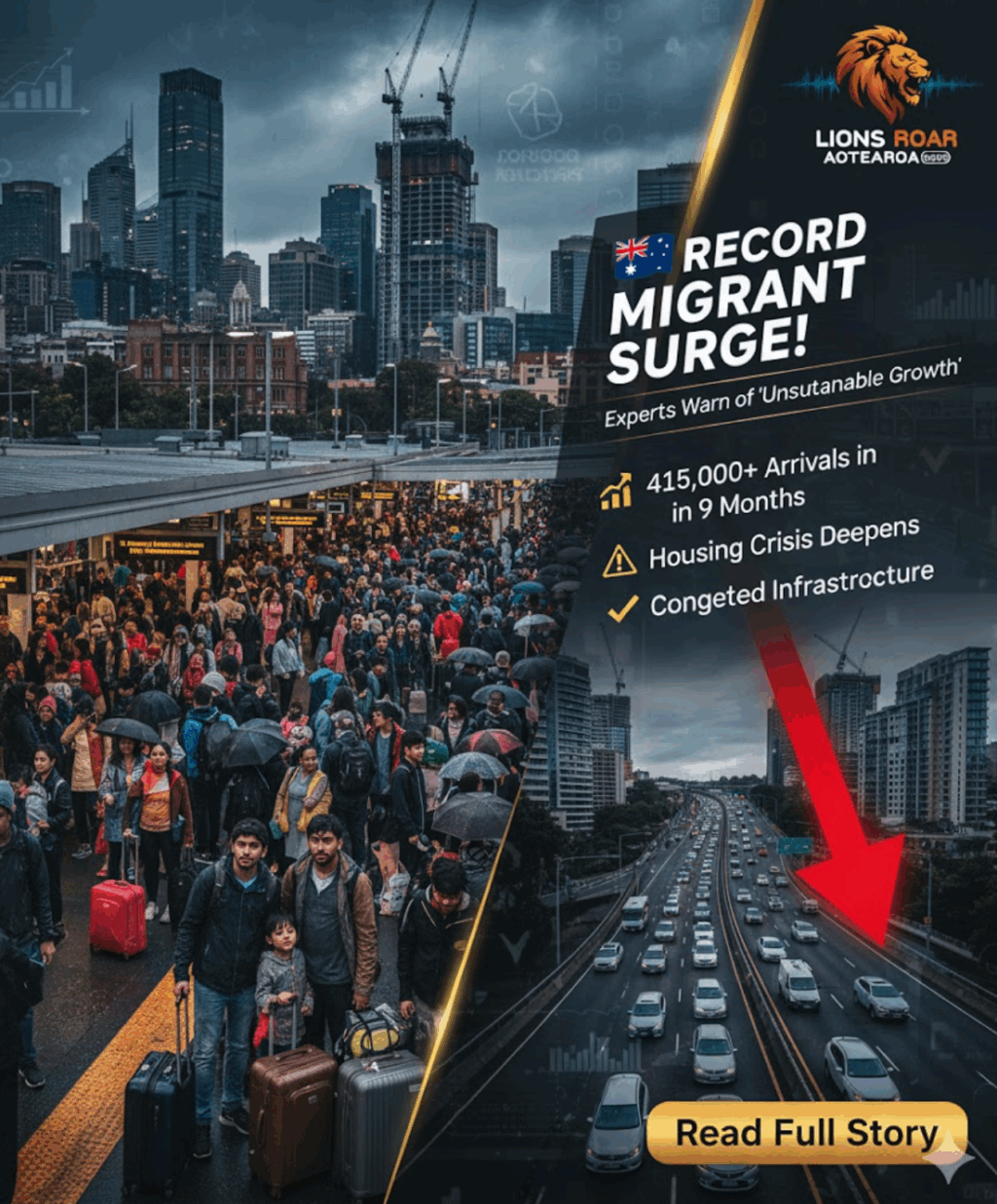
Lions Roar Aotearoa News Analysis: Australia is grappling with what analysts are calling an “out-of-control” surge in migration, with the number of permanent and long-term arrivals hitting unprecedented levels in 2025. Experts warn that the record growth is placing severe and unsustainable pressure on the nation’s housing market, public infrastructure, and critical services.
New analysis of data from the Australian Bureau of Statistics (ABS) covering overseas arrivals and departures has sparked fresh controversy over the Federal Government’s migration policy, which critics claim is pushing a “Big Australia” agenda without community consent.
Migration Records Shattered in 2025
The Institute of Public Affairs (IPA) released figures this week confirming that the migration intake has far surpassed previous highs, not only recovering from the pandemic but establishing a new norm of elevated arrivals.
IPA Deputy Executive Director Daniel Wild highlighted the key metrics:
- Year-to-Date Record: Net permanent and long-term arrivals reached 415,760 in the first nine months (January to September) of 2025. This figure represents the highest on record for the period, marking a 6% increase on the previous high set in 2024.
- Annual High: The total number of net permanent and long-term arrivals recorded in the 12 months to September 30, 2025, reached 468,390, the highest 12-month total on record, exceeding 2024’s record by 4%.
- New Norm: Mr. Wild asserted that these elevated numbers are no longer a post-pandemic “catch-up” but have become “a new norm,” gradually replacing the natural increase component of population growth.
Unsustainable Pressure on Housing and Services
The primary concern raised by the IPA and other commentators is the immediate and severe strain this rapid population increase is placing on Australia’s foundational services.
The housing crisis is frequently cited as the most acute impact. Data scientists note that high demand for housing, coupled with sluggish construction activity, has led to continuously rising rents and property prices. For instance, national rental vacancy rates have plummeted in major cities, intensifying an affordability crisis that is disproportionately affecting both first-time buyers and the highly stressed rental cohort, including new migrants themselves.
Furthermore, critics argue that the soaring population growth is overwhelming essential infrastructure and services, including:
- Public Infrastructure: Roads, public transport, and utilities are struggling to keep pace with the rapid population density growth in major capitals.
- Critical Services: Healthcare and education systems face increasing pressure as capacity fails to expand quickly enough to meet the needs of a burgeoning population.
A Failure of Government Planning
Mr. Wild was unequivocal in his allocation of blame, stating that the “out-of-control levels of migrant arrivals should not be blamed on the migrants. This failure belongs to the federal government alone.”
The conservative think tank argues that the government’s current migration program is neither properly targeted toward specific economic needs nor does it reflect the priorities or “consent of the community.” The growing dissatisfaction is encapsulated by the public sentiment that the government should “hit the brakes” on migration until infrastructure and housing supply can catch up.
While the data used (Net Permanent and Long-Term Arrivals) is an early indicator and differs slightly from the official Net Overseas Migration (NOM) figures—which lag due to the ’12/16 rule’—the sheer scale of the long-term arrivals signals a continued, robust trend that is fueling the debate over the optimal size and pace of Australia’s population growth. The official NOM figures, when released, are expected to confirm this heightened trajectory.
The government faces increasing pressure to demonstrate that its migration settings are effectively managed, sustainable, and integrated with national housing and infrastructure planning to address the concerns of a community struggling with the cost of living crisis.