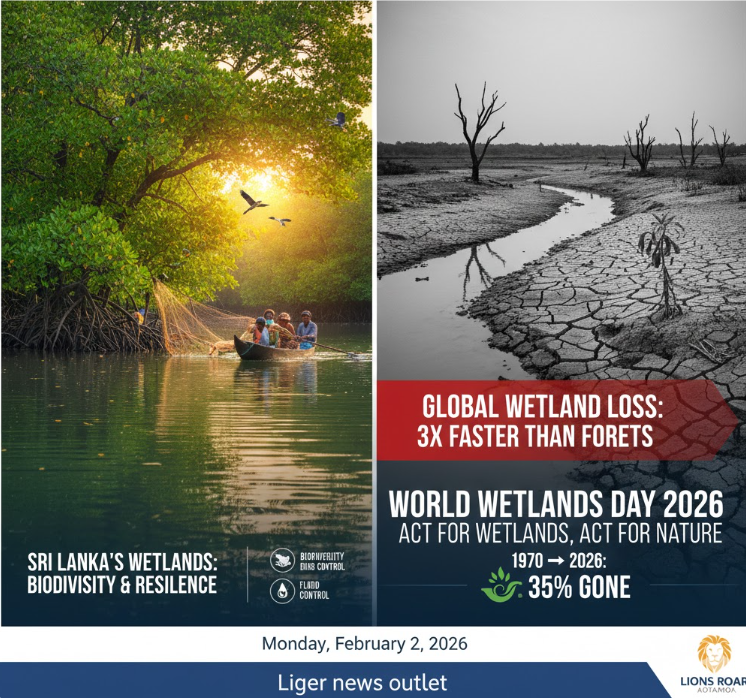
World Wetlands Day 2026: Sri Lanka Joins Global Call to Protect Vital Ecosystems
By Lions Roar Aotearoa Environment Desk
COLOMBO, SRI LANKA (Monday, February 2, 2026) — Today marks World Wetlands Day, a global event dedicated to raising awareness about the critical importance of wetlands for our planet and human wellbeing. Established by the Ramsar Convention on Wetlands and formally recognized by the United Nations, this day commemorates the adoption of the Convention on Wetlands on February 2, 1971, in the Iranian city of Ramsar.
Sri Lanka, a nation blessed with diverse wetland ecosystems ranging from coastal mangroves to inland marshes, became a signatory to the Ramsar Convention in 1991. Since then, the island has committed to the conservation and wise use of these “biological supermarkets,” which are essential for maintaining biodiversity and providing a natural buffer against environmental disasters.
The theme for World Wetlands Day 2026 is “Act for Wetlands, Act for Nature,” a direct call to action for governments, communities, and individuals to prioritize the restoration and protection of these vanishing habitats.
Wetlands play a multifaceted role in the environment. They act as massive natural sponges, absorbing and storing excess rainfall to control flooding—a function increasingly vital as climate change brings more frequent and intense storms. Furthermore, they serve as highly efficient carbon sinks, help purify water by filtering pollutants, and provide a home to thousands of species of flora and fauna.
In Sri Lanka, wetlands like the Bundala National Park, the Anawilundawa Sanctuary, and the Maduganga Mangroves are not only ecological treasures but also vital to the local economy through tourism and sustainable fishing. However, these areas face ongoing threats from urban encroachment, pollution, and unsustainable land use.
As the world celebrates this day, environmentalists in Sri Lanka are urging the public to recognize that the survival of our wetlands is inextricably linked to our own survival. Protecting these nature-based solutions is one of the most effective ways to build climate resilience and ensure a sustainable future for generations to come.