UN Human Rights Council Passes Resolution on Sri Lanka Despite Official Rejection
Global Pressure Mounts for Accountability, Reconciliation, and Justice in Colombo
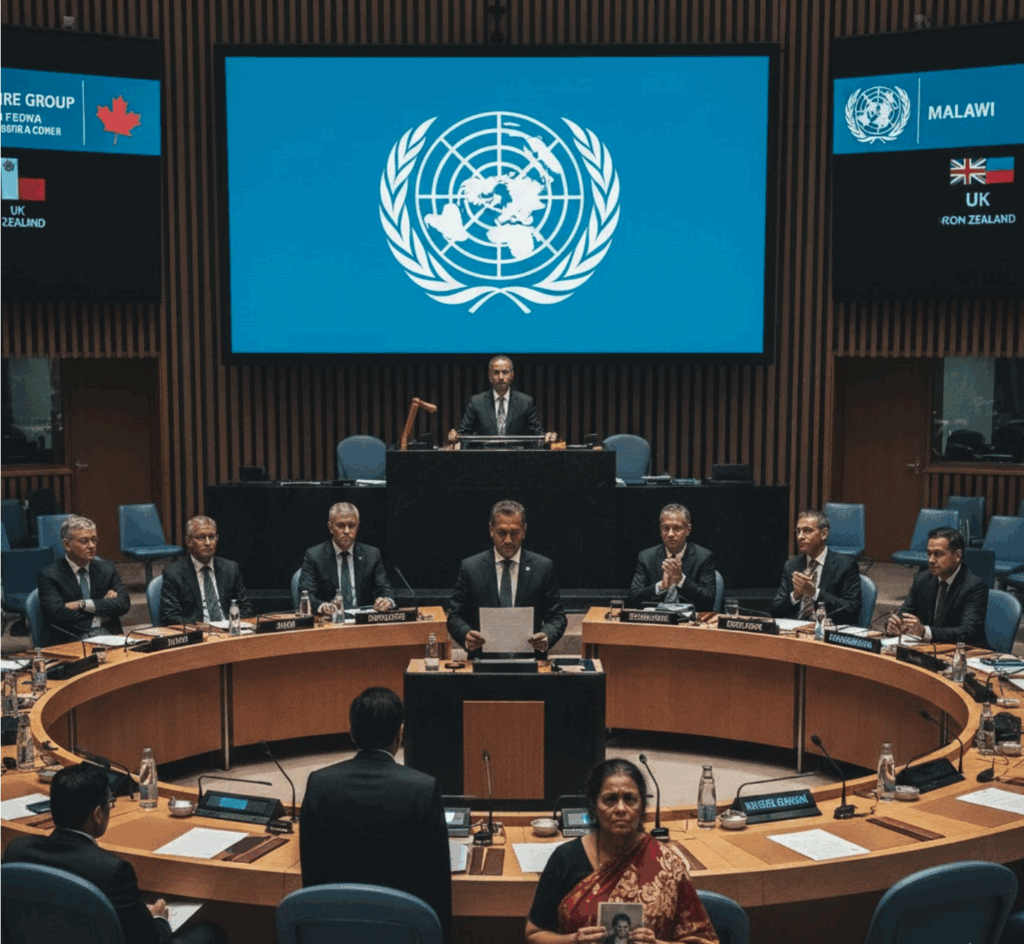
GENEVA, SWITZERLAND — In a significant diplomatic manoeuvre that underscores persistent international concern, the United Nations Human Rights Council (UNHRC) has passed a pivotal new resolution aimed at promoting reconciliation, accountability, and human rights in Sri Lanka. The resolution, adopted on October 1st during the Council’s 60th session, was passed without a vote, despite the Government of Sri Lanka officially rejecting the text and its mandate.
The move marks a continuation of sustained international scrutiny on Sri Lanka, following the conclusion of the civil war in 2009 and the enduring calls for justice for victims of alleged gross human rights violations and serious violations of international humanitarian law committed by all sides. The new resolution replaces its predecessors and strengthens the mandate for external monitoring, much to the chagrin of the Colombo administration.
Sri Lanka Stands in Official Opposition
Prior to the resolution’s adoption, the Permanent Representative of Sri Lanka to the UN in Geneva reiterated the nation’s strong rejection of the proposed text. Colombo argued that the resolution, particularly the continued existence of the Office of the High Commissioner for Human Rights’ (OHCHR) external evidence-gathering mechanism—known as the Sri Lanka Accountability Project (SLAP)—was “unprecedented and counter-productive” to genuine domestic reconciliation efforts.
Sri Lanka maintained that it remains committed to its own internal mechanisms for addressing past violations and ensuring accountability, and urged the Council to abandon the resolution entirely, asserting that external interference infringes upon the nation’s sovereignty and political stability.
A Coalition of Nations Pushes the Mandate
Despite Sri Lanka’s staunch opposition, the resolution saw broad international support, ultimately leading to its adoption without a formal vote. This diplomatic consensus was spearheaded by the Sri Lanka Core Group, initially comprising Canada, Malawi, Montenegro, North Macedonia, and the United Kingdom.
By the time of the final presentation on October 1st, the resolution had gained a large number of co-sponsors, including Albania, Austria, Costa Rica, New Zealand, and several other European nations. This wide-ranging coalition of over 30 states signalled a clear international demand for sustained pressure and a comprehensive approach to transitional justice in Sri Lanka.
The representative of the United Kingdom, speaking on behalf of the Core Group, acknowledged the commitments made by Sri Lanka but urged the Government to translate its promises into “tangible actions.” The UK expressed hope that the resolution could be adopted by consensus, though this hope was immediately undercut by China’s strong dissent.
Key Demands: Justice, Devolution, and Law Reform
The resolution is highly specific in its demands, placing significant pressure on the Sri Lankan government across several key areas:
1. Comprehensive Accountability and Truth-Seeking
The central pillar of the resolution is the call for broad and impartial investigations into all alleged human rights violations and breaches of international humanitarian law. Critically, it demands the full participation of victims and their representatives, emphasizing a victim-centred approach to justice.
Furthermore, the resolution highlights the ongoing need for:
- The excavation of mass graves, ensuring independent and credible forensics.
- The establishment of independent prosecution mechanisms.
- An end to the monitoring and harassment of human rights defenders and civil society actors, particularly in the North and East.
2. Devolution of Political Authority and Provincial Council Elections
The resolution explicitly urges Sri Lanka to fully implement its constitutional obligations regarding the devolution of political authority. This is seen as integral to long-term reconciliation.
Specifically, it calls for:
- The holding of Provincial Council elections, particularly in the Northern and Eastern Provinces, as mandated by the 13th Amendment to the Constitution.
- Ensuring that these elected Provincial Councils are able to function effectively to meet the needs of their populations.
3. Repeal of Repressive Legislation
A major concern addressed by the international community is the continued use of laws that allegedly stifle dissent and disproportionately affect minority communities. The resolution calls for:
- The repeal of the Prevention of Terrorism Act (PTA), highlighting its continued use for detentions, which disproportionately impacts Tamil and Muslim communities.
- Fundamental reforms to the Online Safety Act (OSA) to guarantee the freedom of expression and prevent its use as a tool for political repression.
The Global Divide: China Leads the Opposition
The proceedings laid bare the persistent geopolitical divisions within the Council. While Western nations and their allies pushed for accountability, other influential countries vocally opposed the resolution, primarily citing concerns over national sovereignty and non-interference.
The Chinese Representative offered strong praise for Sri Lanka, commending its progress on human rights and economic recovery following the severe economic crisis. China reaffirmed its support for Sri Lanka’s sovereignty and political stability, describing the OHCHR’s external mandate as “ineffective” and announcing its dissociation from the resolution.
In a similar vein, Ethiopia and Cuba argued vehemently against the “external mandate,” calling for respect for national sovereignty and the principle of non-intervention in internal affairs.
Conversely, other Asian nations like the Republic of Korea and Japan offered a more nuanced stance. While acknowledging the Sri Lankan government’s reform efforts, they ultimately supported the resolution’s passage by consensus, stressing the importance of continued progress on reconciliation. The Gulf Cooperation Council (GCC) member states also focused their statements on Sri Lanka’s progress on social and constitutional reforms, emphasizing national rights.
The Long-Term Impact: SLAP Continues Its Work
The adoption of the resolution is a clear sign that the international community is unwilling to relinquish its oversight of the situation in Sri Lanka.
The resolution’s tacit approval ensures the continuation and enhancement of the SLAP mandate. This project, which involves the collection, consolidation, analysis, and preservation of information and evidence of serious crimes, is designed to support future accountability processes, which could potentially include prosecutions under the principle of universal jurisdiction in foreign courts, or referral to an international criminal mechanism.
For the victims and their families, who have consistently expressed a lack of faith in domestic inquiries, the renewal of the external mandate represents a crucial lifeline for justice. For the Government of Sri Lanka, however, the resolution signifies a setback to its efforts to close the chapter on its past conflicts and a major diplomatic challenge as it seeks to navigate international relations and economic recovery.
The resolution will now put immediate pressure on Colombo to demonstrate tangible movement on the demands for power devolution and law reform, or risk further international isolation and the potential for targeted sanctions in the future. The debate is now over, but the difficult process of accountability and reconciliation continues.