The Turning Tide? Why New Zealand’s Era of Falling Interest Rates Could Face a Sharp Reversal in 2026
By A Lions Roar News Economic Analyst WELLINGTON, New Zealand – October 17, 2025
For the first time in years, a collective sigh of relief is echoing through New Zealand households and businesses. After a brutal, extended monetary tightening cycle that saw the Reserve Bank of New Zealand (RBNZ) aggressively hike the Official Cash Rate (OCR) to combat rampant inflation, the consensus narrative has decisively shifted. Economists, banks, and the public are now fixated on a downward trajectory, anticipating a series of rate cuts beginning in late 2025 and extending into 2026 to breathe life back into a sluggish economy.
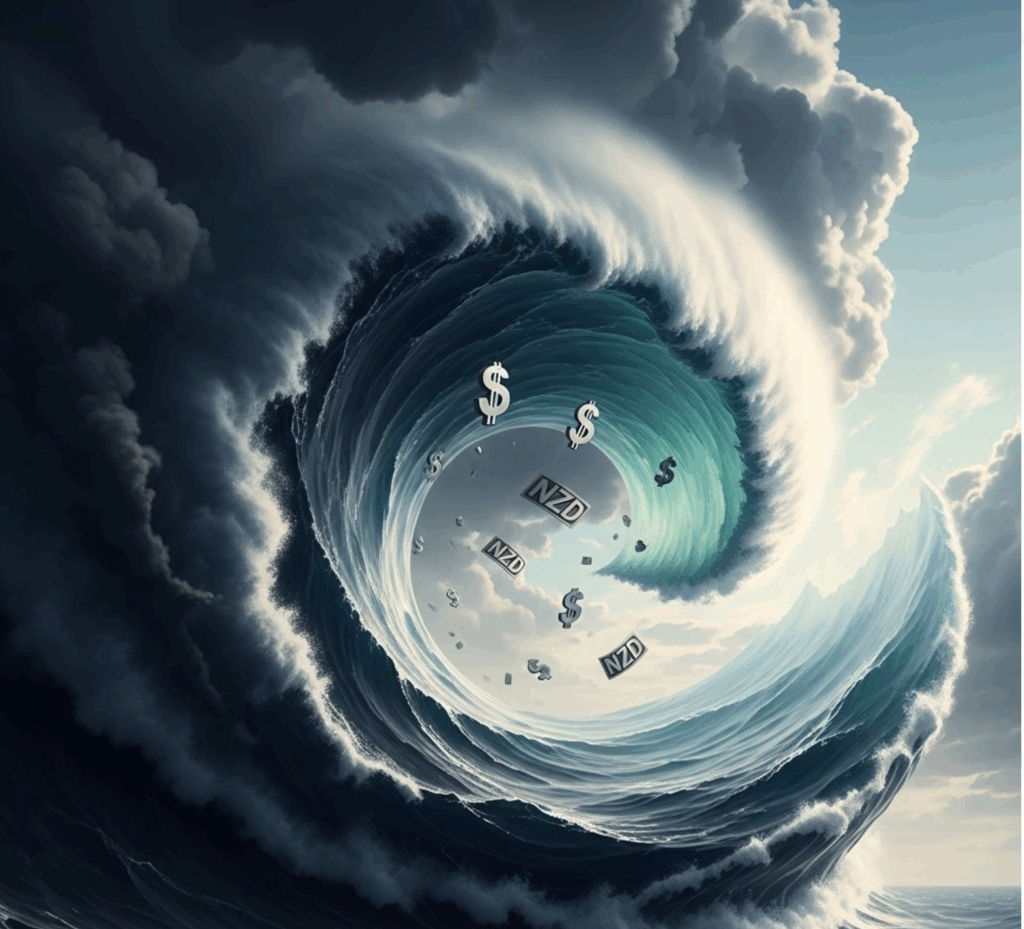
This anticipated easing represents a light at the end of a long tunnel for mortgage holders squeezed by punishing repayments and for businesses struggling with high borrowing costs. However, a deeper, more scholarly analysis of the economic landscape reveals that this path to lower rates is far from guaranteed. The very forces the RBNZ is trying to manage are volatile and unpredictable. A confluence of powerful domestic and global factors could easily create a perfect storm, forcing the central bank into a dramatic and painful policy reversal in 2026, turning the tide and sending interest rates climbing once more.
While the immediate outlook points towards easing, a research-based exploration of possibilities and trends suggests that the battle against inflation may not be over, but merely in a temporary ceasefire.
The Domestic Tinderbox: An Overzealous Recovery
The RBNZ’s current strategy is to engineer a “soft landing”—cooling the economy just enough to bring inflation back within its 1-3% target band without triggering a deep and damaging recession. The risk, however, is that the medicine of rate cuts could prove too effective, too quickly.
The most significant domestic risk for a rate reversal is an overzealous economic rebound. Lower interest rates are designed to stimulate demand, but if that demand resurfaces too forcefully, it could ignite the very inflationary embers the RBNZ has worked so hard to extinguish. The primary catalyst would likely be the housing market. A sharp drop in mortgage rates could unleash a wave of pent-up demand from buyers who have been sitting on the sidelines. A subsequent rapid rise in house prices would create a significant “wealth effect,” making homeowners feel richer and more confident, thereby boosting consumer spending across the board.
This renewed spending would place immediate pressure on the domestic, or non-tradable, sector of the economy—the part the RBNZ watches most closely. This includes services, construction, and retail, where prices are driven by local demand and labour costs. If businesses find that consumers are willing to spend freely again, they will regain pricing power, passing on higher costs and widening margins.
This scenario is inextricably linked to the labour market. The current cooling economy has led to a slight uptick in unemployment and a moderation in wage growth. However, if a housing and consumer-led recovery takes hold, businesses would quickly shift from laying off staff to competing for them. This could trigger a renewed wage-price spiral, where tight labour conditions lead to higher wage demands, forcing businesses to raise prices, which in turn leads workers to demand even higher wages. For the RBNZ, a return to this dynamic would be a red line, almost certainly necessitating a pivot back to rate hikes to curb domestic demand.
The Global Cauldron: Importing a Second Wave of Inflation
As a small, open economy, New Zealand’s fate is heavily tied to global forces. The inflation of 2022-2023 was largely driven by international factors—pandemic-induced supply chain chaos and geopolitical energy shocks. While these pressures have eased, the global landscape remains fragile and susceptible to new disruptions that could send a fresh wave of tradable inflation crashing onto New Zealand’s shores.
A significant geopolitical conflict, for example, could disrupt key shipping lanes like the Suez Canal or the Strait of Hormuz, causing freight costs to skyrocket and delaying the arrival of goods. Similarly, political instability in major oil-producing nations could trigger another energy price spike, feeding directly into higher costs for transport and manufacturing in New Zealand.
Furthermore, the economic performance of our major trading partners is a critical variable. Should the United States or Chinese economies avoid a slowdown and instead experience unexpectedly strong growth, global demand for commodities—from oil and metals to the raw ingredients in the products we import—would surge, pushing up their prices. While this might benefit New Zealand’s export revenues, the cost of imported goods would rise in tandem, putting upward pressure on the Consumer Price Index (CPI). A world that is re-accelerating, rather than gently slowing, poses a significant inflationary threat that the RBNZ would be forced to counteract with domestic policy.
The Currency Conundrum: The Sting of a Weaker Kiwi
Perhaps the most sensitive and immediate transmission mechanism for global pressures is the New Zealand dollar (NZD). The value of the Kiwi dollar is a double-edged sword. When it is strong, it acts as a natural brake on inflation by making imports cheaper. When it weakens, the opposite is true, and it can become a powerful engine of inflation.
Several factors could conspire to push the NZD significantly lower in 2026. Firstly, if the RBNZ is cutting rates while other central banks, like the US Federal Reserve or the European Central Bank, are holding firm or are slower to ease, international investors (so-called “hot money”) will be incentivised to sell NZD and buy higher-yielding currencies.
Secondly, a global economic downturn or a major risk event could trigger a “flight to safety,” where investors dump smaller currencies like the NZD in favour of perceived safe havens like the US dollar. Finally, a drop in the prices for New Zealand’s key commodity exports, particularly dairy, would reduce the flow of foreign currency into the country, weakening the dollar’s value.
A sustained fall in the NZD would make everything New Zealand imports—from petrol for our cars to the electronics in our homes and the machinery for our businesses—more expensive. If this imported inflation is severe enough to risk de-anchoring long-term inflation expectations, the RBNZ would find itself in a difficult position, potentially having to raise interest rates not to cool domestic demand, but to defend the currency and stabilise prices.
The Case for “Lower for Longer”
Of course, the argument for a rate reversal is not the only possible outcome. There remains a strong case that the economic slowdown will be more prolonged and painful than anticipated, forcing the RBNZ to keep rates low throughout 2026 and beyond. The full impact of the previous rate hikes may still be working its way through the economy, leading to a harder landing, higher unemployment, and suppressed consumer demand for years to come. Furthermore, a deep global recession, particularly a significant slowdown in China—our largest trading partner—would severely curtail demand for New Zealand’s exports, acting as a powerful deflationary force on the economy.
Navigating the Uncharted Waters of 2026
The journey of monetary policy is rarely a straight line. While the prevailing winds in late 2025 are pushing interest rates downwards, the economic ocean ahead is filled with unpredictable currents. The potential for a sharp reversal in 2026 is not a fringe theory but a plausible outcome based on a clear set of risks.
A domestic economy that rebounds too quickly, a global environment that delivers another inflationary shock, or a currency that takes a significant dive all represent credible triggers that could force the Reserve Bank’s hand. The central bank is walking a precarious tightrope. Easing policy too slowly risks a recession, but easing too quickly risks undoing all the painful work of the past few years.
For now, New Zealand can look forward to some reprieve. But 2026 will be the true test. It will reveal whether the inflationary dragon has been slain or was merely sleeping, ready to be awoken by the next economic disturbance. Therefore, while the trend may be our friend for now, a scholarly and cautious eye must remain fixed on the horizon.