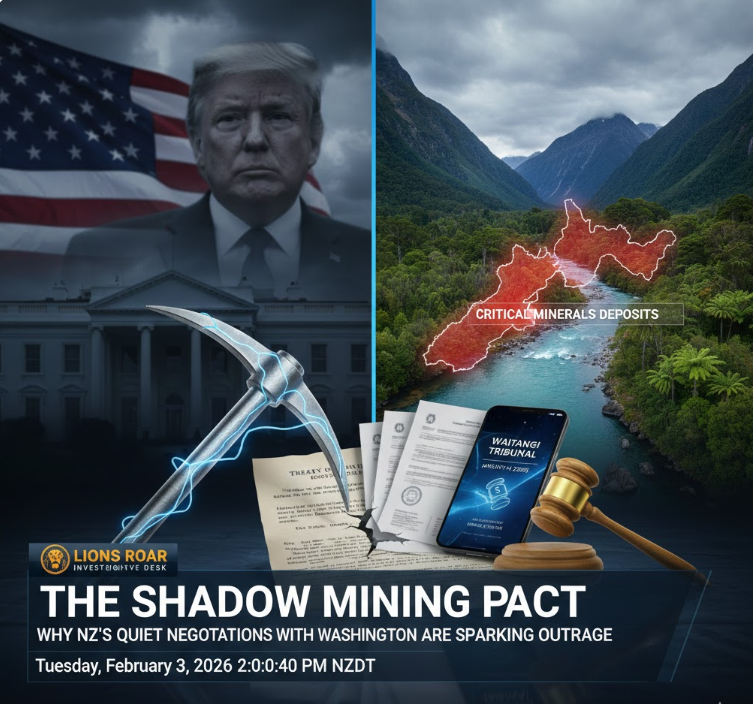
The Shadow Mining Pact: Why NZ’s Quiet Negotiations with Washington are Sparking Outrage
By Lions Roar Investigative Desk
WELLINGTON, NEW ZEALAND (Tuesday, February 3, 2026) — Behind closed doors, the New Zealand government is reportedly hammering out a controversial high-stakes deal with the United States over the future of the country’s mineral wealth. While the Prime Minister has attempted to downplay the discussions as “speculative,” critics warn that Aotearoa is being pressured into a strategic alliance that could strip the nation of its environmental protections and its sovereign neutrality.
The tension follows a memorandum submitted to the Waitangi Tribunal, revealing that the Ministry of Foreign Affairs and Trade (MFAT) is active in talks regarding a “non-binding critical minerals framework” with the Trump administration.
🛡️ “Brutal Self-Interest” vs. Environmental Integrity
Prime Minister Christopher Luxon has defended the move, stating the government must act in New Zealand’s “own brutal self-interest” to secure economic resilience. However, the lack of transparency has ignited a firestorm across the political spectrum:
- Environmental Red Flags: Labour and the Green Party argue that the “Fast Track” consenting laws are being weaponized to allow foreign powers access to New Zealand’s conservation estate.
- Geopolitical Alignment: Green Party co-leader Chlöe Swarbrick questioned when the country agreed to “be in Trump’s corner,” suggesting the terms of the deal are being dictated entirely by Washington.
- Treaty Concerns: Claimants in the Waitangi Tribunal’s climate change inquiry argue that a “backroom deal” for minerals mined in Aotearoa violates rangatiratanga and kaitiakitanga (guardianship).
⛏️ The 180-Day Ultimatum
The timing of these talks is not accidental. On January 14, 2026, the U.S. issued a proclamation threatening new tariffs on any trading partners that fail to sign critical mineral agreements within 180 days.
Industry voices, such as the Minerals Council, support the move, claiming New Zealand’s “high standards” make it a more ethical source for tech-essential minerals (like lithium, nickel, and rare earths) than China. But former Prime Minister Helen Clark has joined the chorus of dissent, urging the government to be upfront about the trade-offs being made for national parks and wild landscapes.