Sweden’s Anna Breman Appointed as First Female Governor of Reserve Bank of New Zealand Amid Recession Fears
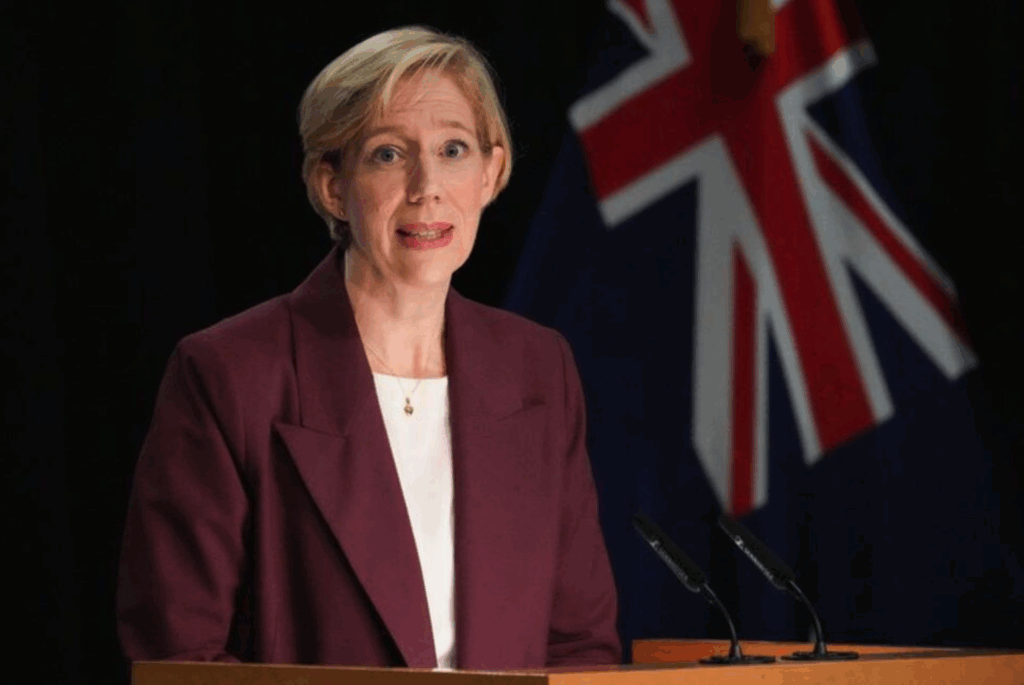
Wellington, September 27, 2025 – In a historic move, the New Zealand Government has appointed Swedish economist Anna Breman as the next Governor of the Reserve Bank of New Zealand (RBNZ). Breman, a highly respected central banker and economist, will become the first woman ever to lead the RBNZ, marking a significant milestone in the institution’s 90-year history.
Her appointment, however, comes at a turbulent time for New Zealand’s economy, which is facing mounting challenges including the risk of a “double-dip recession.” Recent economic data shows the country’s GDP has contracted for two consecutive quarters, unemployment is ticking upwards, and consumer spending is weakening.
Historic Appointment
Breman, formerly a deputy governor at Sweden’s Riksbank, brings with her an extensive background in monetary policy, financial stability, and international economics. Known for her pragmatic and research-driven approach, she has been praised internationally for balancing inflation control with economic growth during volatile global market conditions.
New Zealand Finance Minister [Name] described the appointment as a “transformational moment” for the Reserve Bank.
“Dr. Breman’s leadership and expertise will provide confidence and direction at a time when the New Zealand economy is under real pressure. She is uniquely placed to bring both global experience and fresh perspectives to our central banking system,” the Minister said.
Her five-year term will officially begin in January 2026, succeeding current Governor [Name], who steps down after completing his tenure.
Economic Challenges Await
Breman will inherit an economy under strain. While New Zealand managed a post-pandemic rebound in 2022–2023, growth has slowed significantly in the past year. Analysts point to a combination of factors:
- High interest rates imposed to curb inflation, which peaked above 7% last year but has since eased, are now dampening investment and household spending.
- Export weakness, particularly in the dairy and tourism sectors, has limited revenue inflows.
- Labour market concerns, with rising unemployment and reports of skilled workers migrating overseas.
Economists warn that unless decisive measures are taken, New Zealand could slip into a prolonged period of stagnation.
Expectations from Breman’s Leadership
Market watchers believe Breman will need to balance inflation control with strategies that stimulate growth. While inflation has come down closer to the RBNZ’s 1–3% target band, growth remains elusive.
“Her biggest challenge will be walking the tightrope,” said [Economist Name], an analyst at [Think Tank]. “If rates remain too high for too long, the recession deepens. But if policy is loosened prematurely, inflation could flare again.”
Breman’s international experience is expected to help New Zealand navigate external shocks such as global supply chain disruptions, volatile commodity markets, and geopolitical tensions.
Breaking Barriers in Central Banking
Beyond the economics, Breman’s appointment is being hailed as a breakthrough for gender representation in high-level finance. For decades, central banking in New Zealand, as in much of the world, has been dominated by men.
Advocates for diversity in leadership see this as a symbolic shift. “Representation matters. Having the first female Governor of the Reserve Bank sends a powerful message to young women in economics and finance,” said [Spokesperson Name] of Women in Economics NZ.
Looking Ahead
The months ahead will test both New Zealand’s economy and its new central bank leadership. Financial markets are already watching Breman’s early signals on monetary policy, particularly whether she will consider rate cuts in 2026 to stimulate growth.
For now, her appointment has been met with cautious optimism. The public and business community alike are hopeful that Breman’s leadership will steady the ship and guide New Zealand out of its current economic headwinds.