Summer Forecast: Warm, Humid Days with Elevated Risk of Heavy Rain as La Niña Arrives
By The Lion’s Roar News International Desk
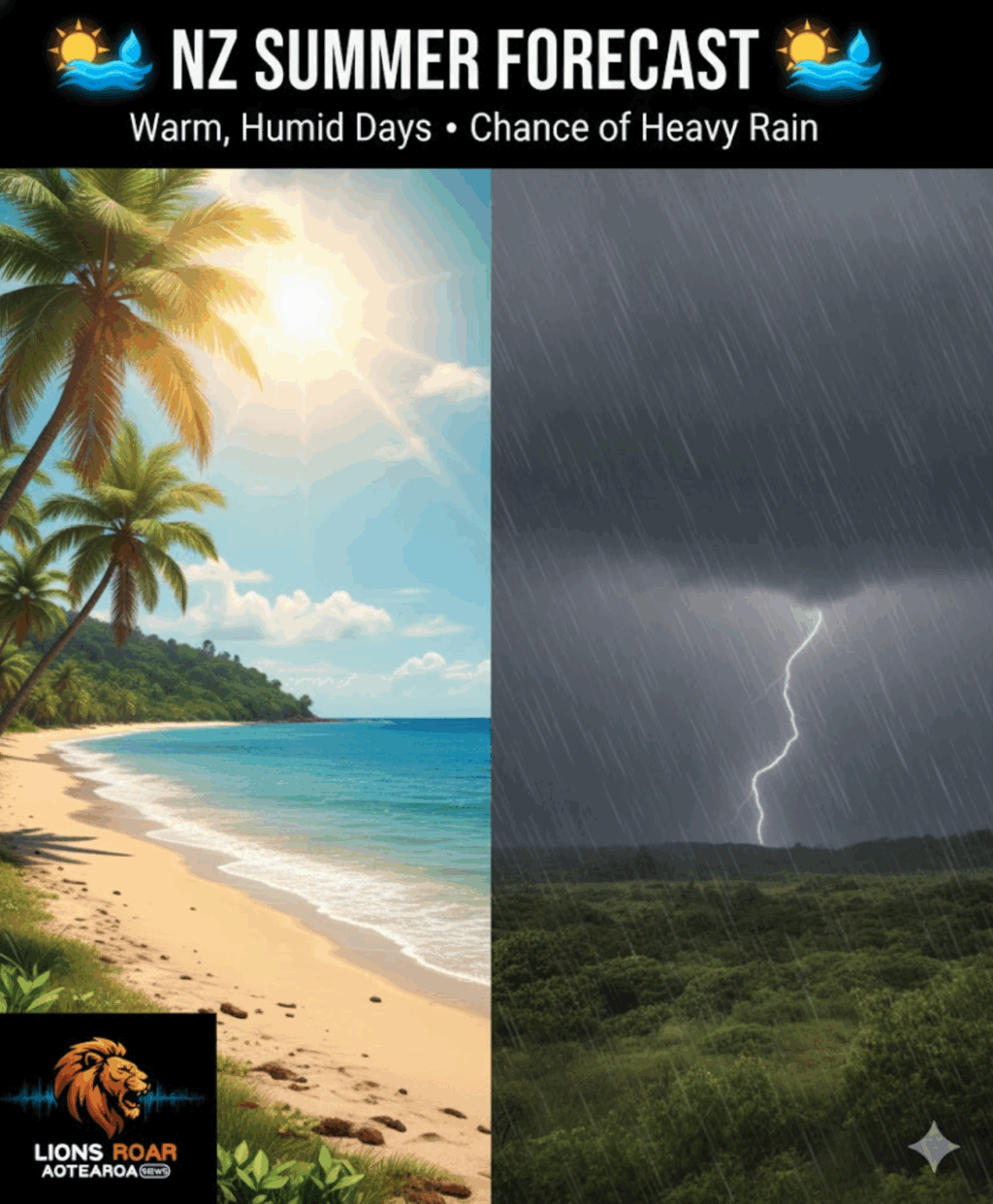
WELLINGTON— New Zealanders are advised to prepare for a classic, but potentially wild, early summer as forecasters from Earth Sciences New Zealand (ESNZ) predict warm, humid conditions punctuated by a heightened chance of major rainfall events. The shift is being driven by the establishment of a La Niña climate pattern, which is expected to dominate the weather from November 2025 through January 2026.
ESNZ has placed an 80 percent chance on La Niña conditions prevailing over the next three months. This means the country is moving away from the stormy westerly patterns of spring towards a summer dominated by east to north-east winds funneling warm, moisture-laden air from the tropics and subtropics.
💧 The La Niña Effect: Warmth and Tropical Moisture
Principal Scientist Chris Brandolino told Morning Report that while average or above-average temperatures are likely across all regions of New Zealand—with particularly warm nights expected in the North Island due to increased humidity—the key concern lies with the rainfall.
The tropical airflow is a double-edged sword: it brings the summer warmth people crave, but it also significantly increases the odds for “big rainfall events,” especially for the upper and eastern parts of the North Island.
“With La Niña we tend to have more east to north east winds… when you get an air flow coming from the subtropics to the tropics you’re going to get warm because air is coming from there but you’re also going to have that moisture and that does increase the odds for those big rainfall events particularly the upper to eastern part of the North Island.” — Chris Brandolino, ESNZ Principal Scientist
🌧️ Regional Rainfall Roulette
The wettest conditions are forecast for the top of the North Island. Regions that are likely to get wetter weather than usual include:
- Northland
- Auckland
- Coromandel
- Bay of Plenty
Brandolino specifically highlighted a period in the second week of November that is likely to see another round of active weather, with a major low-pressure system developing over the Tasman Sea. This system could put areas like the upper South Island and parts of the North Island “under the gun for some heavy rain.”
Conversely, the forecast suggests normal or below-normal rainfall for the west of the South Island, a typical feature of the La Niña pattern as it drives moisture towards the northeast.
🌡️ Temperature Trends: Unusually Warm and Humid
The temperature outlook is consistently leaning towards the warmer side. Average or above-average temperatures are forecast for all regions, though the western parts of both islands are flagged as being most likely to see above-average warmth.
The increased humidity, especially noticeable at night, will be a defining feature of the North Island’s summer, potentially making sleeping conditions more challenging.
In the long term, while the global La Niña cycle only influences less than 25 percent of New Zealand’s seasonal weather, ESNZ’s guidance is clear: plan for a season that will be hot and muggy, but where short, sharp, and intense rainfall events could interrupt summer plans and pose flood risks to vulnerable regions.
ESNZ cautions that despite the chance of heavy rain, soil moisture levels and river flows are still forecast to be near or below normal for the north and east of the North Island, reflecting the patchy nature of the rainfall.
The Lion’s Roar News International Desk advises the public to monitor daily and weekly weather forecasts closely, particularly those in the upper North Island, and be prepared for potential high-intensity weather events.