State Highway 3 Paralysed: Awakino Gorge Shuts Down as Slips and Flooding Create Havoc After Deluge
Awakino Gorge, Waitomo — October 14, 2025
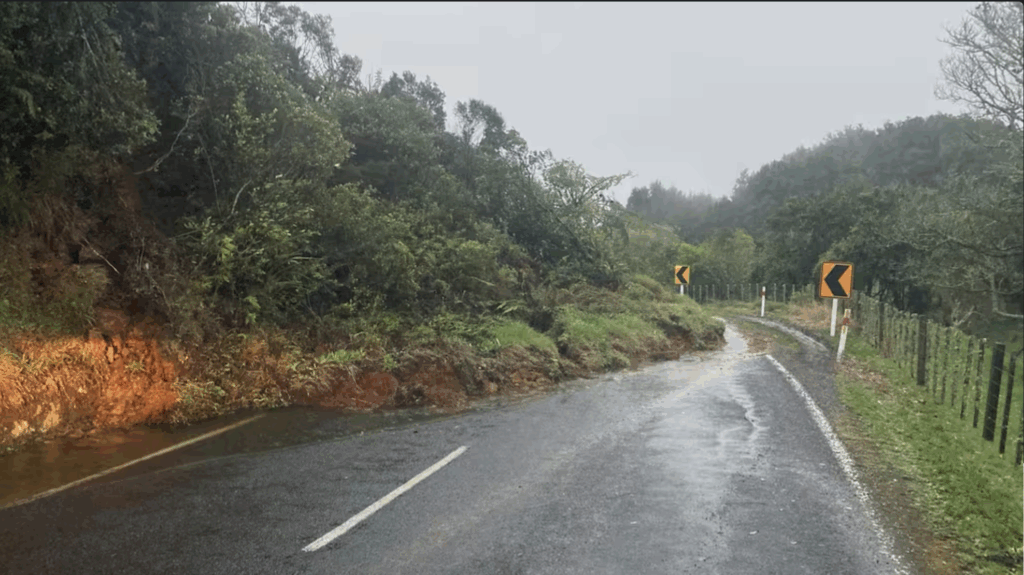
A severe overnight deluge has brought the crucial State Highway 3 (SH3) link through the Awakino Gorge to a complete standstill, with massive slips and widespread flooding forcing an indefinite closure. The route, a vital artery connecting the Taranaki region to Waikato and Auckland, remains impassable this morning as Waka Kotahi NZ Transport Agency crews battle treacherous conditions and persistent instability to clear the debris.
The intensity of the rainfall, which meteorologists describe as an “extreme and localised” event, caused multiple large-scale landslides to cascade down the steep, unstable gorge walls. The largest slip, located near the northern approach to the Awakino tunnel, is estimated to involve hundreds of cubic metres of saturated soil and rock, completely burying both lanes of the highway under several feet of debris. Compounding the situation, the Awakino River, swollen far beyond its banks, has contributed to significant flood damage, eroding the road base in several low-lying sections.
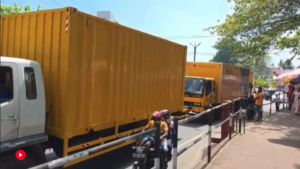
Travel in and out of Taranaki is now severely compromised, forcing motorists and commercial freight operators onto lengthy and arduous detours. Police are urging the public to avoid the area entirely, stressing that the gorge is “extremely dangerous” and advising that emergency services are focused solely on assisting stranded travellers and coordinating the mammoth cleanup operation.
The Scale of the Damage: An Engineering Challenge
Waka Kotahi’s regional maintenance manager, Liam O’Connell, confirmed that the damage is extensive and that a full structural assessment is required before any reliable estimate for reopening can be provided.
“We are dealing with multiple sites of failure,” O’Connell stated in an early morning briefing. “The main slip is immense. It’s not just mud; we have large boulders and tree trunks that have come down. Furthermore, the ground is completely saturated, meaning the gorge walls remain highly susceptible to further slips, even if the rain eases.”
Geotechnical engineers were deployed at first light, but their work is severely hampered by poor visibility and the sheer volume of material. Heavy machinery, including multiple excavators and loaders, is being mobilised from both the Waitomo and Taranaki ends, but the narrow, winding nature of the gorge makes clearance slow and hazardous. The immediate focus is on creating a single-lane passage for emergency vehicles, but even this is proving difficult given the size of the rockfalls.
Detours and Economic Impact
The closure of SH3 is far more than a simple inconvenience; it is a major economic choke point. This highway is the primary conduit for commercial freight between the nation’s largest city, Auckland, and the economically significant Taranaki region, home to major agricultural, dairy, and energy industries.
With the gorge closed, all north-south traffic is being directed onto lengthy alternative routes:
- SH4/SH43 (The Forgotten World Highway): This is the most common alternative, but it is notoriously narrow, winding, and poorly suited for heavy transport trucks. It adds significant time—estimated at two to three hours—and poses navigational challenges, raising fuel and labour costs for transport firms.
- The Eastern Route (via SH1 and SH4/SH49): This option is even longer for Taranaki-Auckland journeys, adding several hours to transit times and significantly impacting logistics schedules.
Commercial transport operators are already calculating the soaring costs. “This is a logistics nightmare,” said Peter Davison, CEO of a Taranaki-based dairy transport company. “We operate on tight margins and strict delivery windows. These detours mean massive spikes in driver hours, fuel burn, and wear-and-tear on vehicles. Ultimately, these costs get passed along, affecting the price of everything from consumer goods to fresh produce.”
For local businesses in the small communities of Awakino and Mokau, the closure means a total loss of passing trade, effectively isolating them until the road is cleared.
Why the Gorge is a Constant Risk
The Awakino Gorge section of SH3 is historically prone to instability. The geology of the area consists primarily of softer sedimentary rocks, which become saturated quickly and easily destabilised during periods of intense rainfall. The steep cutting required to put the road through the gorge means the natural angle of repose is frequently exceeded, making it a constant battleground between civil engineering and nature.
Climate change is exacerbating the problem. Data from NIWA shows that the frequency and intensity of heavy rainfall events in the western North Island have increased significantly over the last decade. This latest event, therefore, is not an anomaly but a worrying trend.
Local residents have long called for a more permanent, strategic solution to the gorge’s vulnerability. Proposals over the years have included significant tunnel extensions or a complete realignment, but the enormous cost—projected to be in the hundreds of millions—has always stalled progress.
Travellers Stranded and Community Response
Reports indicate several drivers who began their journeys before the closure was officially confirmed were stranded inside the gorge, unable to proceed north or south. Emergency services, including Fire and Emergency New Zealand and local Civil Defence teams, have been working to clear minor obstructions and safely escort these vehicles out via less-damaged sections.
Local community halls in Mokau and Piopio have been opened as temporary welfare centres, offering food, warmth, and communication facilities to stranded travellers, showcasing the strong community spirit typical of rural Aotearoa.
Authorities are advising motorists planning to travel between Taranaki and the Waikato region over the next 48 to 72 hours to reconsider non-essential travel or prepare for extremely long delays and hazardous conditions on detour routes. The full impact of this closure is expected to be felt across the North Island’s supply chain throughout the remainder of the week.
Lions Roar Aotearoa will provide continuous updates as clearance crews work to restore access to this critical national highway.