Sri Lankan Supreme Court Orders $1 Billion Compensation for X-Press Pearl Disaster
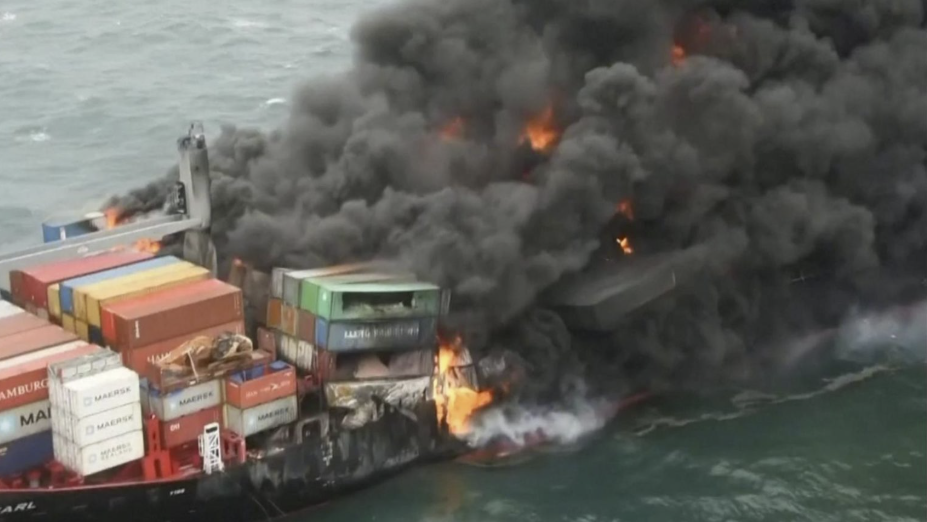
In a landmark ruling today, Sri Lanka’s Supreme Court has ordered the owners of the Singapore-flagged container ship MV X-Press Pearl to pay a staggering $1 billion in compensation to the island nation’s government. This unprecedented judgment comes more than three years after the vessel caught fire and sank off the coast of Colombo in June 2021, causing the most severe marine environmental catastrophe in Sri Lanka’s history. The ruling is a significant victory for environmental campaigners and fishing communities who have tirelessly sought justice and accountability for the devastating pollution.
The MV X-Press Pearl incident unleashed an ecological disaster of immense proportions. The ship, laden with chemicals including nitric acid and several tons of plastic pellets (nurdles) used to make plastic bags, ignited into a massive blaze before eventually sinking. The Supreme Court’s judgment meticulously detailed the “unprecedented devastation to the marine environment of Sri Lanka,” citing the death of 417 turtles, 48 dolphins, eight whales, and countless fish species that washed ashore in the aftermath. The widespread release of toxic substances poisoned ocean waters, severely impacted marine ecosystems and coastal areas.
Beyond the immediate environmental damage, the disaster had a profound and lasting impact on Sri Lanka’s economy, particularly its vital fishing communities. The government was forced to impose a fishing ban for well over a year, depriving thousands of fishermen of their livelihoods and income. The court’s ruling explicitly acknowledged this economic harm, emphasizing that the compensation should be utilized to restore and protect the affected marine and coastal environment, and to support the rehabilitation of the impacted communities.
The judgment was delivered against the X-Press Pearl group, which includes the ship’s registered owner, EOS Ro Pte. Limited, and other charterers, all based in Singapore, as well as their local agent in Sri Lanka, Sea Consortium Lanka (Pvt.) Ltd. The Supreme Court invoked the “Polluter Pays Principle,” a fundamental concept in environmental law, holding the owner, operators, and local agent accountable and liable for the extensive pollution. This sets a powerful precedent for environmental responsibility in maritime incidents, not just in Sri Lanka but potentially globally.
While the ruling represents a major legal triumph, the practicalities of collecting such a substantial sum and ensuring its effective utilization for environmental restoration and community support will be the next challenge. The decision underscores the critical need for robust international maritime regulations, stricter enforcement, and greater corporate accountability to prevent similar ecological disasters in the future. For Sri Lanka, this judgment offers a pathway towards healing its wounded marine environment and providing much-needed relief to its affected coastal populations.