Sri Lanka Targets 6% Growth in 2026 as 2025 Outlook Weakens
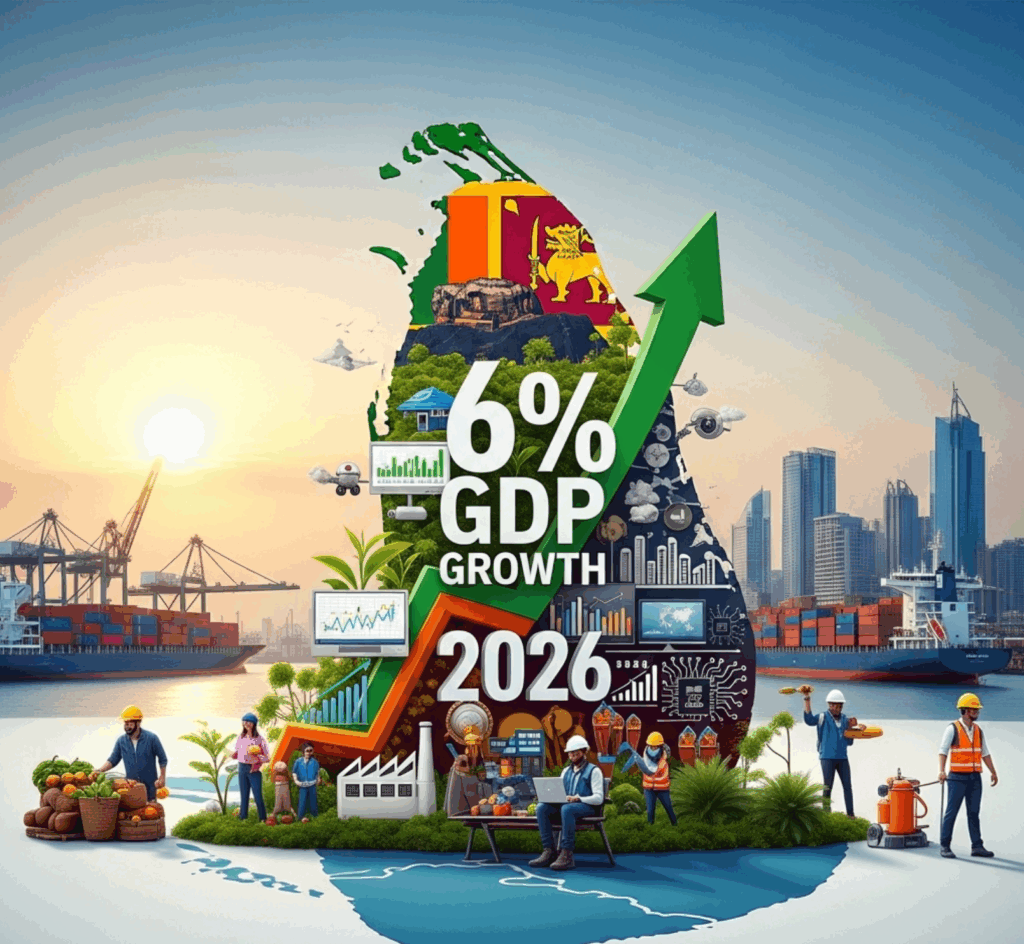
Colombo, Sept. 16 – The Sri Lankan government has set an ambitious target of achieving up to 6% economic growth in 2026, driven largely by record levels of public capital expenditure. However, economists warn that the outlook for 2025 is less encouraging, with growth expected to slow to around 4–4.5% amid delays in the budget process and sluggish execution of major projects.
According to the Ministry of Finance, the government has allocated approximately 1.4 trillion rupees for capital spending, the largest in the country’s history. These funds are intended to support infrastructure development, transport upgrades, renewable energy projects, and digital economy initiatives, all of which are expected to create jobs and stimulate long-term productivity.
Yet, only a fraction of this investment has been utilized so far. Reports suggest that by the middle of 2025, less than 20% of the allocated funds had actually been spent, leaving critical projects behind schedule. Economists say bureaucratic bottlenecks, procurement challenges, and political uncertainty following recent parliamentary debates have contributed to the slow rollout.
“This year’s underperformance is a direct consequence of poor implementation, not a lack of ambition,” noted an independent economic analyst in Colombo. “If the government can clear procedural hurdles, 2026 could indeed deliver stronger growth.”
The weaker near-term outlook comes as Sri Lanka continues its recovery from a severe economic crisis that peaked in 2022, when foreign reserves collapsed, inflation soared above 50%, and widespread shortages triggered mass protests. Since then, a combination of fiscal reforms, IMF-backed policy support, and improved remittance inflows has helped stabilize the economy.
However, the road ahead remains challenging. Export growth has slowed, private investment remains cautious, and debt sustainability continues to be a concern despite restructuring agreements. For many ordinary Sri Lankans, the promise of macroeconomic recovery has yet to translate into tangible improvements in daily life.
Finance Minister Shehan Semasinghe defended the government’s strategy, saying that structural reforms and infrastructure-led growth will pay dividends in 2026. “We are laying the foundations for a new era of economic resilience,” he said.
For now, Sri Lanka faces a balancing act: ensuring that ambitious spending plans materialize on the ground in 2025 while keeping public confidence steady as it looks ahead to a stronger 2026.