Sri Lanka Seeks $500 Million Chinese Loan in Yuan: A New Chapter in Debt, Diplomacy, and De-Dollarisation
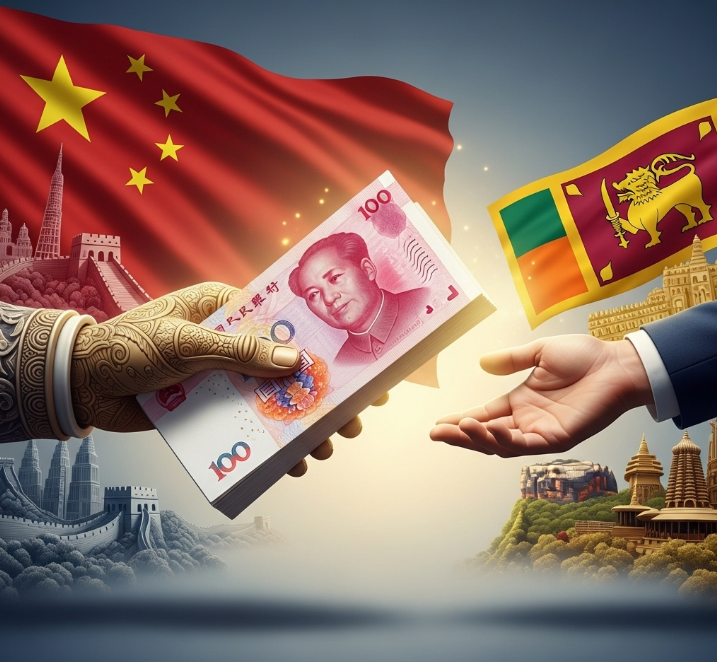
Sub-headline: As Sri Lanka struggles with debt restructuring and IMF-backed reforms, Colombo turns to Beijing for a $500 million yuan-denominated loan. The move marks a shift away from dollar dependency and raises fresh questions about geopolitics, debt sustainability, and regional balance of power.
Introduction
In a significant financial and geopolitical development, Sri Lanka has announced plans to secure a $500 million loan from China’s Export-Import (Exim) Bank, denominated in Chinese yuan instead of the U.S. dollar. This decision comes at a time when the island nation is navigating a fragile recovery after its historic 2022 sovereign debt default and ongoing IMF bailout programme.
The deal represents more than just another loan—it signals Sri Lanka’s participation in the global shift towards de-dollarisation and deepens its complex economic ties with Beijing. For some observers, it’s a pragmatic step to ease pressure on foreign reserves and diversify borrowing options. For others, it raises alarm bells about renewed debt dependence on China, whose infrastructure loans in the past contributed to Sri Lanka’s debt woes.
This article explores the loan’s economic context, geopolitical implications, domestic debates, and long-term risks and opportunities, situating Sri Lanka’s decision within both local realities and the global financial order.
The Road to the Yuan Loan
Sri Lanka’s Economic Collapse
Sri Lanka’s financial crisis of 2022 was catastrophic. The government defaulted on over $50 billion in external debt, triggering shortages of food, fuel, and medicines, as foreign exchange reserves evaporated. Massive street protests toppled President Gotabaya Rajapaksa, ushering in a political realignment and an eventual IMF bailout worth $3 billion in 2023.
Since then, Colombo has been restructuring debt with bilateral lenders (India, China, Paris Club) and private bondholders. But the process has been slow and contentious, particularly with China—Sri Lanka’s largest bilateral creditor.
China’s Role in Sri Lanka’s Debt
China has long been a dominant force in Sri Lanka’s infrastructure landscape, funding projects like Hambantota Port, Colombo Port City, and major highways. While these projects boosted infrastructure, they also saddled the island with heavy debt obligations.
Negotiating debt relief with Beijing has proven tricky, as China prefers bilateral deals rather than multilateral frameworks. Against this backdrop, Colombo’s request for a fresh yuan loan might appear counterintuitive, but officials insist it is necessary to bridge short-term financing gaps.
Why Yuan and Not Dollars?
The choice of yuan is both symbolic and practical. On one hand, it reflects the global trend of countries diversifying away from the U.S. dollar in trade and finance. On the other, it helps Sri Lanka sidestep immediate dollar shortages while still accessing liquidity for imports and government expenses.
By borrowing in yuan, Colombo hopes to directly finance imports from China, particularly in infrastructure and technology, without having to convert into dollars.
Domestic Implications
Bridging the Foreign Exchange Gap
Sri Lanka’s reserves, though stabilised since the IMF programme began, remain precarious. A yuan loan allows Colombo to temporarily bolster reserves while maintaining dollar reserves for other urgent obligations.
Political Reactions
Domestically, the move has sparked debate. Supporters argue that Sri Lanka must take advantage of any available financing to sustain its recovery. Critics, however, warn of falling back into a “Chinese debt trap” that mirrors the controversies of Hambantota Port. Opposition politicians have accused the government of mortgaging the country’s future yet again.
Business Community Response
The business sector has cautiously welcomed the loan, particularly importers who rely heavily on Chinese machinery, electronics, and raw materials. By transacting directly in yuan, import costs could be stabilised, reducing dependency on volatile exchange rates with the dollar.
Geopolitical Dimensions
India vs China in Sri Lanka
India has been Sri Lanka’s biggest lifeline in recent years, extending billions in credit lines, fuel assistance, and humanitarian aid during the peak of the 2022 crisis. However, the yuan loan underscores Sri Lanka’s delicate balancing act between India and China.
New Delhi remains wary of Beijing’s expanding influence in Colombo. For India, Sri Lanka’s tilt towards China—even financially—raises concerns about strategic encroachment in its backyard.
China’s Belt and Road Strategy
For Beijing, the yuan loan fits neatly into its broader Belt and Road Initiative (BRI) and its push for the yuan’s global acceptance. By encouraging countries like Sri Lanka to borrow and transact in yuan, China not only strengthens economic ties but also advances its long-term ambition of making the yuan a reserve currency alternative to the dollar.
Western Reactions
Western creditors and the IMF are likely to view the loan with scepticism. They fear it could undermine Sri Lanka’s debt sustainability plan by adding fresh Chinese liabilities at a time when the focus should be on reducing exposure.
Risks and Challenges
- Debt Sustainability
- Sri Lanka already faces a staggering debt-to-GDP ratio above 120%. Adding another half-billion-dollar loan, even in yuan, risks undoing hard-won gains from restructuring.
- Currency Volatility
- While the yuan is seen as relatively stable, it is not immune to market fluctuations. Sri Lanka’s unfamiliarity with yuan debt management could add complications.
- Conditionalities and Leverage
- Unlike IMF loans, which come with structural reform conditions, Chinese loans often come with opaque terms. Critics warn of potential clauses that could increase Beijing’s leverage over strategic assets.
Opportunities
- Diversification of Finance
- Moving away from exclusive reliance on the dollar gives Sri Lanka more flexibility in global markets.
- Trade Facilitation with China
- Direct yuan financing could smoothen trade relations with Beijing, Sri Lanka’s second-largest import partner.
- Geopolitical Leverage
- By engaging both India and China, Sri Lanka maintains room for manoeuvre in its foreign policy.
Long-Term Outlook
The yuan loan represents both an opportunity and a gamble. For Colombo, the immediate benefit of stabilising reserves may outweigh the long-term risks. But without fiscal discipline, structural reforms, and careful negotiation of loan terms, Sri Lanka risks repeating past mistakes.
In the long run, the move may also accelerate Sri Lanka’s role in the de-dollarisation movement, aligning the island with a growing group of countries seeking to reshape global finance. Whether this proves to be a path toward stability or a new form of dependency will depend on how Colombo balances its relationships—with Beijing, with New Delhi, and with the IMF.
Conclusion
Sri Lanka’s decision to seek a $500 million yuan loan from China is emblematic of the crossroads the nation finds itself at. Desperate for financing, yet wary of past entanglements, Colombo is walking a tightrope between survival and sovereignty.
The loan will ease short-term pressures, but the bigger question remains: can Sri Lanka build an economy resilient enough to break free from perpetual borrowing? Or will it continue to oscillate between creditors, caught in the currents of global power politics?
Only time—and careful policy choices—will answer.