Rising Tensions Surround Winston Peters: Protests, Vandalism and a Polarising Foreign Policy
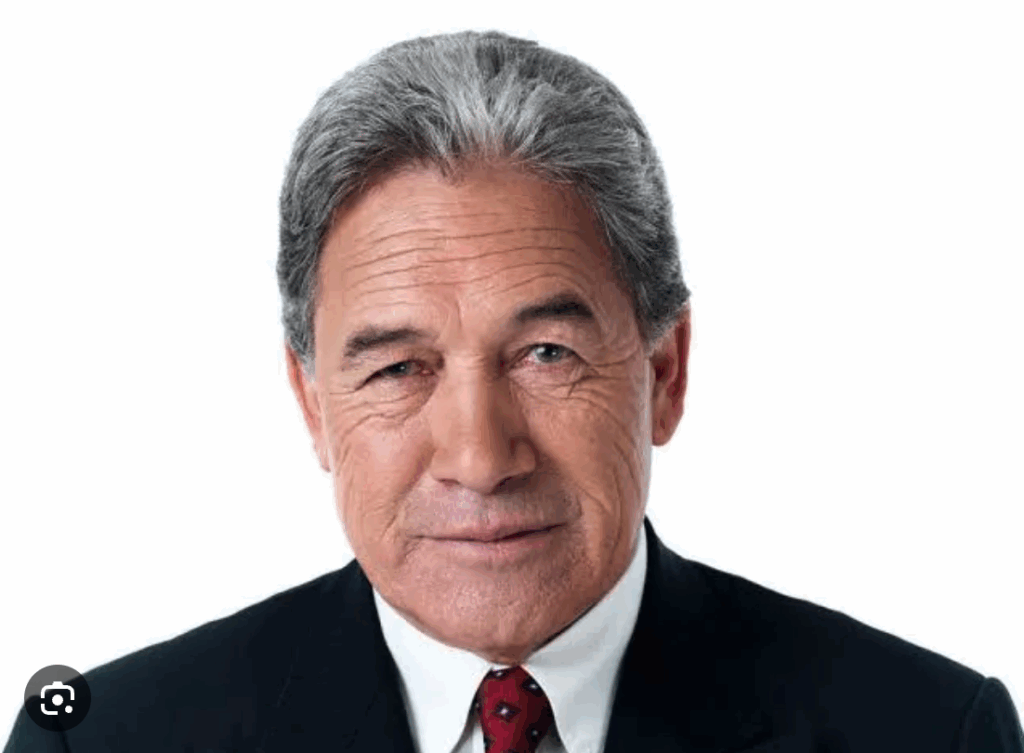
Winston Peters, New Zealand’s Foreign Minister and longstanding political figure, has found himself at the centre of intensifying public anger and protest in recent weeks. What began as vocal criticism over his government’s stance on international issues has escalated into direct action — including mass demonstrations, confrontations at public events, and an attack on the minister’s family home that has refocused national attention on the risks of politicised protest and the limits of acceptable dissent.
The immediate flashpoint for the recent wave of action has been the government’s decision not to immediately recognise Palestinian statehood, announced by Peters during international meetings. That position — framed publicly by Peters as a cautious, pragmatic approach given the ongoing conflict and governance questions in Gaza — triggered swift condemnation from many activists and pro-Palestinian groups who had been campaigning for explicit recognition. The announcement and Peters’ UN remarks have since been repeatedly cited as the core grievance driving the current demonstrations.
Mass demonstrations and targeted protests
Across several cities, protesters have staged public rallies and sought to confront Peters directly at events. In Dunedin, for example, hundreds of pro-Palestine protesters gathered at a port event where Peters was present, seeking to make their opposition visible and vocal. Organisers and participants say their goal is to pressure political leaders to adopt a clearer stance in solidarity with Palestinians; critics of the protests argue that some demonstrators have crossed lines by attempting to breach private boundaries or intimidating public officials.
While much of the public dissent has taken a peaceful form — rallies, placards and chants — there have been worrying episodes of escalation. Most dramatically, a man allegedly smashed a window of Peters’ Auckland home with a crowbar, leaving a note. Peters was not at the property at the time, but his partner and a guest were present and the incident sent glass across the house and the family’s dog. Police have since arrested a 29-year-old man in connection with the incident and charged him; inquiries are ongoing. The attack prompted immediate condemnation across the political spectrum and sharpened debate about how protest movements should act in a democratic society.
Political reactions: condemnation, finger-pointing and calls for restraint
Political leaders and parties were quick to respond to the vandalism. Prime Minister Christopher Luxon described the act as “a really cowardly act from an individual,” warning of the dangers of normalising violence in political disputes. Opposition and crossbench figures also condemned the assault, though rhetoric has varied significantly: while many stressed the importance of protecting personal privacy and safety, others pointed to broader political rhetoric they say has contributed to a toxic environment. Some government ministers publicly criticised Green Party leaders, accusing them of implicitly encouraging protest activity near MPs’ homes; Greens condemned the vandalism and urged restraint, while also arguing government rhetoric should be examined. These exchanges reflect the wider polarisation surrounding the issue and a mutual urgency to distance mainstream politics from violent tactics.
From public policy to personal safety: how a foreign policy decision became domestic flashpoint
Why has a foreign policy choice created such intense domestic fallout? Analysts point to several converging factors. The Gaza conflict has inflamed strong feelings across communities worldwide, and New Zealand is no exception: diaspora communities, activists, and student groups have mobilised to press for rapid, moral responses from Western governments. Peters’ high-profile role and his public explanation — that recognition would be premature while Hamas remains the de facto authority in Gaza — was viewed by many campaigners as insufficiently forceful or morally clear, prompting escalated tactics. The decision also unfolded in a charged domestic environment where debates about immigration, national identity, and geopolitics are already acute.
Security, law enforcement and the right to protest
Police and legal authorities have tried to walk a narrow line: affirming citizens’ right to peaceful protest while condemning and prosecuting criminal acts such as property damage or threats. Officials have emphasised that protest is a legitimate democratic tool, but must remain lawful; at the same time, the attack on Peters’ home has sparked a review of how public figures’ personal addresses and private lives are protected in an era where social media makes personal details more accessible to large numbers of people. The arrests linked to the St Mary’s Bay incident demonstrate that law enforcement is treating property damage and trespass seriously — but critics say deterrence and prevention require better coordination and public messaging to reduce escalation.
Political fallout and the media environment
The events have also intensified scrutiny of political language and media coverage. Commentators have pointed to inflammatory rhetoric from all sides — politicians, pundits, and social media personalities — as a contributing factor. Some say that framing dissent as moral clarity can make activists less responsive to calls for non-violence; others say that labelling protest as extremism risks stifling legitimate democratic pressure. Media organisations have been careful to cover both the protesters’ demands and the condemnations of violence, but the rapid cycle of online debate has amplified voices on the extremes, making the public conversation feel more combustible.
What Peters and the government are saying now
Peters himself has condemned the vandalism in strong terms, calling the perpetrator a “disgusting coward” and urging New Zealanders to uphold standards of decency even amid political disagreement. The foreign minister has defended the government’s cautious approach on recognition and stressed the need for careful diplomacy at the UN and with allies, while acknowledging the depth of feeling among activists and diaspora communities. The Prime Minister and senior cabinet ministers have reiterated that while protest is legitimate, criminal damage and threats will not be tolerated.
Looking ahead: risks, remedies and the shape of protest
The immediate questions for New Zealand are how to prevent further escalation, protect public figures and their families, and channel legitimate grievance into lawful democratic activity. Steps that have been suggested across opinion and political commentary include: clearer public messaging from party leaders discouraging intimidation, strengthened policing where credible threats exist, improved safeguards around MPs’ personal information, and more civic forums for dialogue between civil society and government on foreign policy decisions. Many activists insist that peaceful civil disobedience remains necessary to shift government priorities — but the vandalism has provided ammunition to those who argue such tactics should be condemned unequivocally.
Conclusion
Winston Peters’ recent experiences — from heated public protests to an attack on his home — reflect how international crises can rapidly become domestic political flashpoints. The episode has forced New Zealanders to confront uncomfortable questions: how to balance passionate protest with the safety of individuals, how political rhetoric shapes behaviour in the streets, and how democratic societies respond when foreign policy decisions collide with powerful public emotions. As inquiries continue and political debate rages on, the country faces the urgent task of protecting both democratic expression and the personal security of those who serve in public office.