Public Service Census: The Best and Worst Government Departments to Work For Revealed
By Lions Roar News National Desk
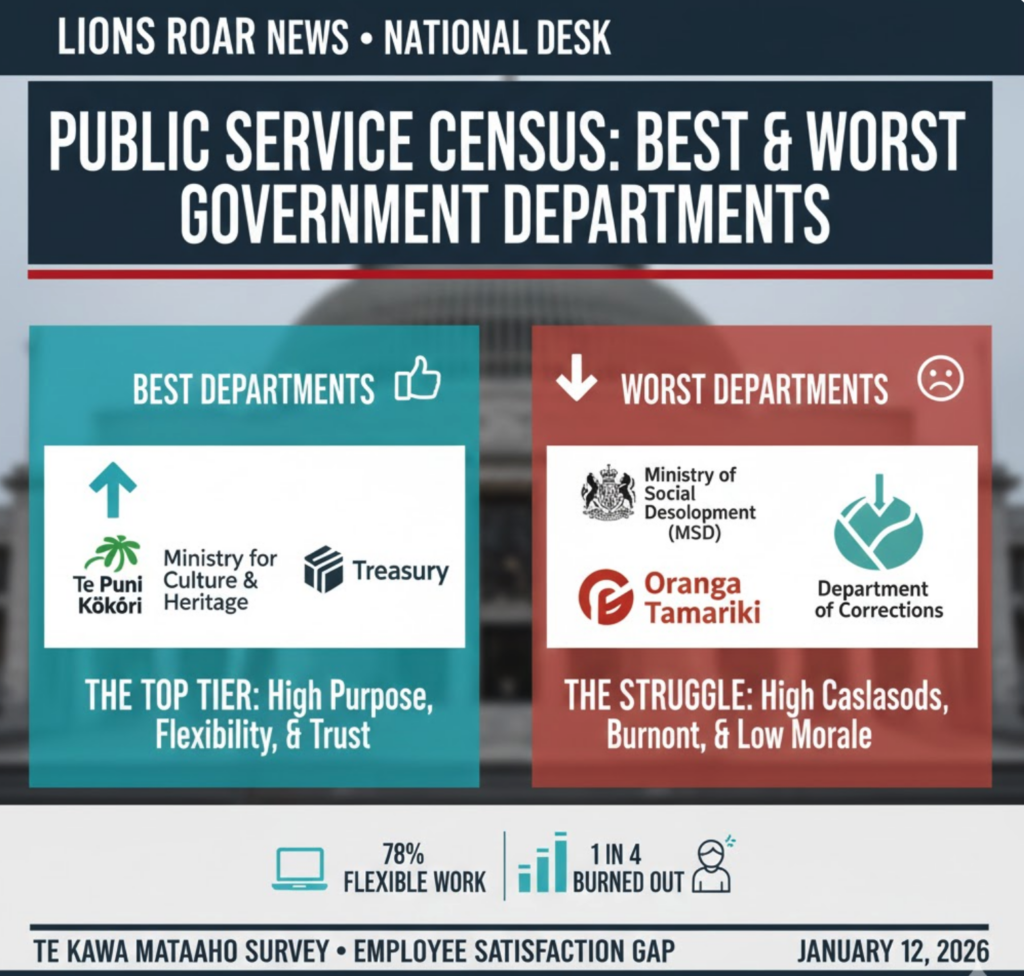
WELLINGTON, NEW ZEALAND (January 12, 2026) — The latest Public Service Census results are in, offering a transparent look into the morale, culture, and satisfaction levels across New Zealand’s government agencies. The data reveals a significant divide in employee experience, with specialized, purpose-driven agencies soaring in popularity while larger, frontline departments continue to face significant cultural and workload challenges.
The census, conducted by Te Kawa Mataaho (The Public Service Commission), provides a benchmark for how thousands of public servants view their leadership, work-life balance, and overall job satisfaction.
🏆 The Leaders: Top-Rated Departments
Small to medium-sized agencies with clear, focused missions consistently ranked the highest for employee engagement and satisfaction.
- The Winners: Agencies like Te Puni Kōkiri, the Ministry for Culture and Heritage, and the Treasury reported high scores for “sense of purpose” and “leadership trust.”
- Why they succeed: Employees in these departments cited flexible working arrangements, a strong commitment to inclusion, and a feeling that their work directly contributes to the wellbeing of New Zealanders as key reasons for their high satisfaction.
⚠️ The Struggling Agencies: Lowest Satisfaction
At the other end of the scale, some of the government’s largest and most public-facing departments reported lower morale and higher rates of burnout.
- Under Pressure: The Ministry of Social Development (MSD) and Oranga Tamariki remained near the bottom of the rankings. Staff pointed to high caseloads, safety concerns, and “bureaucratic bottlenecks” as major detriments to their daily work life.
- Cultural Issues: Some agencies, including Corrections, reported lower scores regarding workplace culture and “psychological safety,” indicating a need for urgent leadership intervention.
📊 Key Trends Across the Public Service
Beyond the rankings, the census highlighted three major shifts in the public sector workforce:
| Trend | Finding |
| Flexible Work | 78% of public servants now utilize some form of flexible or remote work, which remains the #1 factor in job retention. |
| Pay Gap | While the gender pay gap continues to shrink, ethnic pay gaps for Māori and Pasifika staff remain a point of concern for many employees. |
| Burnout | Approximately 1 in 4 respondents reported feeling “regularly stressed or burnt out,” particularly in frontline operational roles. |
💬 The Commissioner’s Take
The Public Service Commissioner noted that while the overall “spirit of service” remains high, the disparity between agencies is a call to action. “We see that where leadership is transparent and staff feel heard, satisfaction thrives. Our goal is to bring that same level of engagement to our larger, more complex agencies.”