NZ’S $2 BILLION PIPELINE SALE: Brookfield and Powerco Acquire Clarus—A Test of Regulatory Resolve and Energy Resilience
By The Lions Roar News Investigative Team
WELLINGTON — In a landmark deal valued at approximately NZ$2 billion, the ownership of a foundational pillar of New Zealand’s energy infrastructure has shifted hands. Brookfield Asset Management, the colossal Canadian-based global investment firm, has teamed up with local energy distributor Powerco to acquire Clarus, the entity previously known as Firstgas Group.
The transaction, which sees the country’s primary gas transmission and distribution networks—including the ownership of nearly 2,500 km of high-pressure transmission pipelines and extensive local distribution networks—transferring to a new partnership structure, has ignited intense debate among regulators, politicians, and energy security experts.
The deal’s immense value underscores the critical nature of these assets, but the entry of a global private equity giant like Brookfield immediately raises the central question: will this foreign-backed, profit-driven ownership model prioritise the long-term resilience, safety, and green transition of New Zealand’s pipelines, or will it focus on maximizing returns under the current, potentially insufficient, regulatory framework?
This Lions Roar News investigation dissects the magnitude of the acquisition, the implications for the future of gas in a decarbonizing economy, and the crucial regulatory challenges facing the Commerce Commission (ComCom).
The Asset and the Acquirers: What’s at Stake?
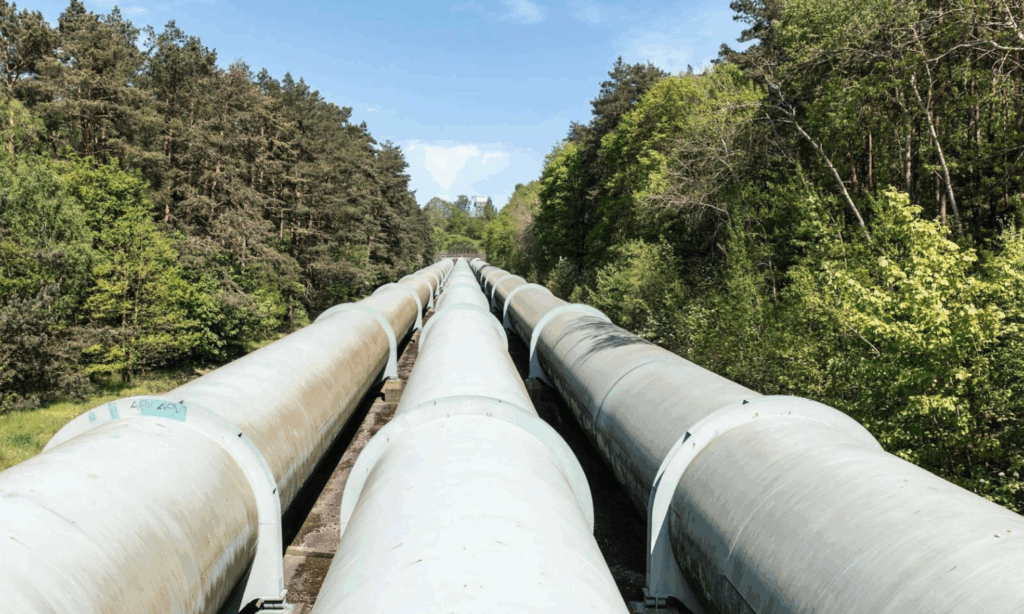
Clarus, as the former Firstgas Group, holds a near-monopoly position over the bulk of New Zealand’s gas infrastructure. Its assets are not merely pipes in the ground; they are complex, high-pressure systems that supply critical energy to thousands of industrial users, power generators, and hundreds of thousands of residential customers across the North Island.
The Clarus Portfolio:
- Gas Transmission: The core national pipeline network that moves gas from the Taranaki production fields to major demand centres.
- Gas Distribution: Local networks serving cities and towns.
- LPG Holdings: Ownership of the Rockgas LPG distribution and storage business.
The buyers form a formidable, if complex, partnership:
- Brookfield Asset Management: One of the world’s largest infrastructure investors, managing hundreds of billions of dollars globally. Brookfield’s motive is clear: securing high-quality, regulated infrastructure assets that provide stable, long-term returns. Their participation provides the bulk of the capital and brings a global perspective on utility management, though critics worry about a global fund’s lack of local accountability.
- Powerco: A significant local player, owning and operating electricity and gas distribution networks across the lower North Island. Powerco’s involvement provides essential New Zealand operational expertise and is likely intended to smooth the regulatory and political acceptance of the deal, grounding the foreign investment with local utility experience.
The $2 Billion Question: Regulation and Consumer Pricing
The Commerce Commission (ComCom) holds the crucial mandate for regulating the returns on these monopolistic assets under the country’s utility framework. With the acquisition price tag reaching NZ$2 billion, analysts are now deeply concerned about the pressure this places on the regulatory settings.
The Rates of Return Conundrum
When regulated assets are sold at high prices, the new owners—particularly private equity funds like Brookfield—will inevitably seek to justify that valuation by maximizing their allowed rate of return (RoR).
The current regulatory framework uses complex methodologies to determine the fair RoR, designed to balance attracting necessary capital investment while protecting consumers from excessive pricing. The concern is twofold:
- Asset Valuation Inflation: Did the high sale price inflate the perceived value of the assets, and will the new owners subsequently lobby for regulatory changes that allow a higher RoR to recoup their investment?
- Investment vs. Extraction: Historically, global infrastructure funds have a track record of maximizing shareholder returns, sometimes at the expense of accelerated maintenance or forward-looking investment in grid resilience and modernization. The question for ComCom is whether they can enforce investment obligations effectively under the existing framework.
“This deal puts the onus squarely on the Commerce Commission to demonstrate its teeth,” stated Dr. Sarah Thompson, an economist specialising in infrastructure pricing. “If Clarus is allowed to push for rate increases based on a NZ$2 billion valuation, every industrial user and every household connected to that gas network will ultimately pay the price. The regulatory test must be on the prudent and efficient cost of providing the service, not simply what the foreign investor was willing to pay.”
The public interest demands assurances that the regulatory safety net—the one thing protecting consumers from a natural monopoly—is robust enough to handle the financial muscle of a global giant like Brookfield.
The Decarbonization Dilemma: Future of Gas
Adding a layer of profound complexity to the deal is the New Zealand government’s aggressive goal of decarbonizing the economy. Natural gas, while a lower-emission fossil fuel than coal, must ultimately be phased out to meet the country’s legislated climate targets.
Clarus’s infrastructure—the national gas pipeline network—is, therefore, a stranded or transitional asset. The owners face a delicate balancing act: maintaining and investing in the aging steel infrastructure to ensure energy security today, while simultaneously planning and funding the transition away from fossil fuels tomorrow.
The Bio-Fuel Pipeline
The new owners have signaled intentions to explore converting portions of the network to transport low-carbon alternatives, such as:
- Bio-Gas (Biomethane): Gas derived from organic waste, which can be injected directly into the existing network.
- Hydrogen Blending: Mixing green hydrogen into the natural gas stream to incrementally lower carbon intensity.
However, the conversion process is costly, technically challenging, and requires massive upfront investment that is currently not guaranteed by government mandate or carbon pricing.
“The risk here is a perverse incentive,” notes energy transition expert Mark Ellis. “The more money Brookfield and Powerco sink into maintaining and upgrading the natural gas network to justify their NZ$2 billion investment, the harder it will be to justify its abandonment or conversion later. The market needs a clear signal on the pipeline’s end-of-life or its mandated conversion timeline, otherwise, the owners will just seek to run the existing model for as long as possible.”
The sale forces New Zealand to confront the fundamental question: who pays for the energy transition? Will it be the new owners, the government (via subsidies), or ultimately, the consumer (via increased distribution tariffs)?
Energy Security and Resilience
The transfer of ownership also prompts urgent questions about energy supply resilience. The gas network is highly vulnerable to seismic activity and extreme weather events. The Taranaki pipelines often traverse challenging terrain, and any failure can halt supply to major industrial users and power stations, creating a cascading failure risk for the electricity grid.
While Powerco’s presence offers some domestic assurance, the long-term maintenance strategy under a new ownership structure must be scrutinized.
- Safety Standards: Will the cost-containment measures necessary to meet profit targets compromise the high standards required for pipeline integrity and safety inspections?
- Operational Control: How will the partnership structure, combining global finance (Brookfield) with local distribution expertise (Powerco), ensure swift, localized decision-making during an emergency?
The government, via the Overseas Investment Office (OIO), approved the deal based on the perceived benefits—including the promise of capital injection and international best practice. However, promises must be backed by enforceable commitments to maintenance spending that exceeds the regulatory minimum, ensuring the network is not simply run down for profit.
Political Response: Investment or Infrastructure Drain?
The political reaction has been mixed. Government ministers have generally hailed the deal as a vote of confidence in New Zealand’s infrastructure sector, citing the investment as necessary capital that domestic markets could not easily provide.
However, opposition parties and industry watchdogs have been highly critical, echoing concerns about foreign control over strategic national assets.
“We are selling off the foundational infrastructure that powers our homes and businesses to international financiers whose primary allegiance is to their shareholders, not to the New Zealand ratepayer,” stated a leading opposition spokesperson. “This is the same debate we had with previous asset sales, but this time, the asset is crucial to our energy transition and national resilience.”
The acquisition of Clarus marks a watershed moment. It is a necessary inflow of capital but comes with the inherent risk of regulatory arbitrage and a potential conflict between climate goals and commercial imperatives. The success of this NZ$2 billion gamble will ultimately be judged by whether the Commerce Commission can hold the global investor accountable, and whether the new owners can transition New Zealand’s pipelines into assets for the future, not just relics of the past.