New Zealand Faces Record Population Exodus as Tens of Thousands Seek Better Prospects Abroad
By Lion’s Roar News Desk
Wellington, 9 October 2025
New Zealand is witnessing one of the largest population outflows in its modern history, as tens of thousands of citizens choose to leave the country in search of better wages, affordable living, and greater professional opportunities overseas.
According to the latest figures released by Statistics New Zealand for the year ending June 2025, an estimated 72,000 New Zealand citizens departed the country — while only 25,400 returned during the same period. The result is a net loss of approximately 46,500 citizens, marking the highest recorded migration deficit since the early 1970s.
This unprecedented outflow is triggering alarm across political, business, and social circles, raising questions about the long-term sustainability of the country’s workforce, productivity, and social fabric.
Economic Strain and Living Costs Driving the Exodus
Economists and social analysts agree that the root causes of this accelerating migration trend are largely economic. The combination of rising living costs, stagnant wage growth, and a slowdown in economic activity has left many New Zealanders feeling financially strained and pessimistic about their future at home.
Over the past two years, inflation has remained stubbornly high even as the economy cooled. The Reserve Bank’s latest move to cut the Official Cash Rate (OCR) to 2.5% this week reflects growing concern about the economy’s fragility. Despite these measures, ordinary households continue to struggle with record rents, steep grocery prices, and mortgage pressures.
For many, the math simply no longer adds up. The average weekly rent in Auckland now exceeds $700, while the median house price remains well over $900,000 — despite a slowdown in the property market. Meanwhile, real income growth has been among the weakest in the developed world over the last two years, as recently noted by international economic monitors.
The result is a sense of stagnation and frustration among working-age New Zealanders. “It’s not that people don’t love New Zealand,” said an Auckland-based teacher preparing to move to Brisbane. “It’s that we can’t keep up anymore. We work full-time, yet we’re falling behind every month. Australia feels like the only realistic option.”
Australia: The Promised Land Once Again
For decades, Australia has been the top destination for New Zealanders seeking better pay and lifestyle stability. Under the Trans-Tasman Travel Arrangement, New Zealand citizens can live and work in Australia indefinitely without a visa, making migration both easy and appealing.
What’s changed in recent years is the scale and demographic spread of the migration wave. Previously dominated by young tradespeople and graduates, today’s outflow includes mid-career professionals, nurses, teachers, IT specialists, and even small business owners.
Australian wages continue to outpace New Zealand’s by as much as 30–40% in many comparable sectors, and the cost of essentials — such as fuel and groceries — is often lower. Combined with Australia’s newly streamlined pathway to citizenship for long-term Kiwi residents, the incentives for relocation are stronger than ever.
The Australian Bureau of Statistics reports that net migration from New Zealand has doubled since 2022, particularly to Queensland and Western Australia, where employment demand remains strong in construction, healthcare, and mining.
For many families, the move is no longer temporary. A 2025 survey by the New Zealand Institute of Economic Research found that three in five emigrants have no intention of returning to New Zealand in the foreseeable future.
Brain Drain: A Looming Challenge for the Economy
The demographic composition of those leaving poses a serious challenge. Most emigrants are aged between 25 and 45, the very age bracket that forms the backbone of New Zealand’s workforce and tax base.
The loss of skilled professionals — particularly in healthcare, education, engineering, and information technology — threatens to exacerbate existing labour shortages. Public hospitals, already stretched by staff burnout and funding constraints, face mounting difficulties in recruiting and retaining qualified medical personnel.
According to the New Zealand Nurses Organisation, the country is currently short of more than 4,000 registered nurses, and the gap could widen significantly if the exodus continues. In the IT and technology sector, companies report increasing delays in project delivery and escalating costs as skilled developers relocate abroad.
University graduates, too, are increasingly joining the migration trend. Recent data show that over half of New Zealand graduates consider moving overseas within five years of completing their studies, mainly for better salaries and career progression.
Dr. Laura McLean, a senior economist at the University of Otago, describes the situation as a “slow bleed” that will weaken national productivity over time. “When a country loses not just its workers but its innovators and future leaders, the effects aren’t immediate — but they are deeply structural,” she said. “We’re watching the slow erosion of our human capital.”
Government Response and Public Debate
The government has acknowledged the seriousness of the migration imbalance but has so far struggled to present a cohesive strategy to reverse it. The recent reduction of the OCR by the Reserve Bank is aimed at stimulating investment and job creation, but economists warn that lower interest rates alone will not be enough to address the deeper affordability crisis.
Minister for Immigration and Economic Development, Michael Woodhouse, said in Parliament this week that the government is “deeply concerned” about the outflow of citizens and is exploring “comprehensive measures” to make New Zealand a more attractive place to live and work.
Among the options under discussion are targeted tax relief for middle-income earners, expansion of affordable housing projects, and further investment in skill-based job creation. The government also aims to attract skilled migrants from overseas to fill critical shortages, although critics argue this does little to stop the outflow of New Zealanders themselves.
The opposition has seized on the issue, blaming government mismanagement for the exodus. National Party spokesperson Nicola Willis said, “When hardworking Kiwis can’t afford to stay in their own country, that’s not migration — that’s failure. New Zealand deserves leadership that rewards work and opportunity at home.”
Social Implications: Families and Communities Divided
Beyond the economic impact, the mass migration wave is taking a social toll. Thousands of families are being separated across the Tasman, with parents, siblings, and children often living in different countries.
Local communities, particularly in regional New Zealand, are feeling the effects of depopulation. Small towns are losing teachers, tradespeople, and young families — weakening local economies and volunteer networks. School enrolments in some rural districts have declined sharply, prompting concerns about school closures and service cuts.
Sociologist Dr. Aroha Te Rangi of Massey University says the emotional impact is often overlooked. “Migration isn’t just about economics — it’s about identity and belonging. When people feel they must leave to thrive, it changes how they view their country. It creates a quiet grief — a sense of being left behind.”
Experts Warn of a Tipping Point
While migration has always been part of New Zealand’s story, experts warn that the current scale and direction of outflow could signal a long-term demographic shift.
New Zealand’s population growth, once driven by strong inward migration, is now slowing sharply. Without intervention, the combination of a shrinking workforce, ageing population, and persistent skill shortages could undermine economic growth for years to come.
“The numbers we’re seeing are not just a blip — they’re a structural warning,” said economist Brad Olsen. “Unless policy changes to improve affordability, raise wages, and make housing accessible again, we risk losing a generation of our best talent permanently.”
Looking Ahead
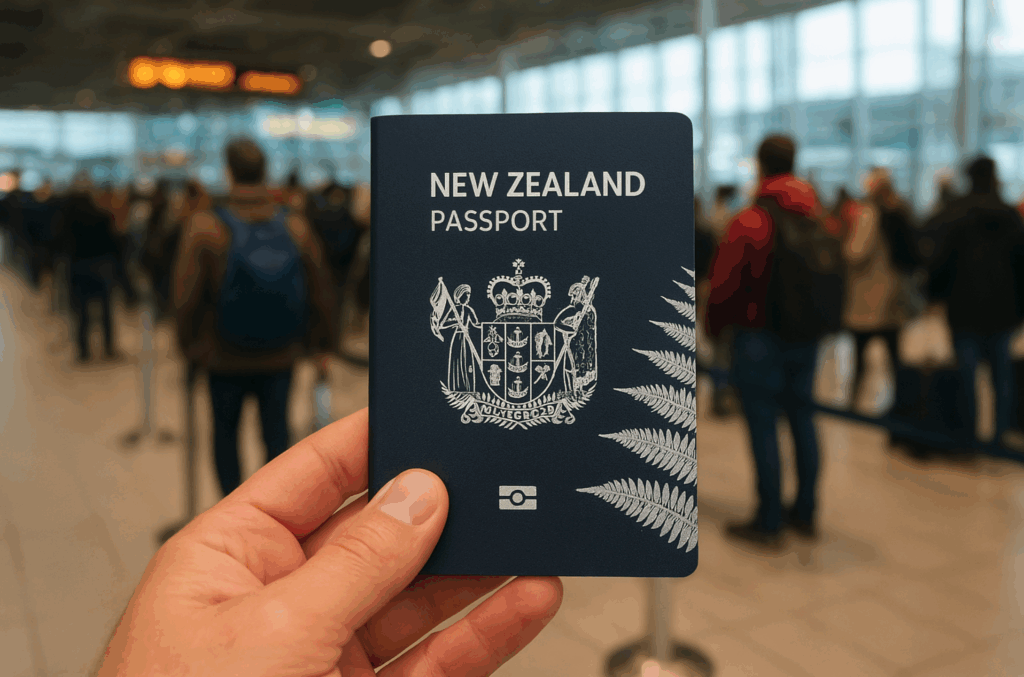
For now, airports continue to see long lines of departing New Zealanders — not tourists but citizens relocating for good. Social media is filled with farewell posts, job updates from Perth and Melbourne, and bittersweet reflections on the difficulty of leaving home.
The government faces a monumental challenge: to restore faith in the Kiwi dream and rebuild a sense of security and opportunity for those who remain. Whether New Zealand can reverse the tide and once again become a country of choice — not departure — remains one of the defining questions of the decade