New Report Warns Whitebait Species at Critical Risk from Deteriorating Waterways
Wellington, New Zealand – November 29, 2025 (Lions Roar News)
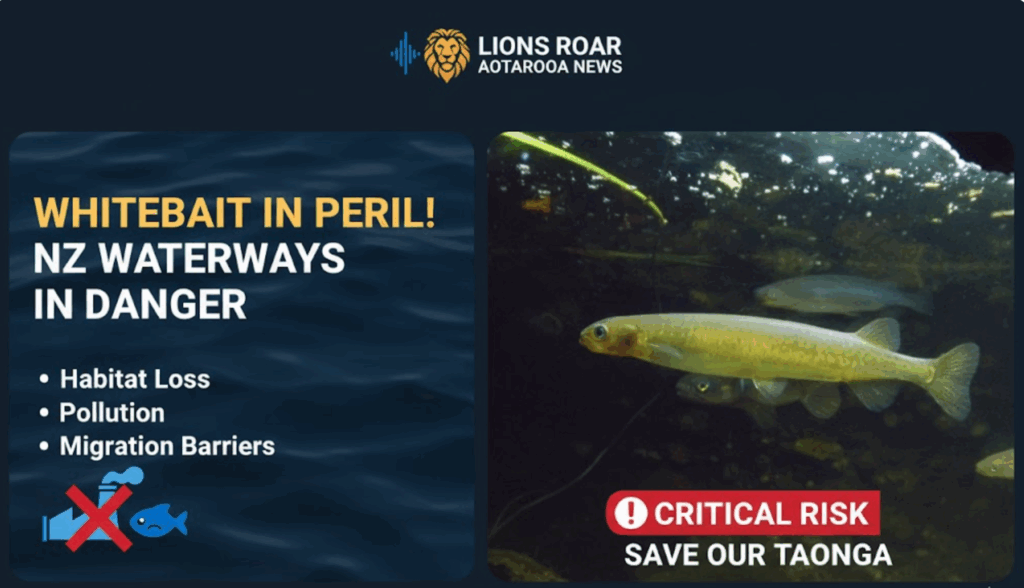
New Zealand’s iconic whitebait species are facing an increasingly perilous future, with a comprehensive new report confirming that the declining health of the country’s waterways poses a critical threat to their survival. The report, compiled by leading freshwater ecologists and conservation groups, highlights a direct correlation between habitat degradation, pollution, and the dwindling populations of these culturally significant fish.
Whitebait, a collective term for the juveniles of five native fish species (īnanga, kōaro, band-tailed kōkopu, shortjaw kōkopu, and giant kōkopu), are a cherished part of New Zealand’s natural heritage and a highly valued culinary delicacy. However, the latest findings paint a grim picture for their long-term viability.
The Alarming State of Freshwater Ecosystems
The report details how decades of intensive land use, inadequate wastewater management, and insufficient protection of riparian zones have pushed many of New Zealand’s freshwater ecosystems to a breaking point.
- Habitat Destruction: The most significant threat identified is the widespread destruction of their preferred habitats. Inanga, the most common whitebait species, rely on healthy, shaded banks with native vegetation for spawning. However, riverbank development, agricultural runoff, and the removal of riparian planting have decimated these crucial spawning grounds.
- Water Quality Degradation: Pollution from agricultural intensification (nitrate and phosphate runoff), urban stormwater, and effluent discharge is severely impacting water quality. Increased sediment loads smother spawning beds and reduce water clarity, making it harder for whitebait to find food and evade predators. High levels of E. coli and other contaminants also directly affect fish health and survival rates.
- Barriers to Migration: Obstructions such as poorly designed culverts, floodgates, and dams are preventing adult whitebait from migrating upstream to their spawning grounds and juvenile whitebait from moving freely within river systems. This fragmentation of habitats isolates populations and disrupts their natural life cycles.
Specific Species at Risk
While all five species are under pressure, some are more critically endangered:
- Shortjaw kōkopu and giant kōkopu are listed as “Nationally Vulnerable” and “At Risk – Declining,” respectively, due to their reliance on specific, often pristine, habitats that are rapidly diminishing.
- Inanga, despite being the most widespread, faces significant threats to its spawning habitat, with many traditional sites now compromised.
The report emphasizes that the decline of whitebait is not just an ecological issue but also a cultural one. Whitebait fishing holds deep historical and cultural significance for Māori (kaitiakitanga – guardianship) and is a beloved seasonal pastime for many New Zealanders.
Call for Urgent Action
Conservation groups and freshwater scientists are calling for immediate and decisive action from the government, regional councils, and landowners. The report recommends:
- Strict Enforcement of Freshwater Regulations: Stricter enforcement of existing environmental regulations and the implementation of more robust policies to protect and restore freshwater quality.
- Extensive Riparian Planting: A nationwide program for large-scale riparian planting along rivers and streams to provide shade, filter runoff, and create vital spawning habitat.
- Removal of Fish Barriers: Identifying and removing or upgrading fish passage barriers to ensure unimpeded migration.
- Improved Wastewater Infrastructure: Significant investment in upgrading urban and rural wastewater infrastructure to prevent pollution.
- Targeted Conservation Efforts: Increased funding and resources for targeted conservation projects aimed at specific whitebait species and their unique habitat requirements.
“Our whitebait are a bellwether for the health of our rivers and streams,” stated a spokesperson for the Freshwater Foundation, a contributor to the report. “Their rapid decline is a stark warning that the very lifeblood of our land is sick. We have a collective responsibility to act now, or risk losing these taonga forever.”
The report hopes to galvanize public support and government commitment to reverse the trend and restore the health of New Zealand’s precious waterways.