National Launches Election Campaign with Pledge to Boost KiwiSaver to 12%
Wellington, New Zealand – November 23, 20251
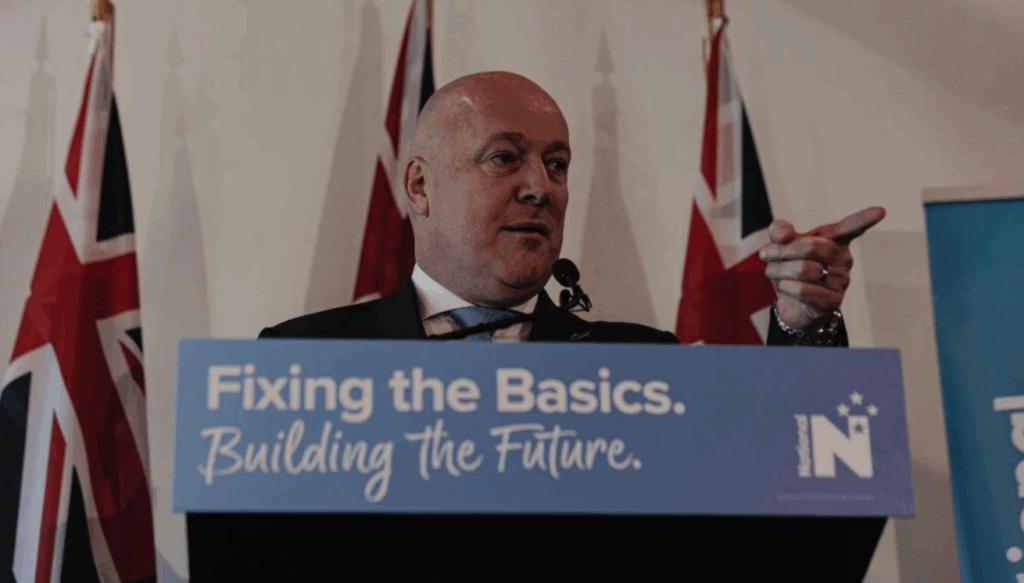
The National Party has officially launched its election campaign with a bold promise to significantly increase KiwiSaver contribution rates, aiming to match the compulsory superannuation rate across the Tasman.2 Prime Minister Christopher Luxon announced today that if re-elected, a National Government would incrementally raise the combined employer and employee contribution rate to 12% by 2032.3
Making the announcement in Silverstream, Wellington, the Prime Minister framed the policy as essential for strengthening New Zealanders’ financial security in retirement.
“Financial security for retired people comes through home ownership and supplementing New Zealand Superannuation with long-term savings,” Mr. Luxon stated.4 “KiwiSaver supports both of those, so National will strengthen it further.”5
The Roadmap to 12%
The policy centers on a phased approach to lift the default contribution rates for both the employee and the employer from the current minimum of 3% each to 6% each.6 This would create a combined mandatory contribution of 12%, equivalent to Australia’s superannuation guarantee (which reached 12% in July 2025).
Mr. Luxon highlighted that the government is already implementing planned increases agreed upon in Budget 2025:
- April 1, 2026: Default contribution rate increases from 3% to 3.5%.7
- April 1, 2028: Default contribution rate increases again to 4%.8
National’s new campaign promise builds directly on these existing increases with a further commitment that would begin the year after the next election:
| Date | Employee Contribution | Employer Contribution | Combined Total |
| April 1, 2028 (Current Plan) | 4.0% | 4.0% | 8.0% |
| April 1, 2029 (National Promise) | 4.5% | 4.5% | 9.0% |
| April 1, 2030 (National Promise) | 5.0% | 5.0% | 10.0% |
| April 1, 2031 (National Promise) | 5.5% | 5.5% | 11.0% |
| April 1, 2032 (National Promise) | 6.0% | 6.0% | 12.0% |
Under this plan, employees would have the option to put 6% of their pay into their KiwiSaver, which their employer would then be required to match.
Addressing the Australian Savings Gap
The central justification for the policy is the growing disparity between New Zealand’s voluntary KiwiSaver scheme and Australia’s compulsory superannuation system.
Mr. Luxon noted that even with the currently scheduled increases up to 4% by 2028, New Zealand’s contribution levels would remain “much lower than the equivalent scheme in Australia.”910
“For Kiwis working in New Zealand, that means smaller KiwiSaver balances and less financial security than friends or family working and saving in Brisbane, Sydney or Melbourne,” h11e said.12
The Prime Minister provided modelling to illustrate the impact: a 21-year-old earning $65,000 today would retire with an estimated KiwiSaver balance of around $1.4 million under the new 12% contribution settings, which is approximately $400,000 more than they would achieve under the current 4% settings.13
Costs and Practicalities
The policy aims to encourage greater financial self-sufficiency in retirement and to grow the pool of domestic capital available for investment in New Zealand’s economy.14 KiwiSaver funds are frequently cited as vital resources for funding infrastructure and other growth assets.15
While the increased employer contribution rates are mandatory for all employers, the employee contribution remains voluntary; employees will retain the ability to opt out or choose lower contribution rates.16 However, employers will be required to match contributions up to the default level. The minimum employee contribution rate for those participating will remain at 3%.17
National also acknowledged the policy’s cost to the government, primarily in its role as a major employer.18 The party estimated that each 0.5% increase in the employer rate would cost the Crown approximately $90 million annually in employer contributions.19 National expects government agencies to absorb these costs from their existing budgets.20
The announcement marks a clear distinction between National’s platform and that of other parties, positioning retirement savings and future financial security as a core plank of its election strategy.