Inside Economics: The Hidden Engine Driving Confidence in a Recovery
Inside Economics: The Hidden Engine Driving Confidence in a Recovery
Auckland, New Zealand – November 19, 2025
While consumers and businesses remain cautious about the near-term economic outlook, a surprising sense of confidence is brewing among the world’s leading economists: a sustained recovery is on its way. This optimism isn’t solely founded on easily tracked metrics like GDP or inflation, but on a more nuanced set of indicators that collectively signal a resilient structural turnaround.
The common public narrative often focuses on the lingering pressure of the cost-of-living crisis and persistently high prices (as seen with the recent butter price slump). However, a deeper dive into the data reveals that economists are looking beyond the volatile short-term movements and into the bedrock components of the economy.
The Real Reason: The Unseen Turnaround
The key to the economists’ confidence lies in the momentum of leading indicators that precede an uptick in headline growth, and the structural resilience of key parts of the global and domestic economy.
1. The Power of Sentiment and Expectations
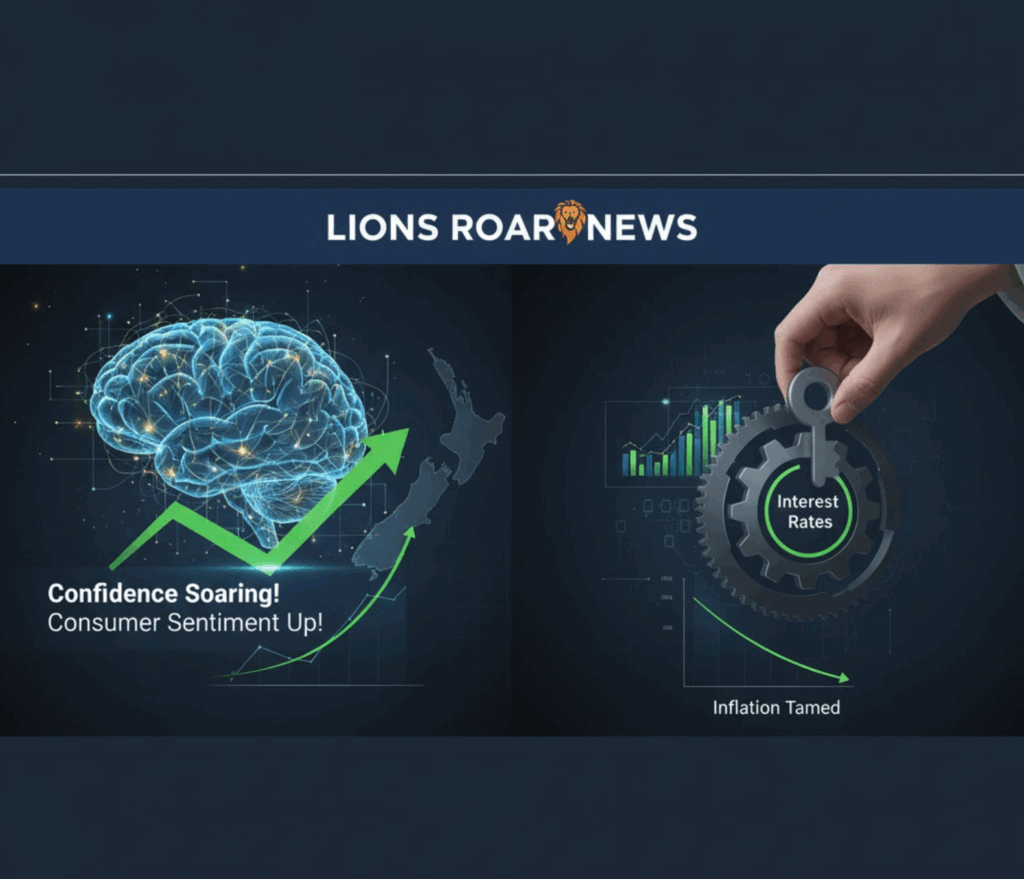
The most compelling, and often “hidden,” reason for optimism is the dramatic rebound in consumer confidence and business sentiment.1
- Consumer Sentiment Surge: Recent surveys, such as those conducted in Australia, have shown consumer sentiment surging back into “optimistic territory” for the first time in years.2 This shift—sometimes described as “extraordinary and somewhat surprising”—suggests that households are beginning to look past current financial pressures toward a better future.3
Economists know that sentiment is often a self-fulfilling prophecy; if people feel more optimistic, they are more likely to spend, invest, and spur the economic activity needed for a recovery.
- Business Confidence Normalisation: Similarly, business confidence and conditions have generally normalised, settling back around their long-run average levels.4 This means businesses are no longer purely focused on survival but are making cautious plans for expansion and hiring, often starting with temporary workers (a sign tracked by the ASA Staffing Index).5
2. Monetary Policy Easing and Its Lag Effect
Central to the recovery narrative is the impact of global and local monetary policy.
- OCR Cuts Enter Stimulatory Territory: In nations like New Zealand, the Official Cash Rate (OCR) has been cut to a level where it is actively considered stimulatory for the economy, not just neutral. Economists believe this is the “game-changer” moment. As the theory goes, lower interest rates will, with a lag, begin to entice investors, developers, and businesses to borrow and spend, boosting investment in capital and infrastructure.
- Contained Core Inflation: A significant reason central banks have the space to ease rates is that while headline inflation has been volatile, the core measures of inflation—which strip out the most volatile components—have started to slow and are heading towards target bands. This abating inflation is seen as a major plus, confirming that the policy choices worked to normalise the economy without causing excessive havoc.6
Key Economic Indicators Supporting the View
While confidence is the unseen driver, several physical and financial indicators back up the economists’ view:
| Indicator | Trend | Economic Interpretation |
| Labour Market | Increase in job ad numbers, increase in hours worked | Points to a tentative recovery in labour demand and suggests businesses are moving past hiring freezes. |
| Real Wages | Rising faster than inflation | Crucial for boosting consumer spending capacity and household finances, directly supporting the largest component of GDP (Consumption). |
| Financial Markets | Robust performance, resilient home values | For those with investable assets, wealth continues to grow, providing a buffer and supporting higher-end spending and investment. |
| Building Consents | Upward lift (e.g., +7.2% in one month) | Suggests the lower interest rates are beginning to impact the construction sector, a major engine of domestic economic activity. |
The Geopolitical Context: Easing External Threats
Globally, the easing of external threats has also buoyed the outlook.7 A de-escalation of certain geopolitical trade tensions and the signing of critical international minerals deals have reduced major sources of uncertainty.8 While risks like AI disruption, cyber threats, and geopolitical instability remain, the overall consensus is that the global economy is gradually normalising toward long-term trend growth, creating a more stable backdrop for local recovery.
The current economic outlook suggests a path of “slower, more anemic growth but no recession,” driven by the fundamental return of confidence and the delayed but inevitable effect of stimulatory monetary policy.9 For economists, the subtle shifts in human behaviour and forward-looking business plans are the real reasons they are confident the recovery is not just a hope, but a calculated inevitability.