Global Software Glitch Grounds A320 Fleet: Air New Zealand, Jetstar Hit By Largest Airbus Recall in Decades
Auckland, New Zealand – November 29, 2025 (Lions Roar News)
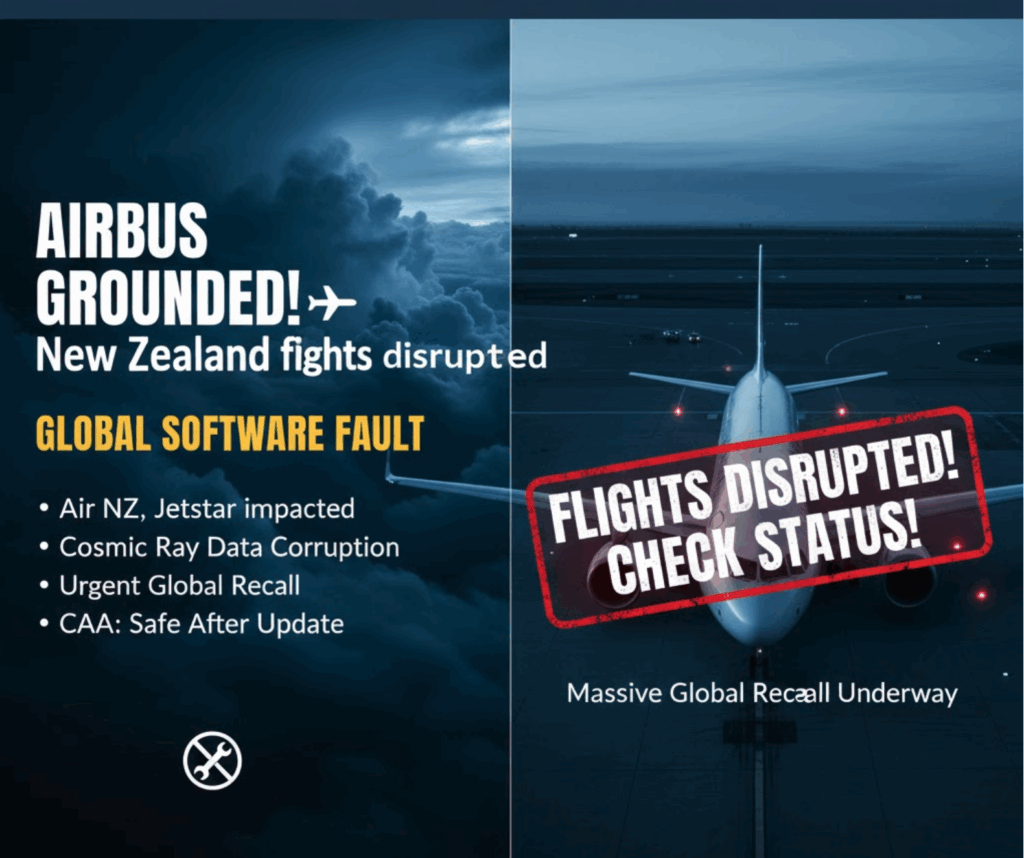
New Zealand’s air travel network was plunged into chaos this morning as a global software fault affecting the popular Airbus A320 family of aircraft forced both Air New Zealand and Jetstar to ground planes, leading to numerous cancellations and delays that impacted hundreds of travellers nationwide.
The dramatic disruption is part of one of the largest recalls in Airbus’s 55-year history, affecting an estimated 6,000 aircraft worldwide—more than half of the global A320 fleet. The manufacturer issued an urgent directive after a recent mid-air incident revealed that intense solar radiation could potentially corrupt data critical to the functioning of the aircraft’s flight controls.
Chaos at Auckland Airport as Flights Cancelled
The impact was immediately felt at major hubs like Auckland Airport, where long queues formed and scenes were described by stranded travellers as “chaos.” An NZ Herald journalist reported a “stampede” as passengers were told their delayed domestic flights, including services to Queenstown and Christchurch, had been cancelled and that they needed to rebook entirely.
Air New Zealand (Air NZ) confirmed that the global software issue was impacting its Airbus A320neo aircraft fleet. Air NZ Chief Safety and Risk Officer, Nathan McGraw, issued a statement assuring the public of the airline’s swift response:
“As a precaution, all A320neo aircraft in our fleet will receive a software update before operating their next passenger service. This will lead to disruption across a number of our A320neo flights today, and we’re expecting a number of cancellations to services across that fleet.”
The airline initially cancelled 12 services but was later able to temporarily resume A320 operations after receiving an update from the European Union Aviation Safety Agency (EASA). This update advised that aircraft with the affected software could continue flying until 12:59 PM on November 30th, New Zealand time, allowing the carrier a window to get passengers to their destinations before commencing the required updates fleet-wide.
Jetstar, which operates a large fleet of A320s, was also severely affected, confirming that a portion of its flights were grounded. Jetstar’s Chief Pilot in Australia, Tyrone Symes, stated that the issue was affecting over 30 of their aircraft and causing disruptions to approximately 90 domestic and international flights across the Tasman network.
The Root Cause: Cosmic Rays and Flight Computers
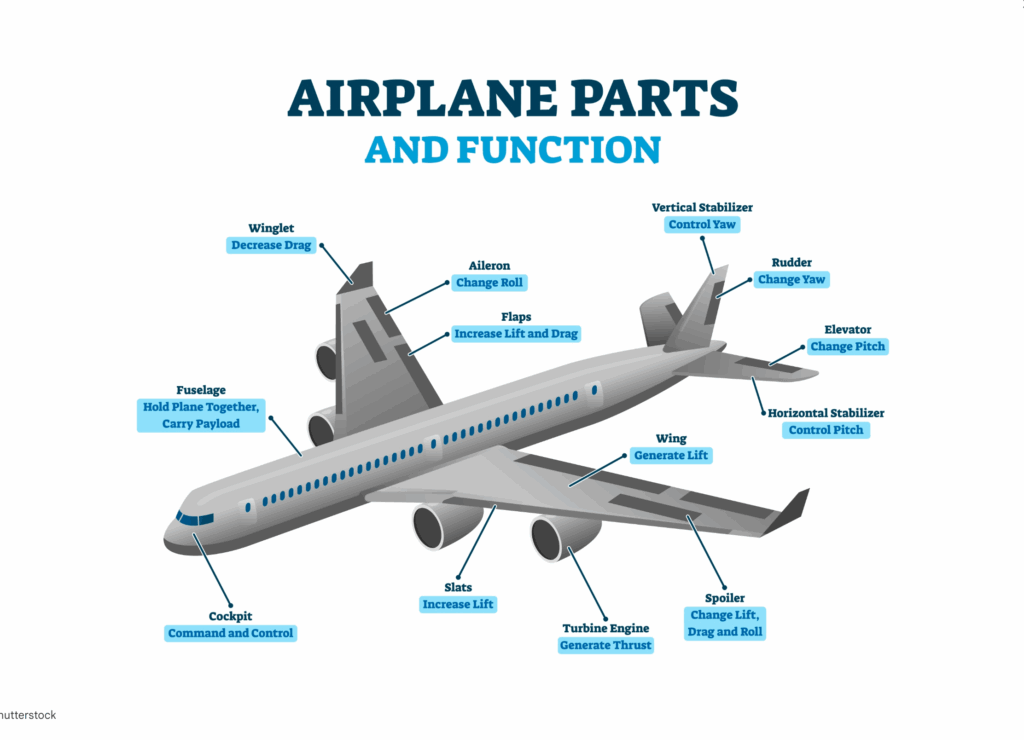
The technical fault, which has triggered the emergency global recall, stems from a vulnerability in the aircraft’s Elevator and Aileron Computer (ELAC) system. The ELAC is a critical flight control computer responsible for translating the pilot’s side-stick commands into movements of the aircraft’s elevators and ailerons, which control the pitch (nose angle) and roll of the plane.
Airbus’s investigation into an incident involving a JetBlue A320 flight on October 30th—which experienced a sudden, uncommanded drop in altitude and was forced to make an emergency landing—revealed a shocking potential cause:
- Solar Radiation Corruption: Airbus discovered that intense solar radiation or cosmic rays at high altitude may corrupt the data within the ELAC. This corruption could lead to a ‘bit-flip’ or data error in the computer’s memory, compromising the logic that controls the aircraft’s movement.
- Safety Risk: The European Union Aviation Safety Agency (EASA) issued an Emergency Airworthiness Directive warning that, if uncorrected, the malfunction could potentially lead to an uncommanded elevator movement that might exceed the aircraft’s structural limits.
Precautionary Grounding and Global Scale
Airbus issued an Alert Operators Transmission (AOT) requiring immediate action across its global customer base. The A320 family, which includes the A319, A320 (CEO and NEO), and A321 variants, is the world’s best-selling commercial aircraft, meaning the recall’s scope is massive.
The vast majority of affected aircraft—about two-thirds—require a relatively simple software rollback (reverting to a previous, stable software version) that takes just a few hours. However, industry sources indicate that for over 1,000 jets globally, the problem is more severe, requiring a hardware realignment or replacement, which could ground those aircraft for weeks and deepen the global disruption.
In India, major operators like IndiGo and Air India Express confirmed that hundreds of their A320 family planes were impacted, warning of significant delays over the coming week as fixes are applied. American Airlines, the world’s largest A320 operator, said 340 of its jets required the fix but expected the “vast majority” to be serviced within 24 hours.
Civil Aviation Authority Assurances and Next Steps
Despite the initial confusion and frustration at airports, the New Zealand Civil Aviation Authority (CAA) moved quickly to reassure the public that their safety remains paramount and that the operational changes are purely precautionary.
A CAA spokesperson confirmed: “The Civil Aviation Authority (CAA) is aware of the Airbus A320 situation and is working closely with Air New Zealand (and other relevant agencies) in response to an emergency airworthiness directive from the European Union Aviation Safety Agency (EASA), requiring A320s to have a software update.”
They reiterated that the software update does not present an immediate safety risk to flights that are permitted to operate under the temporary EASA waiver.
Air New Zealand confirmed it is working to implement the necessary updates as quickly as possible: “Air New Zealand will begin rolling through the updates to its A320 fleet as quickly as possible to minimise ongoing disruptions. We know unexpected changes are frustrating, and we are working hard to keep customers moving wherever possible.”
Passengers are strongly advised to check their flight status directly via the Air New Zealand or Jetstar apps and websites before travelling to the airport, as ongoing, minor disruption is expected throughout the weekend and into the coming week as the maintenance roll-out continues.
The unprecedented scale of this grounding highlights the complex vulnerabilities of modern digital flight controls to natural phenomena like solar radiation, forcing a rapid, global response from manufacturers, regulators, and airlines to maintain the highest standards of safety in commercial aviation.