Calls Grow for Economic “Rescue Plan” Amid Shrinking GDP
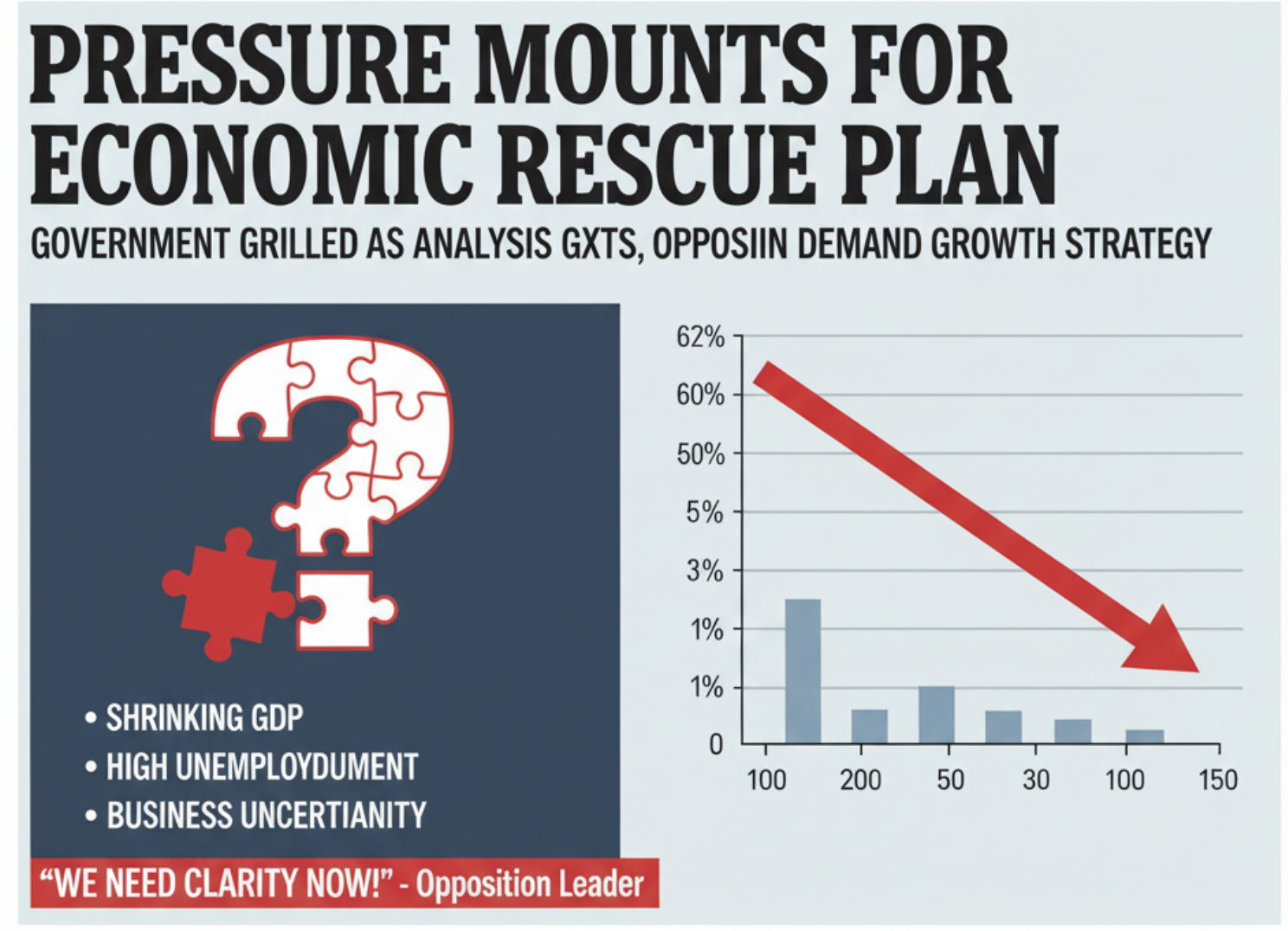
Government faces pressure as analysts and opposition demand clarity on growth strategy
New Zealand’s economy has entered troubled waters, with the latest GDP figures showing a 0.9% contraction in the June 2025 quarter. While the government has urged calm and expressed confidence in long-term fundamentals, a chorus of analysts, commentators, and opposition leaders is demanding urgent and concrete action — a so-called “rescue plan” to stabilise growth and restore confidence.
The debate centres not only on the numbers but also on the perception that households, businesses, and investors are losing faith in the economy’s direction.
What critics are asking for
Opposition parties have seized on the figures to demand a detailed roadmap from Prime Minister Christopher Luxon’s government, arguing that broad assurances are not enough. Their calls are echoed by economists who say the lack of visible, immediate policy levers risks undermining confidence further.
Key questions being raised include:
- What policy tools will be used to stimulate growth in the short term?
- Where will government spending be focused — infrastructure, small business support, or household relief?
- How will investor and consumer confidence be restored in a climate of uncertainty?
Labour’s finance spokesperson said in Parliament this week:
“Kiwis are not asking for optimism, they’re asking for action. Without a credible plan, the economy risks sliding further, and everyday New Zealanders will pay the price.”
Expert analysis
Independent economists say the calls for a rescue plan are not political theatre but a rational response to growing risks.
Dr. Michael Reddy, a senior economist at the New Zealand Institute of Policy Studies, explained:
“Confidence is a currency of its own in economic management. Right now, confidence is eroding. The government needs to show not only that it understands the challenges but also that it has concrete strategies to address them.”
Analysts point to potential policy options such as targeted tax relief for low-income households, accelerated infrastructure projects to create jobs, and incentives for innovation and export-led growth.
Government’s position
Prime Minister Christopher Luxon has maintained that while the numbers are disappointing, they are not unexpected in the context of global uncertainty. He pointed to ongoing investment in major projects, trade negotiations, and efforts to streamline regulation as proof the government is already laying the foundations for recovery.
“Our economy has strong fundamentals. We are focusing on productivity, skills, and infrastructure to ensure New Zealand is resilient and competitive for the long term.”
Finance Minister Nicola Willis echoed this view, suggesting that short-term fluctuations should not dictate panic-driven policy changes. She acknowledged, however, that households are facing rising costs and slower wage growth.
The confidence problem
One of the greatest risks identified by experts is that the loss of confidence itself could deepen the downturn. If businesses delay investment, households reduce spending, and investors pull back, the economy may slow further, creating a cycle that is harder to break.
The ASB Investor Confidence Survey released this week found confidence at its lowest level since the COVID-19 pandemic, reinforcing the urgency of a credible response.
Looking ahead
With the next GDP release only months away, the government faces a critical window to shape the narrative and provide reassurance. For now, the pressure is mounting to unveil policies that can both stimulate growth and signal to households and businesses that recovery is a priority.
The growing demand for a rescue plan highlights a simple truth: while optimism may inspire, it is concrete action and transparency that will convince New Zealanders their economy is on the path to recovery.