Auckland Transport’s LPR Fleet Doubled Fines Last Year, Hitting Motorists with Over Half a Million Infringements
LIONS ROAR NEWS DESK | AUCKLAND
Auckland motorists were hit with a staggering number of parking tickets last year, as new data reveals the local council’s automated enforcement system nearly doubled its output of infringement notices. The surge, attributed to a significant expansion of the License Plate Recognition (LPR) vehicle fleet, has sparked renewed debate over whether the system is primarily a management tool for congestion or a relentless revenue generator for the city.
In a striking figure that underscores the growing pressure on Auckland drivers, data supplied to Newstalk ZB shows Auckland Transport’s (AT) licence plate recognition vehicles issued more than 518,000 fines last year. This colossal number represents an enormous jump—almost twice the volume of the 261,713 infringement notices that were handed out by the automated system just one year prior, in 2023.
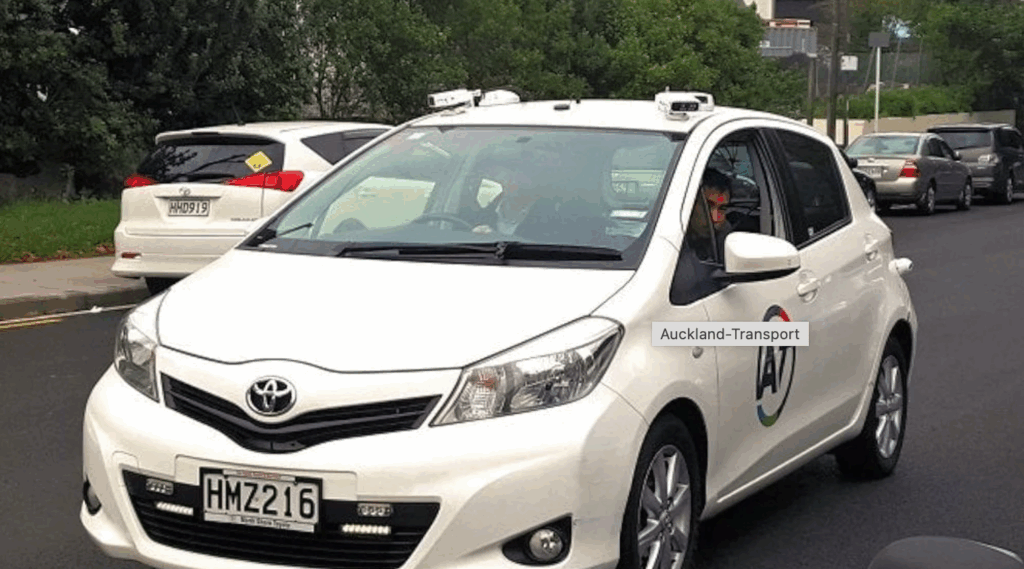
The LPR vehicles are a crucial, yet often controversial, part of AT’s parking enforcement strategy. These cars are equipped with technology that systematically scans license plates of parked vehicles to automatically check if a driver has paid for their parking time or if they have overstayed the permitted duration in a given spot. If a violation is detected, the system generates an infringement notice, which is then sent to the driver. The sheer scale of the 2024 figures indicates that this automated system is now the single largest contributor to parking enforcement in the Auckland region.
AT Attributes Surge to Fleet Expansion
In defending the massive increase, John Strawbridge, Auckland Transport’s Group Manager of Parking Services, pointed directly to the expansion of the LPR fleet.
“The rise was directly proportional to the size of the team,” Strawbridge explained. “We increased the fleet from nine cars in 2023 to 16 last year. More enforcement capacity inevitably leads to more enforcement notices being issued.”
Strawbridge was quick to highlight that the vast majority of tickets are issued for a single, easily avoidable infraction: failing to pay for parking in paid zones, which carries a standard penalty of $70.
“That’s a $70 fine. It does my head in because if you use the AT Park app, for example, you only pay for the short time you’re there,” Strawbridge said, expressing frustration that many drivers receive a hefty fine simply for neglecting to use the available payment methods. He stressed that a driver would “very rarely” need to pay the full $70 if they had used the system correctly.
Public Watchdog Questions Revenue Motives
However, the dramatic leap in enforcement figures has drawn immediate concern from motoring advocates. Martin Glynn, AA Policy Director, confirmed that the size of the jump between 2023 and 2024 is significant and that the AA had already approached Auckland Transport for clarification.
While acknowledging the practical need for parking management, Glynn voiced the common public fear that the LPR system might be leveraged more for financial gain than for urban planning necessity.
“We hope the system is being used for the stated goal of keeping parking spots clear,” Glynn stated. “In the past year or so, they’ve been set some pretty big revenue targets by the mayor and Auckland Council from areas they can get revenue from, including parking.”
This assertion touches on a long-standing tension between the council’s need for non-rates revenue and the public perception that parking enforcement is being used to fill municipal coffers rather than genuinely improve traffic flow and kerbside access.
Balancing Safety, Access, and Enforcement
Strawbridge countered the criticism by emphasising the core purpose of the enforcement, stating that managing the kerbside is essential for a safe and functional city.
“If we didn’t manage the kerbside, there’d be cars parked everywhere, it would be unsafe, and there’d be very limited opportunity for people to come into the city and find a spot,” he said.
He offered the Auckland Domain as a prime example of the LPR system’s effectiveness. Before the automated cars, enforcement was “infrequently” carried out on foot, leading to parking scarcity. Consistent LPR enforcement now keeps the Domain at a manageable 65% capacity, ensuring spots are available for visitors.
Furthermore, Mr. Glynn noted that the LPR cars provide an important secondary benefit: safety for parking wardens.
“We know it’s become more unsafe for parking wardens, so there’s an advantage to doing it in that automated way where people don’t receive their tickets on the spot,” Glynn observed, highlighting how the automated system reduces direct, potentially dangerous, confrontation between wardens and unhappy motorists.
In conclusion, the half-a-million fine mark signals a new era of parking enforcement in Auckland, driven by technology and fleet expansion. While the system appears to be achieving its goal of ensuring parking availability and enhancing warden safety, the challenge for Auckland Transport remains in convincing a skeptical public that this unprecedented flood of fines is solely about kerbside management and not, as critics suggest, an aggressive pursuit of revenue targets.