Lions Roar News Exclusive: A Nation Under Siege—Death Toll Hits 390 as Sri Lanka Mounts Massive Reconstruction and Relief Effort
By Our Senior Editorial Team
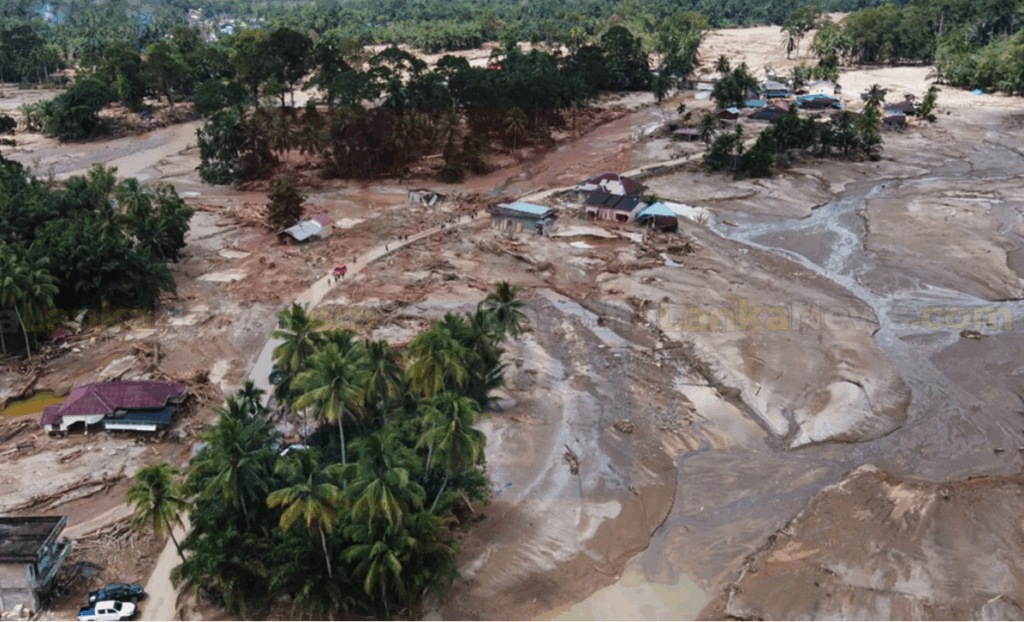
The Democratic Socialist Republic of Sri Lanka is reeling from a catastrophic natural disaster of unprecedented scale, as the grim statistics of the recent adverse weather system continue to mount, revealing a profound humanitarian crisis and infrastructural devastation. The official death toll has tragically climbed to 390 lives lost, with a further 352 individuals still reported missing, according to the latest data released by the Disaster Management Centre (DMC). This staggering loss of life is compounded by the mass displacement of over a million people and the widespread destruction of homes and national infrastructure, prompting an urgent and multi-faceted national response, supported by immediate international aid and a long-term, public-private sector-led reconstruction plan spearheaded by President Anura Kumara Dissanayake.
This extensive report delves into the human cost of the tragedy, the logistics of the ongoing relief operations, the crucial foreign assistance that has begun to arrive, and the strategic governmental vision for rebuilding a resilient nation from the ruins of this catastrophe.
💔 The Human Cost: 390 Lives Lost and Hundreds Still Missing
The sheer magnitude of the loss is staggering, painting a devastating picture of the weather system’s impact across the island. The official confirmation of 390 fatalities marks one of the darkest periods in Sri Lanka’s recent history, surpassing many previous natural disasters in terms of human casualties. The despair deepens with the DMC’s report that 352 individuals remain unaccounted for, primarily in the districts worst affected by flash floods and devastating landslides. Search and rescue operations continue with grim tenacity, though hopes of finding survivors are dwindling with each passing hour.
The geographical distribution of the fatalities underscores the specific, lethal nature of the disaster, primarily targeting the vulnerable mountainous regions prone to earth slips. The Central Highlands have borne the brunt of the tragedy:
- Kandy District: Reported the highest number of casualties with 88 deaths. This ancient royal city, known for its lush hills and cultural heritage, has seen its serene landscape transformed into a scene of utter devastation, as widespread landslides buried entire villages and cut off remote communities. The district’s mountainous terrain, saturated by relentless rainfall, proved fertile ground for catastrophic earth movements, leading to immense and rapid loss of life.
- Badulla District: Closely follows with 82 deaths. Badulla, situated in the Uva Province and home to expansive tea estates and deep valleys, witnessed similar, relentless landslides. The area’s fragile soil composition and steep slopes amplified the destructive power of the floods, obliterating homes and crucial access roads.
- Nuwara Eliya District: Has recorded 75 deaths. Often referred to as ‘Little England’ for its colonial architecture and cool climate, Nuwara Eliya’s vulnerability lies in its high altitude and dense population in valleys and slopes, making it exceptionally susceptible to mudslides and structural collapse under heavy downpours.
In total, across all twenty-five administrative districts of the country, the disaster has directly impacted a staggering 1,373,899 people, belonging to 382,651 families. The scale of this affected population represents a nationwide crisis, stretching the capacities of governmental, military, and civilian aid organizations to their absolute limit.
🏠 A Nation Displaced: The Shelter Crisis and Logistical Nightmare
Beyond the immediate loss of life, the structural damage inflicted by the weather system has created a massive shelter and displacement crisis. The Disaster Management Centre reports that 432 houses have been completely destroyed, leaving hundreds of families instantly homeless and without any possessions. Furthermore, an overwhelming 15,688 houses have sustained partial damage, rendering many partially or fully uninhabitable and placing a colossal burden on local authorities to assess, repair, and relocate residents.
In response to the unprecedented displacement, the government and humanitarian agencies have urgently established 1,368 safe centres across the island. These temporary shelters are currently housing 204,597 displaced individuals. The coordination of these centres—providing shelter, essential medical care, sanitation, and food security—is a monumental logistical challenge. The sheer number of displaced persons presents a complex scenario for maintaining public health standards and ensuring the mental well-being of those who have lost homes, livelihoods, and, in many cases, loved ones. Relief efforts are heavily focused on supplying these centres with continuous dry rations, clean drinking water, and basic necessities, often hampered by damaged roads and access routes.
The crisis of displacement is not merely one of numbers but of deep human suffering. Families, many of whom are subsistence farmers or daily wage earners, have lost their entire economic foundation, placing long-term recovery beyond the scope of mere financial compensation. The psychological toll on children, the elderly, and the bereaved requires specialized and sustained intervention, which is now being coordinated alongside the immediate physical relief.
🇦🇪 International Solidarity: The UAE’s Swift and Massive Aid Deployment
In a crucial demonstration of international solidarity, the first tranche of humanitarian assistance from the United Arab Emirates (UAE) arrived at the Katunayake International Airport late last night (December 1), marking the beginning of a significant foreign relief operation. The assistance, brought by one of the world’s largest transport aircraft, underscores the immediate and urgent nature of the aid required.
The flight, operated by the UAE Air Force and utilizing a massive C-17 Globemaster III cargo plane from Abu Dhabi, was laden with essential, life-saving supplies designed to address the most pressing needs of the displaced population and aid rescue teams:
- Temporary Shelters: A total of 48 temporary housing units, providing immediate, dignified shelter for families whose homes were completely destroyed.
- Food Security: 2,592 packaged food parcels, meticulously prepared to sustain one family for up to 14 days, ensuring nutritional stability for those cut off from food supply chains.
- Shelter and Relief Equipment: A large quantity of tents for extended temporary accommodation.
- Search and Rescue Assets: A range of specialized rescue vehicles and motorcycles equipped for navigating difficult and challenging terrains—a necessity given the extensive damage to the country’s road network due to landslides and flooding.
The arrival of the C-17 marks the first of four similar relief flights scheduled from the UAE in the coming days, highlighting a sustained commitment to Sri Lanka’s recovery.
The high-profile delivery was received at the airport by a delegation comprising key officials from both nations, including His Excellency Rashid Al Masoori, the Deputy Ambassador of the United Arab Emirates to Sri Lanka, along with local dignitaries such as the Director General and Chief Executive Officer of Civil Aviation, Captain Damith Rambukwella, officials from the Disaster Management Centre, and senior officers of the Sri Lanka Army. The presence of such a high-level delegation emphasizes the importance of the aid and the strong bilateral relationship. This swift intervention is a testament to the UAE’s global humanitarian commitment and is expected to significantly boost the capacity of local relief organizations, particularly in reaching the most inaccessible and devastated areas.
🏛️ The Road to Recovery: Presidential Strategy for Reconstruction
Recognizing that the catastrophe has inflicted damage far exceeding the Treasury’s capacity, the government has moved decisively to implement a comprehensive, long-term reconstruction and recovery strategy. President Anura Kumara Dissanayake has announced a pivotal decision to launch a medium-term and long-term recovery program that will fundamentally integrate both the public sector and the private sector to mobilise the vast financial resources required. The central aim of this ambitious plan is the urgent restoration and rebuilding of critical national infrastructure, including major highways, bridges, irrigation systems, and government buildings.
Speaking at a crucial meeting with private sector investors at the Presidential Secretariat yesterday (November 30), the President was unequivocal about the severity of the crisis. He stated that the scale of destruction caused by the floods and landslides is “far greater than what is visible on the surface,” and stressed that the financial burden of recovery cannot be borne by the national Treasury alone.
To address this monumental financial challenge, the President outlined a strategic funding mechanism:
The Joint Management Fund
A dedicated national Reconstruction and Recovery Fund is to be established with contributions gathered from all sectors. This fund will be overseen by a Joint Management Committee, to be appointed with Cabinet approval, comprising high-level representatives from both the public and private sectors. The mandate of this committee will be to ensure transparent, efficient, and targeted deployment of funds for reconstruction activities.
The President identified multiple crucial funding streams to sustain this massive rebuilding effort:
- Domestic Contributions: Mobilisation of local philanthropy and corporate social responsibility.
- Sri Lankan Diaspora: Tapping into the immense goodwill and financial capacity of expatriate Sri Lankans around the globe.
- Foreign Governments and International Organizations: Securing bilateral assistance and grants from global financial institutions.
- Business Associations: Direct contributions and long-term investment commitments from the domestic and international business community.
The core responsibility of coordinating and securing these multi-source contributions will be vested in the newly established Joint Management Committee.
Infrastructure in Ruins and the World Bank’s Role
The meeting brought into sharp focus the extensive infrastructural damage across the island. The President highlighted that the devastation is widespread, affecting:
- Residential and Agricultural Land: Houses, paddy fields, and cultivated lands.
- Transportation Networks: Highways, bridges, and the critical road network destroyed by landslides. The President specifically noted that landslide-affected routes require major, comprehensive rehabilitation due to fundamental instability.
- Public Services: Government buildings, schools, and essential services infrastructure, including significant destruction of electricity poles in several locations, crippling power supply to affected areas.
To quantify this sprawling damage and determine the exact financial requirements for reconstruction, the government has formally engaged with the World Bank. The key deliverable from this collaboration is the preparation of a detailed sector-by-sector damage assessment and financial needs document. Crucially, the government has already commissioned the World Bank to conduct a Global Rapid Post-disaster Damage Estimation (GRADE). This international-standard assessment is a vital step in securing international funding and establishing a reliable baseline for the recovery program. The government anticipates receiving the comprehensive GRADE report within a period of approximately two weeks.
Collaborative Leadership: The Attendees
The President’s strategic dialogue with the private sector highlighted the scale of the required collaboration. The following high-profile individuals from both government and the private sector attended the meeting, signifying a united national front on reconstruction:
Government Dignitaries:
- Hon. Vijitha Herath, Minister of Foreign Affairs, Minister of Foreign Employment, and Minister of Tourism.
- Hon. Anil Jayasinghe Fernando, Minister of Labour and Deputy Minister of Finance and Planning.
- Hon. Haniff Yoosuf, Governor of the Western Province.
- Dr. Nandika Sanath Kumara Nayaka, Presidential Secretary.
- Mr. Duminda Hulangamuwa, Senior Economic Advisor to the President.
- Dr. Harshana Suriyapperuma, Secretary to the Ministry of Finance.
- Mr. Russell Aponsu, Senior Additional Secretary to the President.
- Mr. Sugeeshwara Gunawardhana, Director General of the Ministry of Foreign Affairs.
Private Sector Leaders:
- Mr. Mohan Pandithage, Chairman of the Hayleys Group.
- Mr. Krishan Balendra, Chairman of John Keells Holdings.
- Dr. Parakrama Dissanayake, representing Aitken Spence PLC.
- Mr. Ashroff Omar, Chief Executive Officer of the Brandix Group.
The presence of such a diverse and powerful group, particularly the leaders of Sri Lanka’s largest corporate entities, signals the private sector’s firm commitment to partnering with the government to rebuild the nation’s economic and social fabric. This unprecedented public-private collaboration is deemed essential to avoid national economic default and to manage the extraordinary debt that will accompany the recovery effort.
🌧️ Caution Amidst Calamity: The Ongoing Weather Threat
While the nation attempts to pivot from immediate relief to strategic recovery, the weather remains a formidable threat. The Department of Meteorology has issued a forecast for today (December 2) that calls for continued vigilance across the island. The threat of localized downpours and atmospheric instability poses a risk of exacerbating the already severe ground instability and flooding conditions.
The forecast indicates:
- Showers: Several spells of rain are expected in the Northern and Southern Provinces.
- Thundershowers: Rain or thundershowers are likely to occur at a few places in the Uva, North-Central, and Eastern provinces after 2:00 PM.
- Misty Conditions: During the early hours of the morning, misty conditions are anticipated in some areas of the Western, Central, Sabaragamuwa, Uva, North-Western, and Southern provinces, as well as the Ampara district.
The Department has issued a critical advisory, urging the public to take all necessary precautions to minimize damages from potential hazards associated with thundershowers. This includes safeguarding against temporary, localized strong winds and the dangers posed by lightning strikes. In the regions already saturated by the preceding weeks of torrential rain, particularly the Central Highlands, the possibility of even minor rainfall triggering new landslides and further flash flooding remains a terrifying reality. The continuous monitoring of weather conditions is paramount for the safety of the rescue and recovery teams operating in high-risk zones.
A Long Road Ahead
The disaster has not merely damaged physical structures; it has delivered a profound shock to the nation’s collective psyche and economy. The task of recovery will be long, arduous, and costly. The loss of life—390 confirmed dead, with 352 still missing—represents a devastating national tragedy. The displacement of over 1.3 million people requires immediate, sustained humanitarian intervention, supported by the swift aid delivered by international partners like the UAE.
The launch of the joint public-private fund, led by President Dissanayake, and the immediate commissioning of the World Bank’s GRADE assessment are vital steps in turning the tide from crisis management to strategic rebuilding. The successful execution of this medium- and long-term plan will determine not only the recovery of Sri Lanka’s vital infrastructure but the future resilience and prosperity of its people. The unity of purpose demonstrated by the government, the private sector, and the international community provides a vital source of hope as the nation faces its most significant post-conflict challenge yet—to rebuild and recover from the wrath of nature.
The coming days and weeks will be critical, both for the search for the missing and for finalizing the financial architecture of the rebuilding fund. The nation holds its breath, mourning its dead while simultaneously mobilizing every available resource to ensure the survival and future of the affected millions. The Lions Roar News will continue to provide comprehensive coverage of this evolving national crisis.