Ditwah Catastrophe: Sri Lanka’s Worst Disaster in Decades—Death Toll Surpasses 80 Amid Unprecedented Infrastructure Collapse
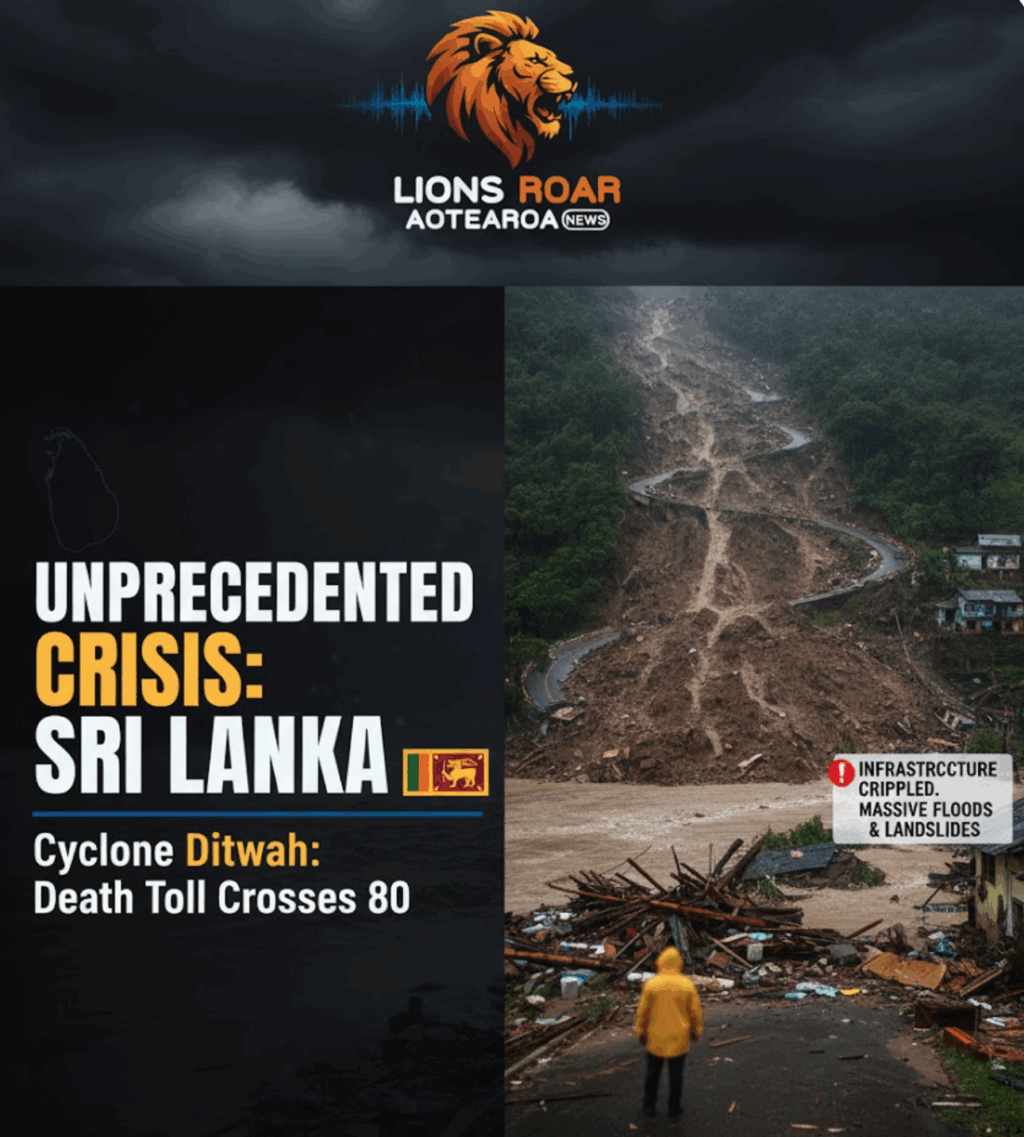
Colombo, Sri Lanka – November 29, 2025 (Lions Roar News)
Sri Lanka is facing an “unprecedented disaster situation” as Cyclonic Storm ‘Ditwah’ continues to batter the island, triggering catastrophic landslides, mass flooding, and a complete breakdown of critical infrastructure. The nation is grappling with its worst weather-related catastrophe in decades, with the confirmed death toll tragically climbing past 80 people and dozens more feared missing across multiple districts.
The severity of the weather, which has been described as “extraordinary” by the National Building Research Organisation (NBRO), has brought a large portion of the nation to a standstill, inflicted deep wounds on its economy, and plunged thousands of families into a humanitarian crisis.
Cyclone’s Current Position and Imminent Departure
As of late Friday, the cyclonic storm was moving slowly and lay centered over the waters off the Sri Lankan coast and the adjoining southwest Bay of Bengal, near Trincomalee.
Trajectory Towards India: The system is now tracking north-northwestwards and is expected to emerge into the open sea before approaching the coastlines of North Tamil Nadu, Puducherry, and South Andhra Pradesh in India by early November 30th. While Sri Lanka may be past the immediate worst of the storm’s core, forecasters warn that its residual influence will continue to draw heavy, moisture-laden air, sustaining the risk of extremely heavy rainfall (over 200 mm), particularly in the Northern, North-Central, and Central provinces for the next 24 hours.
The Catastrophic Human and Humanitarian Crisis
The primary cause of fatalities has been the relentless rainfall, which saturated the central highlands and led to massive earth slips.
- Death and Displacement: Official figures report over 80 confirmed fatalities and 34 people still unaccounted for. The tragedy has left over 148,603 individuals (from 44,192 families) affected. Approximately 14,000 people have been forced to evacuate their homes and seek refuge in nearly 200 emergency shelters established across the country.
- Landslide Hotspots: The districts of Badulla and Nuwara Eliya in the central tea country have been designated as the epicenters of human loss. In Badulla alone, more than 21 people were killed when landslides buried their homes. The NBRO has issued red evacuation notices for 59 Divisional Secretariat Divisions across twelve districts, warning that the prevailing rainfall—which in some areas like Matale has exceeded 500 mm in 24 hours—could trigger slides at any moment.
- The Colombo Threat: Compounding the tragedy, the Irrigation Department has issued a severe Red-Level Flood Warning for the low-lying areas of the Kelani River basin, which includes parts of the capital city, Colombo, and the next most populous district, Gampaha. Authorities are urgently evacuating vulnerable residents, as river levels are approaching historically high flood marks, reminiscent of the devastating floods of 2016.
Crippled Infrastructure and Road Collapse
The sheer force of Ditwah has dismantled essential national infrastructure, effectively severing key arteries and hampering immediate rescue and relief efforts:
- Road Network Paralysis: Vehicular movement on several vital highways has been severely restricted or cut off entirely:
- A4 Highway (Colombo–Batticaloa) and A5 Highway (Peradeniya–Badulla–Chenkalady), which link the capital to the East and the central highlands respectively, are impassable due to landslides and floodwaters.
- Three major bridges—the Moragahakanda Main Bridge, the Elahera Bridge, and the Kumara Ella Bridge—were reported to be washed away, isolating entire communities in the Matale, Polonnaruwa, and Kurunegala provinces—regions crucial for the country’s agricultural output.
- To expedite emergency movements, the Road Development Authority (RDA) temporarily waived tolls on all expressways.
- Railways Suspended: Passenger train services, especially long-distance express and night mail trains on the upcountry, Batticaloa, and Trincomalee lines, have been entirely suspended. Railway tracks are either submerged or damaged by massive earth slips and debris, with repair assessments still pending due to the ongoing adverse weather.
- Power Outages: The storm caused widespread power failures, with the Ceylon Electricity Board (CEB) reporting that 25 to 30 per cent of the region was affected. Two major hydropower plants, Kotmale and Rantambe, were temporarily shut down following a power cable failure, adding energy crisis to the mounting disaster. Over 200,000 consumers across multiple provinces remain without power.
Deep Impact on the National Economy
The timing of Cyclone Ditwah—in the post-monsoon season crucial for trade and agriculture—is disastrous for Sri Lanka’s already strained economy.
- Tea Industry Trauma: The destruction in the central highlands directly impacts the tea industry, a cornerstone of the nation’s foreign exchange earnings. Landslides have destroyed tea plantations, roads used for transportation, and potentially damaged processing factories. The loss of harvest and damage to long-term perennial crops will translate into a major decline in export earnings for the coming quarters.
- Tourism Setback: The cyclone has dealt a heavy blow to the recovering tourism sector. Damage to infrastructure, the inaccessibility of popular destinations like Kandy and the eastern coast, and general travel disruptions are expected to lead to a significant decline in international tourist arrivals in the coming weeks.
- Stock Market Closure: The severity of the crisis was reflected in the financial sector, where the Colombo Stock Exchange was forced to close early on Friday, November 28th, amidst the onslaught of the cyclonic conditions, highlighting the disruption to business confidence.
Government and International Response
The Sri Lankan government has activated the Essential Public Services Act, declaring a wide range of services as essential to ensure that emergency and recovery efforts can proceed unimpeded. The Ministry of Defence has deployed nearly 20,500 tri-service personnel for search-and-rescue and relief operations.
Internationally, India was among the first to respond by launching ‘Operation Sagar Bandhu’. The Indian Navy’s aircraft carrier, INS Vikrant, and the frontline ship INS Udaigiri delivered the first tranche of humanitarian assistance, including 4.5 tonnes of dry rations and 2 tonnes of fresh rations, providing critical aid to the affected families. The assistance underscores the regional solidarity required to face such extreme weather events, which are increasingly discussed in the context of climate variability and its disproportionate impact on South Asia.
As the nation waits for the storm to fully pass, the daunting task of relief, recovery, and long-term reconstruction lies ahead.