Super Typhoon Fung-wong Unleashes Fury on Philippines: Millions Displaced, Calls for International Aid Grow
By Lions Roar News Asia-Pacific Bureau
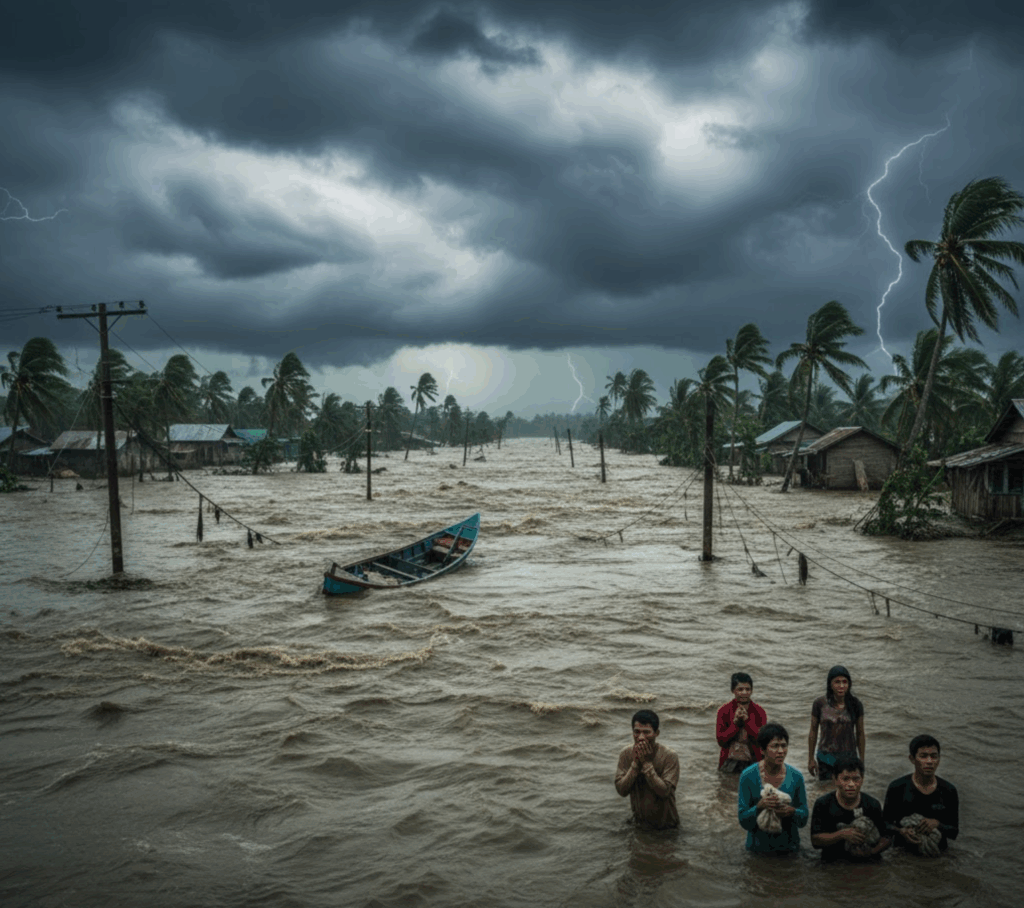
MANILA, PHILIPPINES — The Philippines is once again grappling with the catastrophic force of nature as Super Typhoon Fung-wong (local name: “Ompong”) ripped through the northern parts of the archipelago, leaving a trail of widespread devastation, two confirmed fatalities, and displacing over a million people. The Category 5 storm, packing sustained winds of up to 260 kilometers per hour (160 mph) and gusting even higher, made landfall over the weekend, unleashing torrential rains, flash floods, and landslides that have overwhelmed emergency services and plunged entire regions into crisis.
The National Disaster Risk Reduction and Management Council (NDRRMC) confirmed the deaths of two individuals in the Cordillera Administrative Region, both victims of flash floods. However, officials warn that the death toll is likely to rise as rescue teams struggle to reach remote areas cut off by impassable roads and communication outages.
“This is one of the most powerful storms we’ve seen in years, and its impact is truly devastating,” stated NDRRMC spokesperson Edgar Posadas in a press briefing from Manila. “Over a million people have been evacuated from coastal communities and low-lying areas. Our immediate priority is search and rescue, getting aid to those stranded, and restoring vital services. But the scale of displacement and destruction is immense.”
The provinces of Cagayan, Isabela, and Apayao in northern Luzon bore the brunt of Fung-wong’s fury. Homes were flattened, vast swathes of agricultural land submerged, and critical infrastructure, including roads, bridges, and power lines, severely damaged. Initial aerial assessments show widespread destruction, with entire villages submerged in floodwaters and communities cut off by landslides triggered by the relentless downpour.
Fung-wong’s arrival reignites painful memories of past super typhoons, particularly Haiyan (Yolanda) in 2013, which claimed over 6,300 lives. While improved early warning systems and more efficient evacuation protocols have undoubtedly saved countless lives this time, the sheer force of Fung-wong has tested the limits of the nation’s preparedness. Over 100,000 people are currently sheltering in evacuation centers, with many more seeking refuge with relatives or in makeshift shelters.
Humanitarian organizations on the ground are issuing urgent calls for international assistance. The Philippine Red Cross, along with local and international NGOs, is mobilizing resources, but the scale of the disaster is overwhelming. “Food, clean water, shelter, and medical supplies are urgently needed,” said a representative from Médecins Sans Frontières (Doctors Without Borders). “Access to affected areas is extremely challenging due to damaged roads and ongoing risks of landslides. We are concerned about the spread of waterborne diseases in the coming days.”
The economic impact is also expected to be severe. The northern Luzon provinces are key agricultural regions, producing a significant portion of the country’s rice and corn. The widespread flooding of fields and destruction of crops will undoubtedly lead to significant losses for farmers and potentially impact national food security in the coming months. Fishing communities along the coast have also seen their livelihoods wiped out, with boats and equipment destroyed.
President Ferdinand “Bongbong” Marcos Jr. has declared a state of calamity in the worst-hit provinces and has ordered all government agencies to expedite relief and rehabilitation efforts. “We will spare no effort to help our countrymen recover from this tragedy,” President Marcos stated in a televised address. “The government is working tirelessly, but we also call on the resilience of the Filipino spirit and the generosity of our international partners.”
As Fung-wong continues its path towards the South China Sea, moving away from the Philippines, the focus shifts to the immense challenge of recovery and reconstruction. The full extent of the damage, both human and economic, will likely take weeks to fully assess, underscoring the Philippines’ vulnerability to extreme weather events in an era of accelerating climate change.