The Tax Reckoning: Hipkins’ 28% Capital Gains Gambit Sparks Political Firestorm
By The Lion’s Roar News Editorial Team Date: October 30, 2025
The political landscape of New Zealand has been irrevocably altered following the unveiling of a targeted 28% Capital Gains Tax (CGT) proposal by the Labour Party. Pitched as an essential measure to rebalance the tax system and fund universal healthcare, the policy has immediately drawn intense fire, not just from the right, but also from Labour’s potential coalition partners on the left.
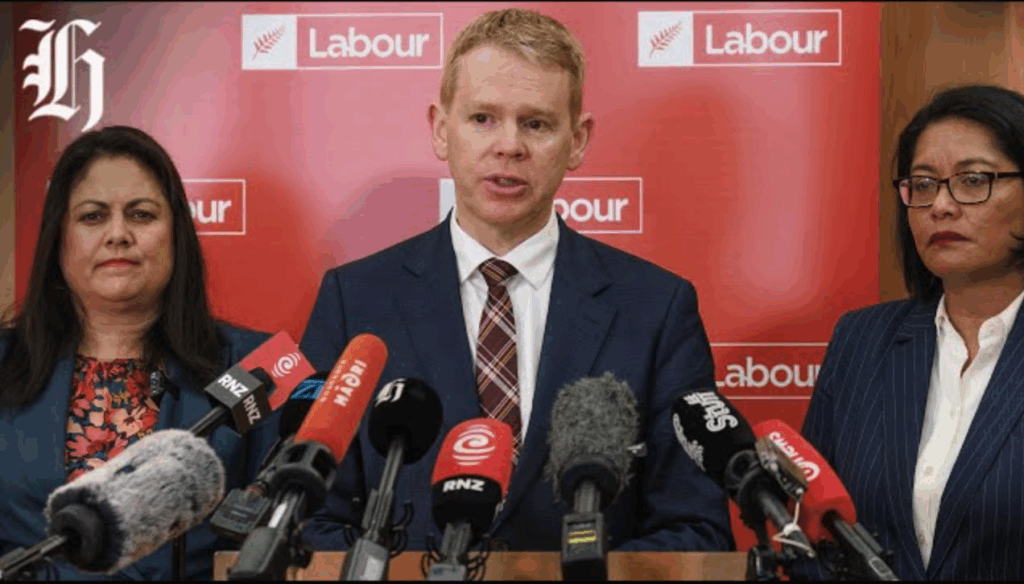
In what is being described as a high-stakes gamble reminiscent of past failed tax reforms, Labour leader Chris Hipkins has thrown down the gauntlet, setting the stage for an economy-defining election battle where the “family home” exemption is the only safe harbour.
The Policy: Narrow Focus, Massive Ambition
Labour’s proposal centers on a 28% tax rate applied to the profits made from the sale of residential investment property and commercial property. The policy, designed to replace the current Bright-Line Test, is set to commence from July 1, 2027, and importantly, will only apply to gains accrued after that date, removing any retrospective element.
The tax’s primary selling point is its ring-fenced revenue stream, projected to raise an average of $700 million annually in the long term, which will be solely dedicated to funding a “Medicard” scheme offering three free GP visits per year for every New Zealander.
However, the political fragility of the issue is highlighted by the extensive exemptions: the family home, farms, KiwiSaver, shares, and business assets (excluding commercial property) are all excluded. Hipkins defended the exclusion of farms, claiming they are “productive investments” and that the party wanted to “encourage people to work hard.” Critics, however, swiftly labeled this a desperate, politically motivated concession to the rural sector.
National’s Fury: A “Handbrake” on the Economy
The response from the National Party was instantaneous and venomous. Finance Minister Nicola Willis declared the proposal a “terrible idea” and a “tax grab” that would function as a “handbrake” on the nation’s economic recovery.
National argues the tax is not a progressive measure but a punitive levy on savings, investment, and growth. By including commercial property, they contend that Labour is levying a new tax on businesses—from small factory owners to major commercial landlords—at a time when businesses need confidence and certainty.
“This is the complete opposite of what our economy needs right now,” Willis stated, affirming National’s position that they will not entertain any CGT, favoring policies that reduce red tape and stimulate capital investment instead.
The Left Flank: “Watered-Down” and Unambitious
Perhaps more damaging than the right’s criticism is the lukewarm reception from the Green Party and Te Pāti Māori. Both parties, which Labour would likely need to form a future government, dismissed the targeted CGT as “watered-down” and a failure to tackle true wealth inequality.
Green Party co-leader Chlöe Swarbrick was vocal, noting the wealthiest pay a fraction of the effective tax rate compared to nurses and firefighters. The Greens’ preferred alternative remains a comprehensive Wealth Tax (e.g., a 2.5% tax on net assets over $2 million), arguing Labour’s limited CGT policy is insufficient to fix the broken system.
This disagreement immediately creates a political headache for Labour: they must campaign against the right’s accusation of being “tax-and-spend” radicals, while simultaneously trying to convince the left they are progressive enough.
The Economic Catch-22
The policy’s expected impact on the overheated housing market is the subject of intense economic debate. Labour’s finance spokesperson anticipates “downward pressure” on house prices by discouraging speculative investment, a view echoed by some economists.
However, a chorus of property experts and chief forecasters are pouring cold water on the idea that this CGT will significantly improve affordability.
- Rents could rise: Landlords facing reduced capital returns may simply seek to maintain their overall yield by increasing rents, hurting the very low-income households the policy aims to help via free GP visits.
- Reduced Supply: The tax could disincentivize the construction of new rental properties, reducing overall supply and placing long-term upward pressure on prices.
- Minimal Immediate Impact: Given the non-retrospective nature, the policy is forecast to take years to raise meaningful revenue, making its immediate impact on investment behavior uncertain.
For New Zealand, which is only one of two OECD countries without a broad CGT, the fairness argument remains compelling, but the practicalities—complexity for compliance, economic efficiency risks, and the history of political kryptonite—make this policy a high-stakes defining moment for the next election cycle.
The Capital Gains Tax debate is set to dominate the political arena. We invite our readers to follow our ongoing coverage as the major parties firm up their fiscal plans.