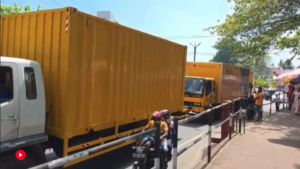
Sri Lanka’s Vehicle Imports Surge to USD 1.5 Billion in 2025: Signs of Recovery or Renewed Risk?
By Lions Roar Aotearoa News | October 23, 2025
Colombo — Sri Lanka’s post-crisis economic rebound is showing strong consumer resurgence, with vehicle imports expected to reach US $1.5 billion in 2025 — a figure well above earlier government and central bank projections.
The data, released by the Central Bank of Sri Lanka (CBSL) this week, marks one of the sharpest spikes in import activity since the country lifted its prolonged vehicle import ban following the 2022 financial crisis.
While the surge signals renewed consumer confidence and stronger economic circulation, experts warn that it could also reignite external balance pressures, threatening the fragile stability achieved through International Monetary Fund (IMF)-backed reforms.
A Market Reawakening After Years of Stagnation
After nearly four years of restrictions on motor vehicle imports, 2025 has seen a dramatic resurgence in buyer activity. The re-entry of major automotive brands into the Sri Lankan market — including Japanese, Korean, and Chinese manufacturers — has driven a wave of purchases across both the personal and commercial vehicle sectors.
Dealers in Colombo and Kandy report unprecedented demand, with long waiting lists for hybrid cars, SUVs, and electric vehicles (EVs). “We haven’t seen this kind of excitement since before 2019,” said a representative from the Ceylon Motor Traders Association. “Customers who waited for years are now buying immediately, even at higher interest rates.”
Economists attribute this surge to pent-up demand, accumulated savings, and a psychological return to normalcy following years of austerity.
Falling Prices and Expanding Supply
Adding to the boom is a noticeable decline in vehicle prices, as supply chains recover and global logistics costs stabilize. Shipping delays and container shortages that once plagued the import industry have eased considerably in 2025.
Electric vehicles, in particular, have benefited from falling battery prices and government tax concessions promoting green mobility. Imports of compact EVs have tripled since January, accounting for nearly 15% of total vehicle imports this year.
However, local dealers caution that the price dip may be temporary, given the volatility of global commodity and exchange markets. “If the rupee weakens again, prices could easily jump 10–15%,” said one importer.
Economic Implications: Balancing Growth and Stability
While the increase in imports is a positive signal of economic recovery and rising consumer sentiment, it also introduces macroeconomic risks. The trade deficit, which had narrowed significantly during the import ban years, is expected to widen again by year’s end.
A senior CBSL official noted,
“We welcome renewed market activity, but unsustainable import growth could place pressure on our foreign reserves. Careful management of demand and currency stability remains critical.”
Sri Lanka’s current foreign exchange reserves stand near US $5.8 billion, bolstered by IMF tranches and increased remittance inflows. However, the expanding demand for foreign currency to pay for vehicle imports could tighten liquidity if not matched by export growth.
A Sign of Economic Normalization
Analysts say the surge reflects both consumer optimism and the normalization of market behavior after years of economic uncertainty. Vehicle imports have long been viewed as a barometer of Sri Lanka’s middle-class health — an indicator that people feel confident enough to invest in big-ticket purchases again.
“This is a natural rebound,” explained Dr. Malini Wijesinghe, an economist at the University of Colombo.
“When you suppress demand for years, you create pressure that explodes once restrictions lift. The key is ensuring that this recovery doesn’t outpace fiscal discipline.”
IMF Agreement and Policy Coordination
The timing of the import surge coincides with Sri Lanka’s recent IMF staff-level agreement for a US $347 million financing tranche, aimed at supporting macroeconomic stability and structural reform.
The IMF has consistently urged the government to prioritize export competitiveness, revenue generation, and prudent management of imports.
If vehicle imports continue to climb, the government may consider targeted import duties or credit controls to moderate the inflow, similar to measures introduced during the 2018 import boom.
Outlook for 2026: Opportunity and Caution
Looking ahead, the automobile industry expects steady demand into early 2026, particularly for electric and hybrid vehicles, as Sri Lanka transitions toward cleaner transport. However, rising fuel prices, fluctuating interest rates, and exchange rate risks could dampen enthusiasm if not carefully managed.
The real challenge for policymakers lies in balancing growth with discipline — sustaining consumer confidence without reopening the fiscal wounds of the past.
For now, though, the surge in vehicle imports paints a vivid picture of a nation cautiously reawakening — a sign that Sri Lankans, after years of economic hardship, are finally ready to move forward again, quite literally, on the road to recovery.
Key Figures:
- Estimated total imports (2025): US $1.5 billion
- EV share: 15% of total imports
- Foreign reserves: US $5.8 billion
- Projected trade deficit increase: up 20–25% by Q4 2025