Prime Minister Harini Amarasuriya Strengthens Sri Lanka–India Ties During Landmark Visit
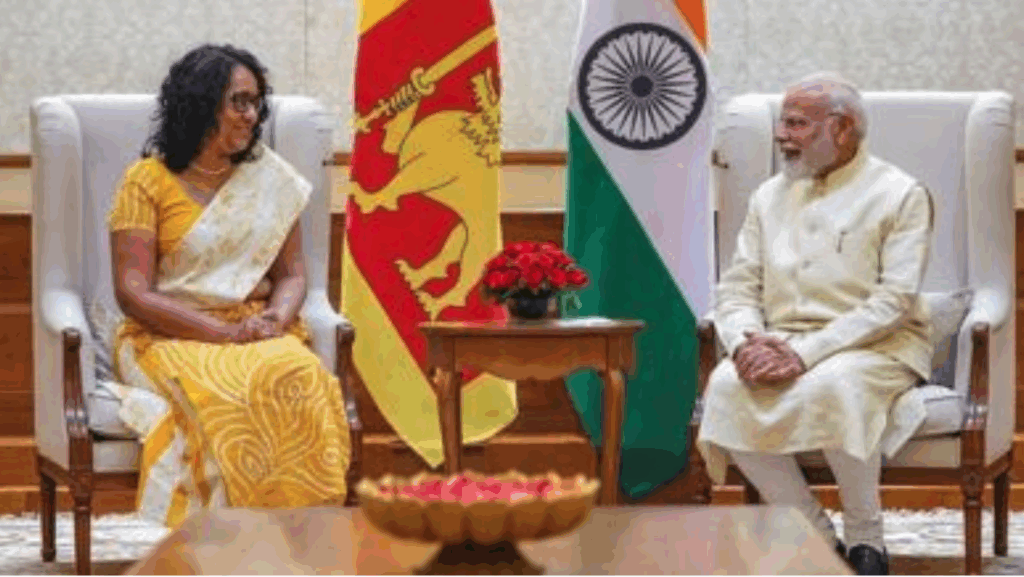
New Delhi, October 2025 —
Sri Lankan Prime Minister Harini Amarasuriya concluded her official visit to India this week, marking one of the most significant bilateral engagements between the two South Asian neighbors in recent years. The visit underscored a new phase of education, economic, and development cooperation, with a strong emphasis on fishermen’s welfare, regional stability, and technology partnership.
The trip, which included high-level talks with Indian Prime Minister Narendra Modi, cabinet ministers, and business leaders, reaffirmed both nations’ commitment to deepen cooperation rooted in geography, culture, and shared democratic values.
🔹 A Symbolic and Strategic Visit
Prime Minister Amarasuriya’s visit — her first state-level engagement with India since taking office — came at a pivotal moment. Sri Lanka is emerging from economic hardship, rebuilding state institutions, and redefining its foreign policy priorities. India, meanwhile, continues to expand its strategic and developmental influence in the Indian Ocean region.
The official agenda focused on education and youth development, sustainable fisheries management, trade facilitation, and digital infrastructure. The two leaders also discussed broader issues including regional maritime security, environmental resilience, and people-to-people exchange programs.
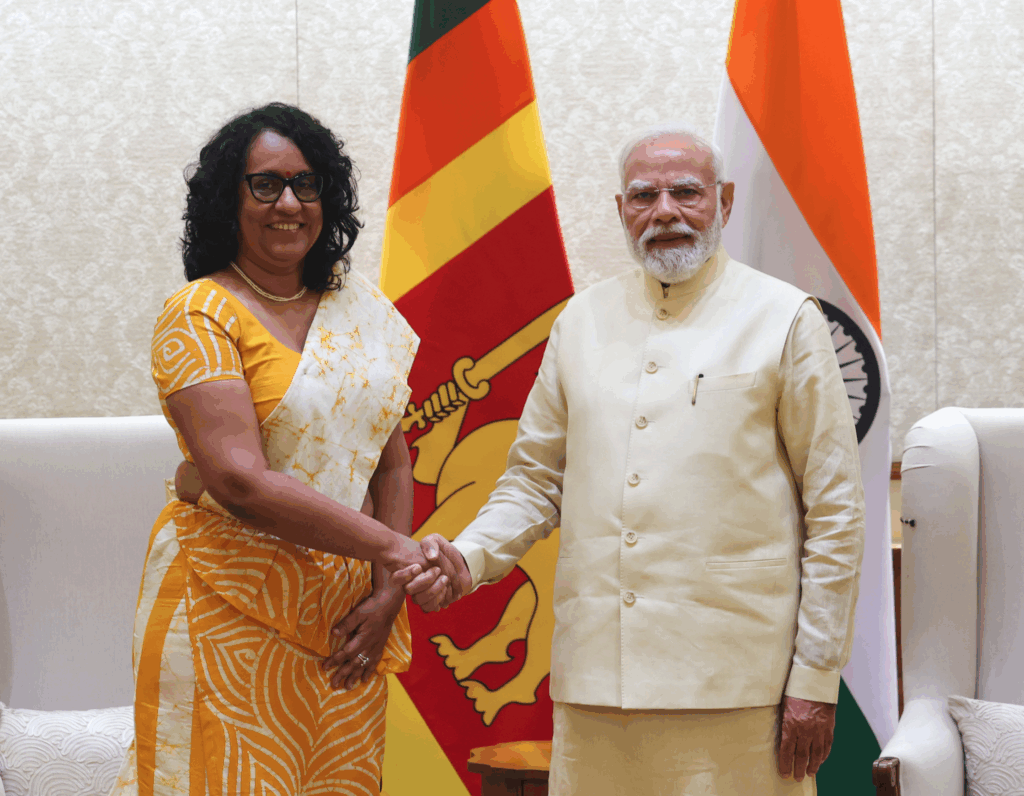
“Sri Lanka’s stability and prosperity are inseparable from its partnership with India,” Prime Minister Amarasuriya said during her joint press briefing with PM Modi in New Delhi.
“This visit is not about dependency — it’s about partnership, built on equality and trust.”
🔹 Key Agreements Signed
The visit produced several concrete outcomes and memoranda of understanding (MoUs), signaling tangible progress in bilateral ties. Among the most notable agreements:
- Education & Skills Development Framework
A joint initiative to expand scholarship programs and establish new vocational training centers in Sri Lanka, supported by India’s National Skill Development Corporation. This initiative aims to equip young Sri Lankans with employable skills in information technology, maritime services, and renewable energy. - Fishermen’s Livelihood and Marine Cooperation
Recognizing the long-standing tensions over fishing rights in the Palk Strait, both leaders agreed on the establishment of a Sri Lanka–India Fishermen’s Welfare Committee.
The committee will focus on joint resource management, conflict resolution mechanisms, and financial assistance for affected fishing communities. PM Modi emphasized, “The livelihoods of fishermen must not become a source of discord, but of cooperation. Together, we will build sustainable and peaceful maritime relations.” - Development Financing & Infrastructure Projects
India pledged to continue its line of credit programs for Sri Lankan infrastructure, particularly in the northern and eastern provinces. This includes renewable energy projects, rail modernization, and digital connectivity corridors. - Education Exchange and Research Collaboration
A new academic exchange program between universities in Colombo, Jaffna, and Delhi was announced, encouraging collaborative research in technology, climate change, and public policy.
🔹 Focus on the Northern Provinces
A significant portion of the discussions revolved around Sri Lanka’s northern region — an area still recovering from decades of civil conflict. India expressed interest in supporting livelihood programs for Tamil and Muslim communities, promoting reconciliation through sustainable development.
Prime Minister Amarasuriya acknowledged India’s continued assistance in rebuilding housing, schools, and healthcare facilities in the North and East, calling it “a cornerstone of regional reconciliation.”
Observers note that this focus also reflects India’s broader goal of fostering equitable development across Sri Lanka, ensuring stability near the shared maritime border.
🔹 Trade and Economic Cooperation
Both countries reaffirmed their commitment to expanding bilateral trade, which currently stands at around USD 6 billion annually. The two prime ministers discussed upgrading the India–Sri Lanka Free Trade Agreement (ISFTA) to include services, investment, and digital economy sectors.
Key areas of cooperation include:
- Renewable energy: India’s Adani Group is expected to continue developing wind and solar projects in Mannar and Pooneryn.
- Port modernization: Ongoing joint projects at Trincomalee and Colombo Port are being expanded to strengthen maritime logistics.
- Technology and fintech: The two sides discussed integrating India’s UPI digital payment system into Sri Lanka’s national payment network — a move expected to boost tourism and cross-border transactions.
PM Amarasuriya highlighted that Sri Lanka is determined to diversify its economic partnerships while maintaining sovereignty:
“Sri Lanka will welcome investment that uplifts our people and preserves our independence. India has been a steadfast friend in that journey.”
🔹 Cultural and Educational Diplomacy
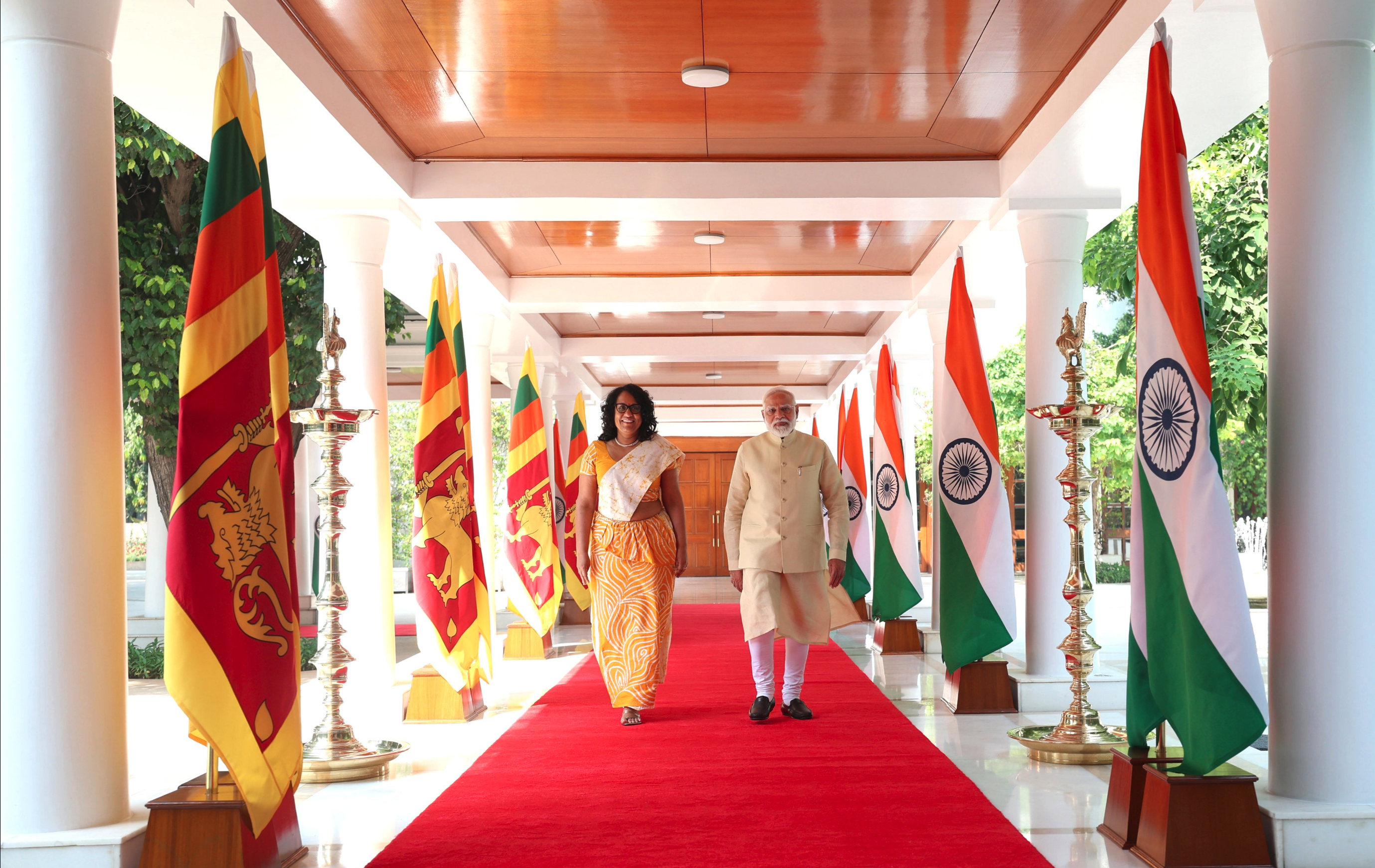
Beyond economics, the visit had a strong cultural and educational dimension. Both nations agreed to host a “Sri Lanka–India Cultural Year 2026”, celebrating shared Buddhist, Hindu, and Tamil heritage.
The two leaders also visited the Nalanda University campus in Bihar, where Sri Lankan students have historically studied since ancient times. A new Sri Lanka-funded study center dedicated to South Asian peace studies was announced.
PM Amarasuriya remarked, “Our cultural ties are thousands of years old. Education is the bridge that keeps that heritage alive for future generations.”
🔹 India’s Role in Sri Lanka’s Recovery
India has been one of Sri Lanka’s most crucial partners during its economic crisis of 2022–2023, extending more than $4 billion in credit lines for essential imports, fuel, and medical supplies.
During the bilateral meetings, PM Modi reaffirmed that India’s assistance would continue, but with a renewed focus on capacity-building, digital governance, and grassroots empowerment, rather than purely financial relief.
Analysts view this as a strategic recalibration — shifting from short-term stabilization to long-term resilience.
🔹 Regional Implications
Geopolitically, the visit is being seen as part of a broader regional balance. As Sri Lanka continues to manage its relations with India, China, and Western partners, the Amarasuriya government is positioning itself as an advocate of non-alignment through cooperation.
By prioritizing education and social development, the Prime Minister is signaling a shift away from purely debt-based economic partnerships toward sustainable human capital growth.
India, for its part, welcomes this orientation, seeing Sri Lanka’s recovery as essential for Indian Ocean security and maritime stability.
🔹 Humanitarian and Social Dimensions
The two leaders also discussed migration, labor rights, and welfare of Sri Lankan workers in India and the Middle East. New measures will allow easier student and work visa processing for Sri Lankans, along with mutual recognition of professional qualifications in healthcare, IT, and engineering.
PM Amarasuriya also invited Indian NGOs to partner with Sri Lanka’s Ministry of Women and Social Empowerment to expand women’s entrepreneurship and microfinance programs in rural areas.
🔹 The Visit’s Broader Message
The joint statement issued at the conclusion of the visit encapsulated the spirit of the dialogue:
“Sri Lanka and India reaffirm their unwavering commitment to peace, prosperity, and shared progress in the Indian Ocean region. The friendship between our nations is not transactional — it is transformational.”
For many, this visit represents not just diplomatic success but a symbol of a generational shift in South Asian leadership — one led by collaboration, empathy, and inclusion.
Prime Minister Amarasuriya’s engagement style, focusing on people-centric diplomacy and gender-sensitive policymaking, has drawn attention across the region.
🔹 Looking Ahead
Both governments agreed to establish a High-Level Monitoring Committee to oversee the timely implementation of signed MoUs. The first review meeting is scheduled for early 2026.
Additionally, the two nations are exploring joint initiatives in ocean research, fisheries technology, and green hydrogen energy, reflecting a growing emphasis on sustainable cooperation.
As PM Amarasuriya departed New Delhi, she noted that Sri Lanka’s partnership with India is “not an alliance of convenience but a relationship of destiny.”
🔹 Conclusion
The 2025 Sri Lanka–India summit signals a renewed era of engagement built on trust, equality, and shared responsibility. While challenges remain — from trade imbalances to maritime disputes — the tone of cooperation has clearly shifted.
For both Colombo and New Delhi, this visit has reaffirmed a simple truth: in a rapidly changing region, neighborly friendship remains the most powerful instrument of stability.