Hamas Announces Conditional Hostage Releases as Global Pressure Mounts — Trump’s Address to Israeli Parliament Draws Mixed Reactions
By Lion’s Roar News International Desk
October 14, 2025
The ongoing crisis between Israel and Hamas has entered a new phase this week as Hamas announced a fresh round of hostage releases under what it described as a “humanitarian framework.” The group, which has been holding dozens of hostages since the escalation of the Gaza conflict, claims that the decision was made following international mediation and internal deliberations over the worsening humanitarian situation in Gaza.
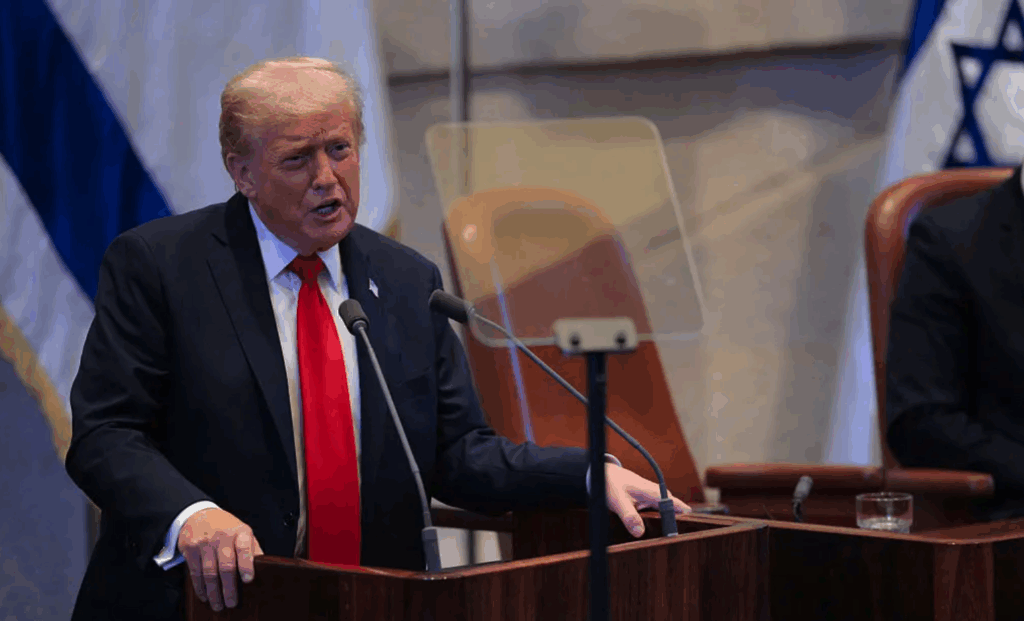
At the same time, former U.S. President Donald Trump made an unprecedented address to the Israeli Parliament (the Knesset), in which he called for “courageous compromise and leadership on both sides.” His appearance, which comes amid his renewed push for global political influence ahead of the U.S. elections, sparked both applause and controversy within Israel and abroad.
Hostage Release Developments
According to official Israeli sources, Hamas has released 18 hostages so far, including several foreign nationals and elderly Israeli civilians. The latest release took place late Sunday evening after a series of indirect talks involving Egypt and Qatar.
The hostages, who were handed over to the Red Cross near the Rafah border crossing, were immediately transported to Israeli medical facilities for evaluation and debriefing. Among the freed individuals were five women, four elderly men, and two foreign aid workers — reportedly from the Philippines and Thailand — who had been captured during the early stages of the conflict.
Hamas claimed in a public statement that the releases were “a gesture of goodwill” intended to draw attention to what it calls the “continued suffering of Palestinian civilians under Israeli bombardment.” The statement further added that more releases could follow, but only if Israel halts “targeted operations” in several northern districts of Gaza and allows for additional humanitarian aid corridors to open.
However, Israeli Prime Minister Benjamin Netanyahu dismissed the notion of a ceasefire, reiterating that “Israel will continue its operations until Hamas no longer poses a threat.” He acknowledged the hostage releases but emphasized that “every hostage freed is a reminder of those still held in brutal captivity.”
The Numbers So Far
Israeli and international monitoring groups estimate that over 130 individuals remain in Hamas custody, including civilians, soldiers, and several foreign nationals. Negotiations for their release have been complicated by Hamas’ demand for prisoner exchanges — specifically, the release of Palestinians detained under Israeli security laws.
According to sources close to the talks, Hamas has presented a list of over 500 prisoners it seeks to free, including several high-profile figures accused of orchestrating past attacks. Israel has so far rejected these conditions but has hinted at limited humanitarian exchanges involving minors and women.
Egyptian and Qatari mediators continue to shuttle between both sides in hopes of brokering an agreement. A senior Egyptian diplomat involved in the negotiations told Lion’s Roar News that “progress is slow but not stagnant,” noting that both parties are under increasing domestic pressure to demonstrate results.
Humanitarian Crisis Deepens
While hostage talks have dominated global headlines, the humanitarian toll in Gaza continues to escalate. The United Nations estimates that over 1.8 million Palestinians have been displaced, and large portions of the Gaza Strip remain without electricity or access to clean water.
Aid convoys entering from Egypt have increased in frequency over the past week, though international organizations warn that the deliveries are “a fraction of what is needed.” Hospitals in central and southern Gaza report critical shortages of medicine and fuel, while communication blackouts continue to hinder coordination of relief efforts.
Hamas, in its latest communique, accused Israel of “weaponizing humanitarian aid,” claiming that delays and restrictions are part of a broader effort to pressure its leadership. Israeli officials counter that the aid is being manipulated by Hamas operatives and that safeguards are necessary to prevent diversion of resources for military use.
Trump’s Surprise Appearance in Jerusalem
Adding an unexpected layer to the tense regional climate, former U.S. President Donald Trump addressed the Israeli Knesset in Jerusalem on Monday — the first former American president ever to do so.
In his 40-minute speech, Trump urged Israel to “stay strong but wise,” commending the nation’s resilience while also suggesting that “lasting peace requires painful decisions.” His remarks included both praise for Israel’s right to self-defense and a call for “restraint where possible” to avoid deepening humanitarian suffering.
Trump’s address was received with a mixture of applause and criticism. Right-wing members of the Knesset welcomed his “bold moral clarity,” while opposition members accused him of political opportunism. Some also questioned the timing of his visit, noting that it coincides with his renewed push to strengthen international visibility ahead of the 2026 U.S. election cycle.
Reactions from Washington and Beyond
The current U.S. administration has so far avoided direct comment on Trump’s visit, though senior officials privately expressed frustration over what they viewed as “unofficial diplomacy.” The White House reiterated its ongoing support for Israel while stressing the importance of multilateral cooperation to secure hostage releases.
Trump, however, appeared unfazed by the criticism. “When lives are on the line, real leadership means showing up,” he told reporters after his Knesset address. “I’ve always believed peace is possible if both sides have strong leadership — not weakness.”
In the Arab world, reactions were more pointed. Palestinian representatives condemned Trump’s remarks as “biased and unhelpful,” accusing him of “endorsing Israel’s narrative while ignoring Palestinian suffering.” Meanwhile, several regional analysts said the speech underscored the former president’s continuing influence in Middle Eastern geopolitics, even without holding office.
Political Calculations and Public Opinion
Within Israel, the developments have reignited debate over the government’s handling of the war and its relationship with international allies. Public protests calling for the government to prioritize hostage recovery over military operations have intensified in Tel Aviv and Haifa.
Polls conducted over the weekend indicate that a majority of Israelis now favor “temporary humanitarian pauses” in exchange for hostage releases — a stance the Netanyahu government continues to resist publicly but has reportedly discussed in closed-door sessions with mediators.
For Hamas, the partial release of hostages appears aimed at projecting an image of control and leverage amid devastating losses. Political observers say the group is seeking to reshape international perception — positioning itself as a negotiator rather than a rogue militant faction.
The Road Ahead
Diplomatic sources say the next 10 days could prove pivotal. If additional hostages are freed under the current humanitarian framework, momentum could build for a broader exchange or temporary truce. Conversely, a breakdown in negotiations could trigger a new escalation in fighting.
For now, families of hostages continue to hold vigils outside the Israeli Defense Ministry, clinging to hope that their loved ones might soon return. “We live in uncertainty every hour,” said one family spokesperson. “Every release brings both joy and guilt — because so many are still inside.”
In Gaza, the human toll deepens by the day. With aid convoys delayed, infrastructure destroyed, and communication lines unstable, humanitarian organizations warn that time is running out to prevent a full-scale catastrophe.
As the world watches, the fragile threads of diplomacy, politics, and human tragedy remain tightly intertwined. Whether the latest developments mark the beginning of de-escalation — or simply a pause before another storm — will depend on decisions made in the coming days by leaders on all sides.