“East Auckland’s Rā Hihi Flyover Opens Early and Under Budget, Paving the Way for Smoother Commutes”
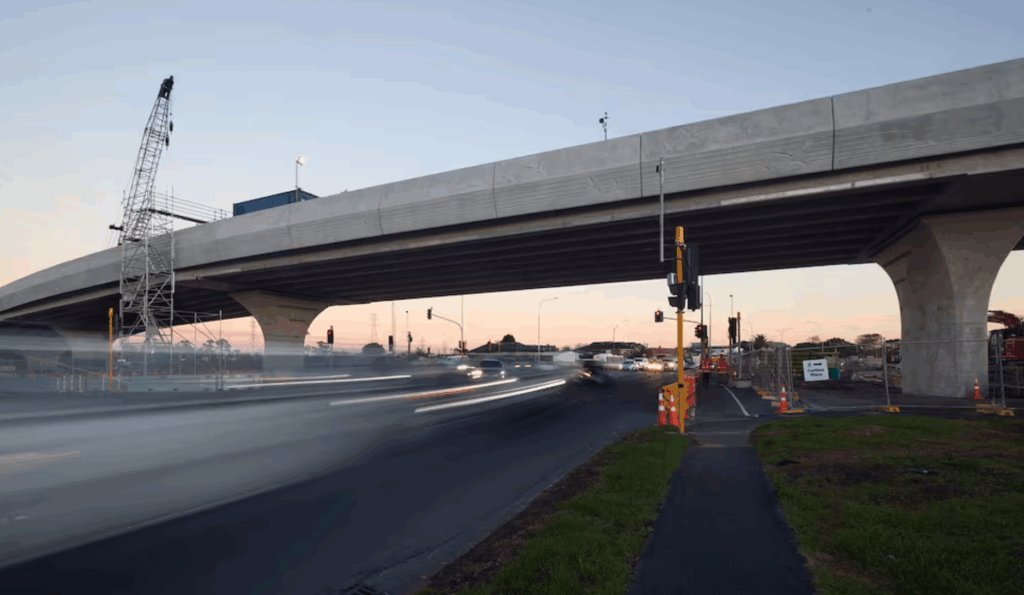
In a significant milestone for East Auckland’s infrastructure, the Rā Hihi flyover—part of the Eastern Busway project—has opened ahead of schedule and under budget. This 600-metre-long overpass, which directly links Pakuranga Road to Pakuranga Highway, is set to alleviate one of the region’s most congested intersections. The flyover is expected to enhance traffic flow and provide a dedicated route for the upcoming high-frequency bus services.
A Collaborative Effort
The successful completion of the Rā Hihi flyover is the result of a collaborative effort between Auckland Transport (AT), the Eastern Busway Alliance, and various stakeholders. The project was initially slated for completion in early 2026 but has now been delivered five months ahead of schedule. Additionally, the project came in more than $4 million under its original budget of $152 million.
Auckland Transport’s Chief Executive, Dean Kimpton, expressed pride in the team’s efficiency and dedication. “We are thrilled to open Rā Hihi ahead of schedule and below budget, bringing much-needed improvements to East Auckland drivers and public transport users,” he said. “This project exemplifies what can be achieved through careful planning and strong partnerships.”
Community Impact
The Rā Hihi flyover is a critical component of the Eastern Busway, a major infrastructure project aimed at enhancing public transport connectivity in East Auckland. Once fully operational, the busway will provide a dedicated corridor for high-frequency buses, reducing travel times and offering a reliable alternative to private car use.
The flyover’s early completion is expected to have immediate benefits for local residents and commuters. By easing congestion at the Pakuranga intersection, the flyover will improve traffic flow and reduce travel times for both private vehicles and buses. Moreover, the project includes provisions for walking and cycling paths, promoting sustainable transport options and encouraging active lifestyles.
Local businesses and residents have also welcomed the development, noting the positive impact on accessibility and the potential for increased economic activity in the area. The improved transport infrastructure is anticipated to attract investment and support the growth of surrounding communities.
Looking Ahead
The Rā Hihi flyover is just one part of the broader Eastern Busway project, which aims to provide a seamless and efficient public transport network across East Auckland. The full busway, extending from Pakuranga to Botany, is expected to be completed by 2027. Once operational, the busway is projected to carry up to 24,000 passengers per day by 2048, significantly reducing reliance on private vehicles and contributing to the region’s sustainability goals.
In the coming months, Auckland Transport will continue to work on the remaining components of the busway, including the construction of additional bus stations and the integration of the busway with the wider transport network. The completion of the Rā Hihi flyover marks a significant step forward in realizing these objectives and underscores the importance of continued investment in Auckland’s transport infrastructure.
As Auckland continues to grow, projects like the Eastern Busway and the Rā Hihi flyover are vital in ensuring the city’s transport network can meet the demands of its expanding population. The successful delivery of these projects demonstrates the effectiveness of strategic planning, collaboration, and a commitment to delivering quality infrastructure that benefits all Aucklanders.
The early completion and cost savings achieved in the Rā Hihi flyover project serve as a model for future infrastructure developments, highlighting the potential for efficiency and value in public sector projects. As the city looks to the future, the lessons learned from this initiative will inform and inspire the next generation of transport infrastructure projects in Auckland.
In summary, the Rā Hihi flyover’s early opening and under-budget completion represent a significant achievement for East Auckland’s transport infrastructure. The project not only addresses current traffic challenges but also lays the foundation for a more connected and sustainable future for the region.